23 Aug 2005
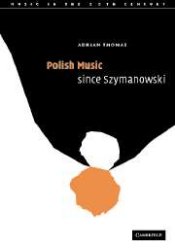
THOMAS: Polish Music since Szymanowski
Throughout the history of Poland, music has been an enduring force in its culture, and Polish composers were at the forefront of a number of developments in the twentieth century.
English Touring Opera are delighted to announce a season of lyric monodramas to tour nationally from October to December. The season features music for solo singer and piano by Argento, Britten, Tippett and Shostakovich with a bold and inventive approach to making opera during social distancing.
This tenth of ten Live from London concerts was in fact a recorded live performance from California. It was no less enjoyable for that, and it was also uplifting to learn that this wasn’t in fact the ‘last’ LfL event that we will be able to enjoy, courtesy of VOCES8 and their fellow vocal ensembles (more below …).
Ever since Wigmore Hall announced their superb series of autumn concerts, all streamed live and available free of charge, I’d been looking forward to this song recital by Ian Bostridge and Imogen Cooper.
The Sixteen continues its exploration of Henry Purcell’s Welcome Songs for Charles II. As with Robert King’s pioneering Purcell series begun over thirty years ago for Hyperion, Harry Christophers is recording two Welcome Songs per disc.
Although Stile Antico’s programme article for their Live from London recital introduced their selection from the many treasures of the English Renaissance in the context of the theological debates and upheavals of the Tudor and Elizabethan years, their performance was more evocative of private chamber music than of public liturgy.
In February this year, Albanian soprano Ermonela Jaho made a highly lauded debut recital at Wigmore Hall - a concert which both celebrated Opera Rara’s 50th anniversary and honoured the career of the Italian soprano Rosina Storchio (1872-1945), the star of verismo who created the title roles in Leoncavallo’s La bohème and Zazà, Mascagni’s Lodoletta and Puccini’s Madama Butterfly.
Evidently, face masks don’t stifle appreciative “Bravo!”s. And, reducing audience numbers doesn’t lower the volume of such acclamations. For, the audience at Wigmore Hall gave soprano Elizabeth Llewellyn and pianist Simon Lepper a greatly deserved warm reception and hearty response following this lunchtime recital of late-Romantic song.
Collapsology. Or, perhaps we should use the French word ‘Collapsologie’ because this is a transdisciplinary idea pretty much advocated by a series of French theorists - and apparently, mostly French theorists. It in essence focuses on the imminent collapse of modern society and all its layers - a series of escalating crises on a global scale: environmental, economic, geopolitical, governmental; the list is extensive.
For this week’s Live from London vocal recital we moved from the home of VOCES8, St Anne and St Agnes in the City of London, to Kings Place, where The Sixteen - who have been associate artists at the venue for some time - presented a programme of music and words bound together by the theme of ‘reflection’.
'Such is your divine Disposation that both you excellently understand, and royally entertaine the Exercise of Musicke.’
Amongst an avalanche of new Mahler recordings appearing at the moment (Das Lied von der Erde seems to be the most favoured, with three) this 1991 Mahler Second from the 2nd Kassel MahlerFest is one of the more interesting releases.
‘And there was war in heaven: Michael and his angels fought against the dragon; and the dragon fought and his angels, And prevailed not; neither was their place found any more in heaven … that old serpent … Satan, which deceiveth the whole world: he was cast out into the earth, and his angels were cast out with him.’
If there is one myth, it seems believed by some people today, that probably needs shattering it is that post-war recordings or performances of Wagner operas were always of exceptional quality. This 1949 Hamburg Tristan und Isolde is one of those recordings - though quite who is to blame for its many problems takes quite some unearthing.
There was never any doubt that the fifth of the twelve Met Stars Live in Concert broadcasts was going to be a palpably intense and vivid event, as well as a musically stunning and theatrically enervating experience.
‘Love’ was the theme for this Live from London performance by Apollo5. Given the complexity and diversity of that human emotion, and Apollo5’s reputation for versatility and diverse repertoire, ranging from Renaissance choral music to jazz, from contemporary classical works to popular song, it was no surprise that their programme spanned 500 years and several musical styles.
The Academy of St Martin in the Fields have titled their autumn series of eight concerts - which are taking place at 5pm and 7.30pm on two Saturdays each month at their home venue in Trafalgar Square, and being filmed for streaming the following Thursday - ‘re:connect’.
The London Symphony Orchestra opened their Autumn 2020 season with a homage to Oliver Knussen, who died at the age of 66 in July 2018. The programme traced a national musical lineage through the twentieth century, from Britten to Knussen, on to Mark-Anthony Turnage, and entwining the LSO and Rattle too.
With the Live from London digital vocal festival entering the second half of the series, the festival’s host, VOCES8, returned to their home at St Annes and St Agnes in the City of London to present a sequence of ‘Choral Dances’ - vocal music inspired by dance, embracing diverse genres from the Renaissance madrigal to swing jazz.
Just a few unison string wriggles from the opening of Mozart’s overture to Le nozze di Figaro are enough to make any opera-lover perch on the edge of their seat, in excited anticipation of the drama in music to come, so there could be no other curtain-raiser for this Gala Concert at the Royal Opera House, the latest instalment from ‘their House’ to ‘our houses’.
"Before the ending of the day, creator of all things, we pray that, with your accustomed mercy, you may watch over us."
Throughout the history of Poland, music has been an enduring force in its culture, and Polish composers were at the forefront of a number of developments in the twentieth century.
For some, figures like Andrzej Panufnik, Witold Lutosławski, Krzysztof Penderecki, and others found a uniquely effective mode of expression in the avant garde, which sets them apart from some of the serialist and post-serialist composers in the West. Their accomplishments seem incredible in the context of the turbulent politics and difficult social situations in Poland for the better part of the twentieth century. Given the many issues that Poles faced in dealing with various governments, music should have been sidetracked until the political situation would have allowed for the arts, as often happens in the West. Perhaps the arts function differently in Poland, since the pressures at work in that culture seem to have caused music to flourish, just as some plants put forth some of their more spectacular blossoms when stressed.
In this book Adrian Thomas focuses for the most part on music in Poland in the twentieth century, and takes as his point of departure the death of Karol Szymanowski (1882-1935). He may be seen as a crucial figure, with his work bridging the late-nineteenth and early twentieth centuries. Thomas offers a comprehensive and organized review of new music in Poland that encompasses efforts during World War II, music under the Soviet regime, and the new wave of contemporary music after the collapse of the USSR. His study essentially ends with the death of Lutosławski (1913-94), and the focus that Thomas contributes results in a vivid discussion of one of the most creative cultures of the twentieth century.
Thomas’s knowledge of Polish music and politics informs various discussions throughout the book. His comments often reflect a firm understanding of the various traditions that existed and to which Polish artists reacted. Thus, the comments in the first chapter about the Young Poland Movement offer some useful perspectives on the strengths and weaknesses of that group (pp. 6-7). The coverage of music during World War II (pp. 16-25) serves as a prelude to the challenges that composers faced under the Soviets and their various responses to the restrictions placed on artistic expression. The latter section comprises the main part of the book, where the counterpoint between politics and art may be seen to emerge in a number of works, which Thomas puts into perspective masterfully.
Again, some of the social elements may be seen to reflect those in the arts, with the end of the Nazi domination of Poland at the end of World War II offering the potential for improvement. Yet the ideals of the Soviet state gave way to the reality of party dictates when hard-liners imposed their guidelines at a conference of composers held in Łagów Lubuski in August 1949, as Marxist philosophy set the tone for music and the other arts. Polish composers met the challenge in various ways, and while some felt victim to the Soviet regime, others found ways to express themselves and, at the same time, respect the wishes of the state. Thomas calls attention to works like Tadeusz Szeligowsk’s opera Bunt żaków [The Scholars’ Revolt] (1951) and Lutosławski’s Concerto for Orchestra (1950-54), which were composed when these artistic sanctions were in force.
In the course of his discussion, Thomas establishes the ascendancy of the symphony in Poland in the mid-twentieth century, which may seem out of place in the West, where symphonic composition had peaked by the late-nineteenth and early twentieth centuries. This sets the stage for later discussions of formalist approaches to music, a stance that was often at odds with the proscriptions of the Soviet regime. Notwithstanding some of the controversies that arose over some works in the genre, the symphony became a vital part of contemporary musical culture. In his discussions of responses to Soviet realism, Thomas raises intriguing issues about the aesthetics involved, which he supports with a firm grasp of the structure of the works discussed.
With such a footing clearly established in the first section of the book, he moves seamlessly into a discussion of the “Warsaw Autumn” that occurred in the early 1950s after Stalin’s death. With the change of leadership in Moscow, music composition benefited from a less oppressive atmosphere, and the result is evident in the annual festivals that took place in the Fall of each year (a list of the works performed is found on pp. 324-31). The “Warsaw Autumn” festivals were an opportunity for an interchange between East and West, since performers like David Tudor were part of the program, as occurred in 1958. More abstract music, like that of Elliott Carter, was performed in Poland, where such music had been proscribed, and native Polish composers composed some of their finest works for these events, with Lutosławski’s Venetian Games and Penderecki’s Threnody for Victims of Hiroshima both premiered at the 1961 festival.
In this study Thomas goes beyond any sort of linear historiography. Rather, he includes in his discussion well-thought discussions of individual composers and their styles, as found in the middle section, which concerns the “search for individual identity.” Through Thomas’s perspective, it becomes clear that Polish composers explored the avant-garde with an eye – or, perhaps, ear – toward personal expression. Novelty does not exist for its own sake, and the quest for new sounds and approaches may be seen as a means of expressing individual voices, as is the case with Baird (see the section devoted to him on pp. 120-32). Likewise, Thomas explores Lutosławski’s style deftly to offer some insights into the composer’s balance between his association with tradition and also the composer’s fascination with new ideas.
In discussions of Lutosławski, Penderecki and others, Thomas reveals his understanding of convincing works, and never sacrifices his enthusiasm for innovation alone. Thus, he establishes a context for Penderecki’s exploration of new sounds and techniques that may have escaped other commentators. His comments about some of Penderecki’s sonically innovative works of the early 1960s not only convey a useful perspective on such pieces as the Threnody, Anaklasis, and others, but they are also apt when it comes to discussing some of the composers of that generation:
They are evidence of Penederecki’s exhilarating sense of freedom, not just from the stifling neo-classicism of his youth but also from what he saw replacing it in Polish music, the insidious avant-garde hegemony of serialism. More than that, he felt free from the construction of traditional musical parameters: rhythm and metre, harmony and melody, and many aspects of form. . . . (p. 165).
These comments help to establish a context for discussing the works that Penderecki composed later in the 1960s and 1970s, and also individuals like Gorecki, Szalonek, and others. Those composers continued to explore music in the following decades, as did Penderecki, and while some of their music may be no longer performed, their contributions may be seen as a tangible connection to some of the contemporary trends that Thomas explores in the later part of this study. With the openness to Western culture that emerged after the 1970s, the potential for personal expression offered a new impetus for composition, which may be perceived not only with those composers, but also others. The well-known Third Symphony of Gorecki is just one example from this time, and Thomas explores Gorecki’s music, as well as that of other composers, as he takes the reader to the present, when “Young Poland” is again a term used to describe the creative spirit that persists to the present. It is clear that Poland has much to offer contemporary music, and beyond the works that circulate in printed and recorded form, the enthusiasm for new music that exists in Poland is one of its most powerful attributes. Thomas conveys that spirit in this book, which is an effective study of a remarkable music culture. The various technical apparatus that are part of the study, the lists of composers and their works, a chronology of events from the late 1960s to the 1990s, and the comprehensive bibliography (of both general works and studies connected to individual composers) are tools that are invaluable to future explorations of this music. For those who appreciate Polish music and others who may want to know about it, Polish Music since Szymanowski is an important publication that should endure as the present generation of composers takes its audiences into the twenty-first century.
James L. Zychowicz
Madison, Wisconsin