28 Oct 2006
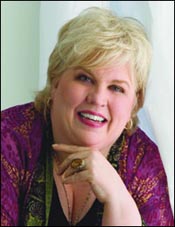
Brewer makes Isolde hers in stage debut
SAN FRANCISCO — Christine Brewer took her time mastering Isolde before making her stage debut in the role with the San Francisco Opera in October.
English Touring Opera are delighted to announce a season of lyric monodramas to tour nationally from October to December. The season features music for solo singer and piano by Argento, Britten, Tippett and Shostakovich with a bold and inventive approach to making opera during social distancing.
This tenth of ten Live from London concerts was in fact a recorded live performance from California. It was no less enjoyable for that, and it was also uplifting to learn that this wasn’t in fact the ‘last’ LfL event that we will be able to enjoy, courtesy of VOCES8 and their fellow vocal ensembles (more below …).
Ever since Wigmore Hall announced their superb series of autumn concerts, all streamed live and available free of charge, I’d been looking forward to this song recital by Ian Bostridge and Imogen Cooper.
Although Stile Antico’s programme article for their Live from London recital introduced their selection from the many treasures of the English Renaissance in the context of the theological debates and upheavals of the Tudor and Elizabethan years, their performance was more evocative of private chamber music than of public liturgy.
Evidently, face masks don’t stifle appreciative “Bravo!”s. And, reducing audience numbers doesn’t lower the volume of such acclamations. For, the audience at Wigmore Hall gave soprano Elizabeth Llewellyn and pianist Simon Lepper a greatly deserved warm reception and hearty response following this lunchtime recital of late-Romantic song.
For this week’s Live from London vocal recital we moved from the home of VOCES8, St Anne and St Agnes in the City of London, to Kings Place, where The Sixteen - who have been associate artists at the venue for some time - presented a programme of music and words bound together by the theme of ‘reflection’.
'Such is your divine Disposation that both you excellently understand, and royally entertaine the Exercise of Musicke.’
‘And there was war in heaven: Michael and his angels fought against the dragon; and the dragon fought and his angels, And prevailed not; neither was their place found any more in heaven … that old serpent … Satan, which deceiveth the whole world: he was cast out into the earth, and his angels were cast out with him.’
There was never any doubt that the fifth of the twelve Met Stars Live in Concert broadcasts was going to be a palpably intense and vivid event, as well as a musically stunning and theatrically enervating experience.
‘Love’ was the theme for this Live from London performance by Apollo5. Given the complexity and diversity of that human emotion, and Apollo5’s reputation for versatility and diverse repertoire, ranging from Renaissance choral music to jazz, from contemporary classical works to popular song, it was no surprise that their programme spanned 500 years and several musical styles.
The Academy of St Martin in the Fields have titled their autumn series of eight concerts - which are taking place at 5pm and 7.30pm on two Saturdays each month at their home venue in Trafalgar Square, and being filmed for streaming the following Thursday - ‘re:connect’.
The London Symphony Orchestra opened their Autumn 2020 season with a homage to Oliver Knussen, who died at the age of 66 in July 2018. The programme traced a national musical lineage through the twentieth century, from Britten to Knussen, on to Mark-Anthony Turnage, and entwining the LSO and Rattle too.
With the Live from London digital vocal festival entering the second half of the series, the festival’s host, VOCES8, returned to their home at St Annes and St Agnes in the City of London to present a sequence of ‘Choral Dances’ - vocal music inspired by dance, embracing diverse genres from the Renaissance madrigal to swing jazz.
Just a few unison string wriggles from the opening of Mozart’s overture to Le nozze di Figaro are enough to make any opera-lover perch on the edge of their seat, in excited anticipation of the drama in music to come, so there could be no other curtain-raiser for this Gala Concert at the Royal Opera House, the latest instalment from ‘their House’ to ‘our houses’.
"Before the ending of the day, creator of all things, we pray that, with your accustomed mercy, you may watch over us."
The doors at The Metropolitan Opera will not open to live audiences until 2021 at the earliest, and the likelihood of normal operatic life resuming in cities around the world looks but a distant dream at present. But, while we may not be invited from our homes into the opera house for some time yet, with its free daily screenings of past productions and its pay-per-view Met Stars Live in Concert series, the Met continues to bring opera into our homes.
Music-making at this year’s Grange Festival Opera may have fallen silent in June and July, but the country house and extensive grounds of The Grange provided an ideal setting for a weekend of twelve specially conceived ‘promenade’ performances encompassing music and dance.
There’s a “slide of harmony” and “all the bones leave your body at that moment and you collapse to the floor, it’s so extraordinary.”
“Music for a while, shall all your cares beguile.”
The hum of bees rising from myriad scented blooms; gentle strains of birdsong; the cheerful chatter of picnickers beside a still lake; decorous thwacks of leather on willow; song and music floating through the warm evening air.
SAN FRANCISCO — Christine Brewer took her time mastering Isolde before making her stage debut in the role with the San Francisco Opera in October.
And she was wise in so doing, for her incarnation of Wagner’s most demanding woman was clearly the sensation of the SFO season.
Although a major Ariadne for the past decade, Brewer had never sung a note of Isolde in public until 2000, when she performed the role in concert — one act an evening — with the BBC Orchestra at London’s Barbicon. Critics celebrated that event as the best Wagner heard in the British capital in four decades. Brewer then did Isolde — again an act at a time — with Esa-Pekka Salonen and the Los Angeles Philharmonic in Peter Sellars’ “Tristan Project.” Only in August 2005 did she put it all together for the first time in a concert “Tristan” at the Edinburgh Festival. Jonathan Nott conducted the Bamberg Symphony. And prior to the San Francisco debut she recorded the “Liebestod” with Donald Runnicles and the Atlanta Symphony and a complete “Tristan” with the BBC Orchestra and Runnicles for Warner Classics with. John Treleaven as Tristan.
Brewer’s approach to a new role — the subject of many interviews with the soprano — focuses intensely on the text divorced from the music. She reads it over and over in the original language and then in her own literal translation. At the SFO the success of her method was underscored by the profundity that she brought to the exposition of the opera’s plot. For many singers Isolde’s recall of her earlier meeting with Tristan, how she spared his life and nursed him after he had killed her betrothed Morold, is something to be gotten through before delivering the curse upon them both. In her reconstruction of events Brewer made clear that this is the heart of “Tristan.” The love potion and what follows are only the unraveling of the tale spun here. Her growing agitation demanded shipboard confrontation with Tristan, without which everyone would have lived unhappily ever after.
Brewer is not one to wear her heart on her sleeve. Isolde’s torment seethed within her, and she laid bare this tempest of pain and passion step by step, building half the first act to the curse, which she delivered with shattering fury. Yet she sang the curse — just as in Act Two she sang the plunge of the torch into the abyss. She did not declaim; she eschewed Sprechstimme, and there was radiant beauty in every note.
Although American Thomas Moser will hardly go down in music history as a great Tristan, at the SFO he was very good in the role — solid and fully reliable. And he had the stamina to carry through to the end of Act Three — even in this uncut performance heard on October 10. Soon to sing Parsifal in Vienna with Runnicles on the podium, Moser is a tenor of taste and intelligence and a near-ideal partner for Brewer.
In this production Israel-born bass Boaz Daniel made his North American debut as Kurvenal, the role that he sang both in the BBC concert “Tristan” and on the Warner recording. He was the loyal servant of his master without overplaying his obedience, and in Act One his mockery of Isolde was comfortably low key. Daniel seems destined to be heard in leading roles for decades to come.
And it is not size alone that made Kristinn Sigmundsson a monumental King Marke — although the bass from Iceland is of dimensions that suggest Fafner and Fasolt in a single figure. And the voice is of equal proportions. In keeping with the overall perspective of this staging Sigmundsson’s second-act lament spoke not of self-pity, but of a deep and painful wound — something beyond his comprehension. (During the season Sigmundsson also sang a Sparfucile in the SFO “Rigoletto” that made the figure even more sinister than Verdi perhaps intended.)
England’s Jane Irwin, a regular in several European “Ring” productions, made her North American debut here as Brangäne. Her second-act warning to the enraptured couple floated with lilting lyricism into the reaches of the War Memorial Opera House.
Matthew O’Neill and Sean Pannikar, members of the SFO Adler studio, sang Melot and the Shepherd; veteran chorus member Jere Torkelsen was the steersman.
Thor Steingraber directed this re-staging of David Hockney’s production, new at the Los Angeles Opera in 1988. Hockney’s stunning use of primary colors, along with regally stylized costumes, complemented the static nature of Wagner’s score, a quality that allegedly prompted actress Beatrice Lilly to observe after Act One that for Germans love was obviously a state roughly akin to paralysis.
Much, of course, could still be said about this “Tristan” — the hurricane force of desire behind the “Liebesnacht,” the eye-moistening authenticity of lament in the “Liebestod, but what made it even greater than the sum of its many superb parts was the continuity brought to the work by Runnicles, one of today’s top Wagnerian conductors. Runnicles, praised in England as “a psychoanalyst summoning Leitmotivs like hidden memories,” allowed Wagner’s score to unfold with full force. For him this is true music drama, not an assembly of “greatest hits” separated by seemingly interminable — and thus often abbreviated — dialogue.
The SFO staging further profited from the fact that most members of the cast had been involved — in various constellations — in the “Tristan” productions in Edinburgh and London. Their interaction recalled the glories of ensemble perfection in the pre-jet-set age.
Runnicles, by the way, has announced his decision to leave the SFO music directorship at the end of the 2008-‘09 season. He has held the position since 1992.
Wes Blomster