01 Oct 2006
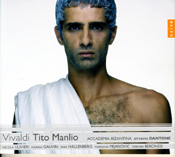
VIVALDI: Tito Manlio
Tito Manlio (Titus Manlius), dramma per musica in 3 acts. Music composed by Antonio Vivaldi (1678–1741) based on a libretto by Matteo Noris (? – 1714).
Ethel Smyth’s last large-scale work, written in 1930 by the then 72-year-old composer who was increasingly afflicted and depressed by her worsening deafness, was The Prison – a ‘symphony’ for soprano and bass-baritone soloists, chorus and orchestra.
Mozart and Salieri, an opera in one act consisting of two scenes.
Nicolai Rimsky-Korsakov (1844-1908), composer. Libretto derived from Alexander Puskhin's play of the same name.
First performance: 7 December 1898 in Moscow.
Boris Godunov, an opera in four acts with prologue
Modest Mussorgsky, composer. Libretto by the composer, based on Alexander Pushkin's drama Boris Godunov and Nikolai Karamazin's History of the Russian Empire
First performance: 8 February 1874 at the Mariinsky Theatre, St. Petersburg
La Gioconda, dramma lirico in four acts.
Music composed by Amilcare Ponchielli (1834–1886). Libretto by Arrigo Boito (under the pseudonym Tobia Gorrio), based upon Victor Hugo's Angelo, Tyrant of Padua (1835).
Don Carlo, an opera in four acts. Music composed by Giuseppe Verdi (1813–1901). Libretto by Joseph Méry and Camille Du Locle after Friedrich von Schiller’s dramatic poem Don Carlos, Infant von Spanien. Revised version in four acts (French text revised by Du Locle, Italian translation by Achille de Lauzières and Angelo Zanardini).
Un ballo in maschera, a melodramma in three acts.
Music composed by Giuseppe Verdi. Libretto by Antonio Somma, based upon the work of Eugène Scribe Gustave III ou Le bal masqué (1833)
The most notable of all Péricholes of Offenbach’s sentimental operetta is surely the legendary Hortense Schneider who created the role back in 1868 at Paris’ Théâtre des Varietés. Alas there is no digital record.
John Eliot Gardiner's Schumann series with the London Symphony Orchestra, demonstrate the how Schumann’s Lieder and piano music influenced his approach to symphonic form and his interests in music drama.
Passion! Pain! Poetry! (but hold the irony . . .)
Brilliant Emmerich Kálmán’s Ein Herbstmanöver from the Stadttheater, Giessen in 2018, conducted by Michael Hofstetter now on Oehms Classics, in a performing version by Balázs Kovalik.
Medea: Melodramma tragico in three acts.
The 68th Wexford Festival Opera, which runs until Sunday 3rd November, is bringing past, present and future together in ways which suggest that the Festival is in good health, and will both blossom creatively and stay true to its roots in the years ahead.
O Lieb! presents the lieder of Franz Liszt with a distinctive spark from Cyrille Dubois and Tristan Raës, from Aparté. Though young, Dubois is very highly regarded. His voice has a luminous natural elegance, ideal for the Mélodie and French operatic repertoire he does so well. With these settings by Franz Liszt, Dubois brings out the refinement and sophistication of Liszt’s approach to song.
The final performance of San Francisco Opera’s deeply flawed production of the Gounod masterpiece became, in fact, a triumph — for the Romeo of Pene Pati, the Juliet of Amina Edris, and for Charles Gounod in the hands of conductor Yves Abel.
From Albion, The Song of Love featuring songs by Ralph Vaughan Williams, with Kitty Whately, Roderick Williams and pianist William Vann. Albion is unique, treasured by Vaughan Williams devotees for rarely heard repertoire from the composer’s vast output, so don’t expect mass market commercial product. Albion recordings often highlight new perspectives.
Die Tote Stadt, an opera in three acts.
Music composed by Erich Wolfgang Korngold (1897-1957). Libretto by Paul Schott (Julius and E. W. Korngold) after the novel Bruges la morte by Georges Rodenbach.
Manon Lescaut, dramma lirico in quattro atti
Elektra: Tragedy in one act.
Though Luigi Cherubini long outlived the carnage of the French Revolution his 1797 opéra comique [with spoken dialogue] Médée fell well within the “horror opera” genre that responded to the spirit of its time. These days however Médée is but an esoteric and extremely challenging late addition to the international repertory.
Jake Heggie and Gene Scheer have become an indispensable presence in the contemporary opera world, and their latest premiere, If I Were You, found the duo at the very top of their game.
Tito Manlio (Titus Manlius), dramma per musica in 3 acts. Music composed by Antonio Vivaldi (1678–1741) based on a libretto by Matteo Noris (? – 1714).
First Performance: 20 February 1719(?), Teatro Arciducale, Mantua.
| Principal Characters: | |
| Tito Manlio, Consul of Rome | Bass |
| Vitellia, lover of Geminio | Contralto |
| Manlio, lover of Servilia and son of Tito Manlio | Soprano |
| Lucio, the Latin lover of Vitellia | Mezzo Soprano |
| Decio, Captain of the Falangi | Mezzo Soprano |
| Lindo, servant to Vitellia | Bass |
| Geminio, Captain of the Latins and lover of Vitellia | Tenor |
| Servilia, sister of Geminio and fiancée of Manlio | Mezzo Soprano |
Background:
Here we present Antonio Vivaldi's Tito Manlio (RV 738-A), as performed under the direction of Ottavio Dantone and released by Naïve as part of its Vivaldi Collection. The libretto to Tito Manlio was written by Matteo Noris in 1696 for performance at the Grand Prince Ferdinando de’ Medici’s theater at his villa in Pratolino. The music was composed by Carlo Pollarola, which was performed in Venice for several consecutive seasons. Thus, when Vivaldi took up the libretto in 1719, it had been in circulation for more than 20 years.
The source of the libretto is from Book VIII of Livy's The History of Rome. Noris, however, takes considerable license in departing from the facts and, indeed, the underlying rhetorical point presented in Livy's account.
Two essays are presented on this work. The first is by Professor Beth Glixon entitled "Pratolino, Venice, Mantua: Musings on Vivaldi’s Tito Manlio (1718/19)," which, among other things, compares the setting by Pollarola with that of Vivaldi. The second is by Professor Andrew Dell'Antonio entitled "Pairing and Elaboration," which looks at the manner in which Vivaldi "implements by musical means the dramatic coupling of the two female roles in the libretto."
Links:
Synopsis:
Titus Manlius is engaged in war with the people of Latium. Conflicts of love and duty arise, with his daughter Vitellia in love with the Latin commander Geminius, but loved by the Latin Lucius. Manlius, the son of Titus, kills Geminius, disobeying his father, and is condemned to death, in spite of the pleas of his beloved Servilia, sister of Geminius. He rejects the offer of Lucius to free him. There is eventual reconciliation between father and son.