I was lured by England’s only national company outside of London, a new
production by Christopher Alden of Monteverdi’s seminal masterpiece, and a debut in the role
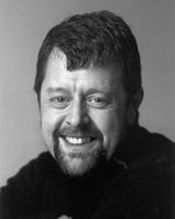
for one of England’s most talented yet under-rated tenors: Paul Nilon. Not one of the three
attractions disappointed.
Opera North is on a roll at the moment; it has a beautiful old theatre as its home, decorated in a
palette of deep red, green and gold, not to mention some fabulous original Victorian tiling now
exposed again in all their glory, and is planning even more work in a Phase Two to bring back to
life the adjoining Assembly Rooms as another rehearsal and performance space. Aligned to
these physical plans is their continuing commitment to challenge preconceptions of opera,
advocating lesser-known works (later this season they are presenting Kaiser’s “Croesus”) and to
breathe new life into the classics. You don’t get very much more classic than the opera that
virtually invented the art-form, and Christopher Alden has most decidedly set out to challenge a
few well-worn notions of this favola in musica.
First of all, the evening’s staging is seamless and without interruption by interval which makes
for a long sit — some one and three quarter hours. Secondly, Alden gives us just one
physical location with no traditional “descent” into Hades, no Styx, no dark and flaming scenes
or flying deities. As the curtain rises we are taken to a large room — possibly a palace or
ducal space — floored, walled and canopied in a kind of giant parquet wood effect in
shades of brown. The costumes are non-specific modern: jeans or dresses with Tudor touches in
the form of the occasional ruff or slashed velvet doublet. A few high niches in the side walls are
the only entrances and exits for a necessarily agile cast of singers — each niche must have
been at least four feet from the boards. Apart from that, just an array of sofas and easy chairs
provided visual detail and a base for the assembly of singers who in turn played the wedding
guests, the chorus, the Furies and, the audience. Audience? Yes, in a way they were just that,
for in this production Alden and Nilon combine their talents to persuade us that this is not Orfeo
as hero, great lover or mystical muse; rather, he is Orfeo the Artist, the Performer, and subject to
all the angst therein. His great aria Possente spirto is delivered in the form of a nervous singer
giving an audition, complete with hastily-erected music stand, shaking hands and despairing
glances at an unmoved Caronte. Equally challenging to the paying audience was the way Alden
played with our expectations of the ill-fated Eurydice: she seems anything but delighted to be
marrying Orfeo, more than happy when dead, and — a typical Alden touch — when
masking-taped to a wall to denote her passage into the Underworld she is transmogrified into the
character of Speranza who encourages Orfeo to convince the infernal gatekeeper Caronte to let
him follow his love. Caronte spends his time sitting in one of the ubiquitous armchairs,
apparently reading the Obituaries column of the Times. A nice touch.
For some in the first night audience (a gratifyingly full house) these ideas pushed them out of
their comfort zone; but even if Alden’s love-affair with masking tape (used not only to fix poor
Eurydice upright to a wall, but also to delineate Pluto’s kingdom and occasionally confine Orfeo)
irritated some, then there could be no argument with the quality of the music making. Quite
simply it was fine, idiomatic, and intensely stylistic throughout without ever making the mistake
of sounding overly “old” or pedantic. Chris Moulds directed a twenty-strong period band, each
element of which accompanied different characters, different “affects”, in different parts of the
story — recorders, cornets, sackbuts and harp adding a rich sonority to the strings and
ubiquitous theorbos.
Of the singers, Paul Nilon of course has to carry much of the opera. This was his first attempt at
the character, which is surprising when one considers his great experience in baroque and
classical roles, but he rose to the challenge and indeed threw down another to singers currently
regarded as masters of the role. Nilon is superb when portraying disturbed or emotionally
tangled psyches — his Grimoaldo in Handel’s “Rodelinda” springs to mind. His Possente
Spirto e formidabil Nume, the great central pivot of the opera, was superbly sung, superbly acted.
If it lacked the icy elegance of an Ainsley or Bostridge, in the context of this production’s most
human of heroes, it convinced entirely. The desperation, the hope, the desire of every performer
to please an audience, in this case the implacable gatekeeper, was in every note and gesture of
this intensely written tour de force for the human voice.
The supporting roles were all consistently well sung and acted — Anna Stephany as
Eurydice/Speranza is fulfilling her promise as a young English singer to watch, her voice full and
coloured, nicely differentiated between the roles. Among the other female voices, Ann Taylor in
the dual roles of La Messagiera and Prosperina had a glorious bloom to her voice, and an
amusing stage presence when required. The minor male roles were equally consistent in quality
of singing — standouts last night being basses Graeme Broadbent (a cavernously voiced
Caronte), and Andrew Foster-Williams (a rather amusingly disinterested and randy Plutone).
There were no obvious vocal weak links and this alone is a testament to the strength in depth that
Opera North can command at present.
This quality was not lost on the local audience or guests: at the end of the performance there were
warm ovations for all concerned, well-deserved cheers for our Yorkshire-born Orfeo — and a
few cheerfully-received boos for the director. Certainly one can pick holes in some of the
director’s conceits in this production: the eliding of Eurydice’s rescue and second death for
instance, but safe to say both Alden and Opera North have upheld their avowed traditions in fine
style.
© Sue Loder 2007