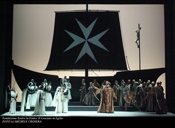
20 May 2007
Rising to the occasion – Michael Maniaci saves the day at La Fenice
It is every young opera singer’s dream.
English Touring Opera are delighted to announce a season of lyric monodramas to tour nationally from October to December. The season features music for solo singer and piano by Argento, Britten, Tippett and Shostakovich with a bold and inventive approach to making opera during social distancing.
Conductor Oliver Zeffman has commissioned the very first opera for a socially distanced world, which is now available to watch exclusively on Apple Music. Eight Songs From Isolation has been written by eight leading composers, specifically for streaming - rather than live performance - and is the first opera written for a time when the performers were unable to meet in person.
Leading freelance musicians unite in Parliament Square to call for targeted support for colleagues in the arts and entertainment sector.
Duo Lewis Murphy (composer) and Laura Attridge (writer) have launched a charitable song project entitled Notes From Isolation. The resulting songs, featuring some of the UK's top singing talent, are being released online between August and October 2020 and can be enjoyed free of charge.
The Royal Opera House is thrilled to announce an exciting, wide-ranging new line-up for its autumn programme. For the first time, extraordinary performances will be accessible online for a global audience through livestreams and for socially distanced live audiences at our home in Covent Garden. In a global first, we present a new opera in hyper-reality, alongside repertory favourites from both artistic companies.
Some of the most famous and outstanding stars from the opera world are to take part in a very special evening from Wexford Festival Opera, including Aigul Akhmetshina, Joseph Calleja, Daniela Barcellona, Juan Diego Flórez, Igor Golovatenko, Ermonela Jaho, Sergey Romanovsky, and many more.
Following its successful launch in 2019, OperaStreaming streams nine operas on YouTube from the historic opera houses of Emilia-Romagna during the 2020-21 season, with fully-staged productions of Verdi's La traviata in October from Modena and Verdi'sOtello from Bologna in...
‘A brief history of song’ is the subtitle of the 2020 Oxford Lieder Festival (10th-17th October), which will present an ambitious, diverse and imaginative programme of 40 performances and events.
Bampton Classical Opera returns to the Baroque splendour of London’s St John’s Smith Square on November 6 with a concert performance of Gluck’s one-act opera The Crown, the first in the UK since 1987. The performance will also be filmed and available to watch on demand on the Bampton website from 9 November.
While many of us spent lockdown at home taking it a little easier, composer Andrew Synnott wrote an opera.
Owen Wingrave is part of the new Interim Season of 19 brand new events, all free to view online between September and December 2020.
The Arts Council has awarded innovative UK charity Music and Theatre For All (MTFA) a major new grant to develop three ambitious new projects in the wake of Covid 19.
English National Opera (ENO) will reopen the London Coliseum to socially distanced audiences on 6 and 7 November for special performances of Mozart’s Requiem. These will provide audiences with an opportunity to reflect upon and to commemorate the difficulties the nation has faced during the pandemic.
The Royal Opera House is proud to continue its curated #OurHouseToYourHouse programme into the autumn, bringing audiences the best of the ROH through a new series of Friday Premieres and cultural highlights.
After six months of closure, the Royal Opera House is thrilled to be opening its doors to the public as part of Open House London weekend, giving visitors a taste of one of the world’s most famous theatres for free.
The Academy of St Martin in the Fields is thrilled to announce re:connect - an eight concert series with live socially distanced audiences at its namesake church, St. Martin-in-the-Fields. The autumn concerts will take place at 5pm & 7:30pm on two Saturdays per month with guest artists including baritone Roderick Williams, soprano Carolyn Sampson and composer-conductor-pianist Ryan Wigglesworth performing a wide range of repertoire.
Music and poetry unite and collide across centuries, from the Medieval to the Enlightenment to the present day. This year, the Oxford Lieder Festival will present a thrilling and innovative programme comprising more than forty events streamed over eight days.
The English Concert with artistic director Harry Bicket is delighted to announce a series of concerts from 1-15 October 2020. The concerts take place in historic London venues with star soloists and will be performed and streamed live to a paying audience at 7pm GMT on each performance date. The programmes include first-class vocal and instrumental works from the two pillars of the English Baroque, covering different aspects of the repertoire.
Glyndebourne has announced plans for a ‘staycation’ series of socially-distanced indoor performances, starting on 10 October 2020.
The Royal Opera House is delighted to announce two packed evenings of opera and ballet, live from our stage in Covent Garden and available to view wherever you are in the world online.
It is every young opera singer’s dream.
The phone call at midnight, the frantic request to drop everything and “just come–we have a problem, we need you to cover all performances and it’s curtain up in just two weeks……”
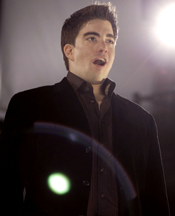
Yet that usually happens when the house in question knows that the young singer already has the role in his or her repertoire, and it will just be a matter of polishing up the vocal muscle memory, and learning the stage-moves. No real problem – and exactly the sort of opportunity which is the life blood of opera. The king is dead (or at least hors de combat), long live the king. But a few months ago young American male soprano Michael Maniaci had all this, and a lot more, to cope with and it took him to the very limits of his mental and physical powers in a way that he will never forget.
It was the very end of December, and he was about to set off for Canada to record his first CD of Handel arias with the ATMA Classique label in Montreal. He was looking forward to his Met debut as Nireno in Handel’s “Giulio Cesare” singing alongside Ruth Ann Swenson and David Daniels in March and his diary was pretty much in order. Then came the phone call – was he free for a last minute departure for Venice and the acclaimed Fenice, to learn and perform the role of Armando in Meyerbeer’s “Crociato in Egitto”? It was a difficult call; for a start, he’d never sung the role. In fact, he’d never heard the opera, or even ever sung any Meyerbeer at all. But, encouraged by the Fenice’s inference that the two scenes they sent him by email constituted the bulk of the role, he decided to take the plunge and, with grateful thanks to the understanding folk at the record label, postponed the recording and headed for the airport. When he landed he went straight to the opera house, and that is when the dream started to look more like a nightmare and an artistic “Death in Venice” began to seem a distinct possibility.
 Tired and jet-lagged, he sat himself down at the back of the famous auditorium, and watched the
rehearsals with both 1st and 2nd casts well underway. It was with shock that he suddenly
realised that his role, the title role of the Crusader, was the largest sing in the production and with
just two weeks to go before final orchestra dress rehearsal, he was looking at 350 pages of music
for a role he’d never heard or studied, and in a style he had never sung in. Panic seemed a
reasonable option – and a fast exit back to the airport. However, the director Pierre Luigi Pizzi
then asked him to take the stage and sing the opening scene for him (the one that he had been
sent) and Maniaci realised that this might be crunch time – and so he took the stage, sang the
music and, when he’d finished, Pizzi, without ceremony, walked to the stage, shook his hand,
and said simply “thank you for coming”. It was the stamp of approval and a huge vote of
confidence, and Michael Maniaci decided there and then to head for his canal side apartment
rather than the airport. Little did he know that worse was to come.
Tired and jet-lagged, he sat himself down at the back of the famous auditorium, and watched the
rehearsals with both 1st and 2nd casts well underway. It was with shock that he suddenly
realised that his role, the title role of the Crusader, was the largest sing in the production and with
just two weeks to go before final orchestra dress rehearsal, he was looking at 350 pages of music
for a role he’d never heard or studied, and in a style he had never sung in. Panic seemed a
reasonable option – and a fast exit back to the airport. However, the director Pierre Luigi Pizzi
then asked him to take the stage and sing the opening scene for him (the one that he had been
sent) and Maniaci realised that this might be crunch time – and so he took the stage, sang the
music and, when he’d finished, Pizzi, without ceremony, walked to the stage, shook his hand,
and said simply “thank you for coming”. It was the stamp of approval and a huge vote of
confidence, and Michael Maniaci decided there and then to head for his canal side apartment
rather than the airport. Little did he know that worse was to come.
The Fenice had, rightly enough, provided him with accommodation that would in other times have seemed idyllic but, as he shut the door, sat down, and reviewed his position he quite frankly admits now that he was near to a mental breakdown as the enormity of his task became fully apparent. He had a huge role, a huge score, to read, memorise and master to not only his own high standards, but to that of La Fenice. He had just fourteen days to be stage-perfect and as he walked out onto the veranda overlooking the canal, he says that for a moment he seemed to see his own body, metaphorically floating face down in the murky waters of a very, very, bad decision. It was probably the lowest point of the entire experience but when you are ambitious, talented and hungry you find reserves of strength that you never knew you had. Luckily for Maniaci, he found those reserves and took the only possible course for a young singer in that position: he buckled down, shut out the world and started to learn the music…..
In his own words, it was “ten days of hell”, alone in the apartment with only occasional coaching help from an over-stretched company pianist, trying to absorb new music, new words, and yet still somehow trying to get some sleep when the brain simply wouldn’t hear of it. Yet, after those ten days, he was able to return to the opera house and inform them that he had learnt the role and was ready to learn the staging. Understandably, there was some disbelief among musicians and staff. Watching his colleague in the first cast rehearse was helpful, and he was able to jot down notes of the staging – he still hadn’t been given any time on stage – and he went home each night to walk through the action in his apartment. Suddenly, he got a text message to say he was to take the stage at the next day’s technical rehearsal – at last! The conductor, Emmanuelle Villaume, started the proceedings with Maniaci’s colleague, but then stopped after the second scene and invited the American to come on stage and sing the big Act One trio with Patrizia Ciofi and Laura Poverelli. He had neither rehearsed it with them, nor with the orchestra. When they finished, the orchestra cheered and stamped their feet in approval and he was then invited to do the rest of the rehearsal and staging with the cast and orchestra. But better was to come – that night, the 9th of January, he was informed he had been chosen to join the A cast and sing the premiere in less than six days time. Next morning it was his first full run in costume with orchestra. Two days later it was public general dress rehearsal, and the production opened on the 14th.
This most demanding role that he had ever sung would be given seven times in twelve days, and recorded for CD and DVD for good measure. Most seasoned singers, even knowing a role, would find this a punishing schedule and Maniaci now thinks that it was only his youth (he is just thirty) and the heady mix of adrenaline and horror that got him and his voice through the whole production. That and the excellent support given to him by Maestri Villaume, Pizzi and his singing colleagues, particularly Patrizia Ciofi and Fernando Portari, who all offered both kindness and assistance in a situation which perhaps only they truly appreciated.
Interestingly, the management at La Fenice never disclosed to the paying public or the critics what Michael Maniaci had been asked to do, and had achieved. But that achievement did not go unnoticed by some. This from Francis Muzzu of Opera Now: “Concert (performances) so far have cast the Velluti role of Armando with a mezzo-soprano, but La Fenice took the fascinating option of using Michael Maniaci, a male soprano (not countertenor) whose technique and artistry vindicated the choice triumphantly …… Maniaci has impeccable phrasing, excellent coloratura, a confident top and an effective stage presence. Matching him was Patrizia Ciofi’s Palmide whose soprano grows in strength without any loss of flexibility or sweetness - their Act One duet …… was exquisite.”
I asked Michael Maniaci what, looking back, his final thoughts were. “It was the greatest musical, intellectual and dramatic challenge I have ever faced. Was it the strongest singing that I have ever done? Perhaps not. But have I ever been prouder of any accomplishment? Absolutely not.”
(Michael Maniaci can be seen next in the title role of Berlioz’s arrangement of Gluck’s “Orphée”
at Glimmerglass Opera, USA July/August 2007.
Opera North, (UK stage debut) as Atis in Kaiser’s “Croesus” directed by Tim Albury, conducted
by Harry Bicket, performances through October/November 2007.)
© Sue Loder 2007