10 May 2007
SANTA FE TO CHANGE MUSIC DIRECTORS
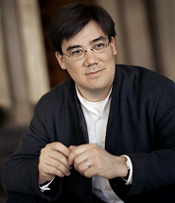
On May 9th, when Santa Fe Opera finally announced that Alan Gilbert had left his post as Music Director of that company, a long-standing rumor was made official.
English Touring Opera are delighted to announce a season of lyric monodramas to tour nationally from October to December. The season features music for solo singer and piano by Argento, Britten, Tippett and Shostakovich with a bold and inventive approach to making opera during social distancing.
Conductor Oliver Zeffman has commissioned the very first opera for a socially distanced world, which is now available to watch exclusively on Apple Music. Eight Songs From Isolation has been written by eight leading composers, specifically for streaming - rather than live performance - and is the first opera written for a time when the performers were unable to meet in person.
Leading freelance musicians unite in Parliament Square to call for targeted support for colleagues in the arts and entertainment sector.
Duo Lewis Murphy (composer) and Laura Attridge (writer) have launched a charitable song project entitled Notes From Isolation. The resulting songs, featuring some of the UK's top singing talent, are being released online between August and October 2020 and can be enjoyed free of charge.
The Royal Opera House is thrilled to announce an exciting, wide-ranging new line-up for its autumn programme. For the first time, extraordinary performances will be accessible online for a global audience through livestreams and for socially distanced live audiences at our home in Covent Garden. In a global first, we present a new opera in hyper-reality, alongside repertory favourites from both artistic companies.
Some of the most famous and outstanding stars from the opera world are to take part in a very special evening from Wexford Festival Opera, including Aigul Akhmetshina, Joseph Calleja, Daniela Barcellona, Juan Diego Flórez, Igor Golovatenko, Ermonela Jaho, Sergey Romanovsky, and many more.
Following its successful launch in 2019, OperaStreaming streams nine operas on YouTube from the historic opera houses of Emilia-Romagna during the 2020-21 season, with fully-staged productions of Verdi's La traviata in October from Modena and Verdi'sOtello from Bologna in...
‘A brief history of song’ is the subtitle of the 2020 Oxford Lieder Festival (10th-17th October), which will present an ambitious, diverse and imaginative programme of 40 performances and events.
Bampton Classical Opera returns to the Baroque splendour of London’s St John’s Smith Square on November 6 with a concert performance of Gluck’s one-act opera The Crown, the first in the UK since 1987. The performance will also be filmed and available to watch on demand on the Bampton website from 9 November.
While many of us spent lockdown at home taking it a little easier, composer Andrew Synnott wrote an opera.
Owen Wingrave is part of the new Interim Season of 19 brand new events, all free to view online between September and December 2020.
The Arts Council has awarded innovative UK charity Music and Theatre For All (MTFA) a major new grant to develop three ambitious new projects in the wake of Covid 19.
English National Opera (ENO) will reopen the London Coliseum to socially distanced audiences on 6 and 7 November for special performances of Mozart’s Requiem. These will provide audiences with an opportunity to reflect upon and to commemorate the difficulties the nation has faced during the pandemic.
The Royal Opera House is proud to continue its curated #OurHouseToYourHouse programme into the autumn, bringing audiences the best of the ROH through a new series of Friday Premieres and cultural highlights.
After six months of closure, the Royal Opera House is thrilled to be opening its doors to the public as part of Open House London weekend, giving visitors a taste of one of the world’s most famous theatres for free.
The Academy of St Martin in the Fields is thrilled to announce re:connect - an eight concert series with live socially distanced audiences at its namesake church, St. Martin-in-the-Fields. The autumn concerts will take place at 5pm & 7:30pm on two Saturdays per month with guest artists including baritone Roderick Williams, soprano Carolyn Sampson and composer-conductor-pianist Ryan Wigglesworth performing a wide range of repertoire.
Music and poetry unite and collide across centuries, from the Medieval to the Enlightenment to the present day. This year, the Oxford Lieder Festival will present a thrilling and innovative programme comprising more than forty events streamed over eight days.
The English Concert with artistic director Harry Bicket is delighted to announce a series of concerts from 1-15 October 2020. The concerts take place in historic London venues with star soloists and will be performed and streamed live to a paying audience at 7pm GMT on each performance date. The programmes include first-class vocal and instrumental works from the two pillars of the English Baroque, covering different aspects of the repertoire.
Glyndebourne has announced plans for a ‘staycation’ series of socially-distanced indoor performances, starting on 10 October 2020.
The Royal Opera House is delighted to announce two packed evenings of opera and ballet, live from our stage in Covent Garden and available to view wherever you are in the world online.
On May 9th, when Santa Fe Opera finally announced that Alan Gilbert had left his post as Music Director of that company, a long-standing rumor was made official.
While no specific reason for Gilbert’s departure was given (“too busy elsewhere”), the atmosphere was all peaches and cream as indeed it should have been, for Gilbert has done a distinguished job for the venerable American summer opera festival over his short four years in musical command. No successor names have surfaced in any serious way, and senior conductor Kenneth Montgomery, a regular at Santa Fe for many years, was appointed interim manger for the orchestra, but is not considered a likely appointment for the musical directorship.
In response to a question at a May 9 news conference, Santa Fe General Director Richard Gaddes discussed the requirements for the position, making clear it is largely concerned with developing the orchestra and mentoring it, and not a lot more. Mo. Gilbert, the New York native, violist and conductor, who is making quite a name for himself in Europe and seems destined for a major American symphonic post eventually, had other ideas — and one has the impression from the start there was not a close alliance between Gilbert’s plans and ambitions at Santa Fe, and just how much General Director Gaddes would allow. In interviews Gilbert had spoken to this reporter several times about adding all-orchestral evenings to the Opera’s schedule, and he had expansive ideas about repertory. Tristan und Isolde, in festival form that would begin at 5 p.m., break for a long dinner first-intermission, then continue to conclude at about 11 p.m. was high on Gilbert’s list of ideas, he told me, and casting was even being considered. The Wagner and several other large projects never got off the drawing board.
Gilbert was not, in my view, an ideal music director for SFO as he was not much experienced or knowledgeable in singing or vocal culture. His great strength was command of the music and the orchestra, but there was a certain amount of learning-on-the-job with respect to his operatic music making. Even so, he delivered some strong evenings of operatic enjoyment and might be expected to grow in such matters. It will not be at Santa Fe.
What this means for the Festival is that Director Gaddes will continue to make repertory and casting decisions, strongly seconded, as he indicated at the press conference, by his artistic second-in-command, Brad Woolbrite, as well as be prime funds-raiser and CEO. Since its founding more than fifty years ago, Santa Fe Opera has followed a formula — a quite successful one — that combines several familiar repertory pieces with a world or American premiere of an operatic rarity or a new opera, plus the occasional presentation of an original new commission. Over the years much attention has been paid to unusual repertory, with a solid core of Bohemes and Carmens to help pay the bills. There is no reason this will change.
The other limiting factor at Santa Fe might be summed up by describing it as a ‘catered’ opera company. Everything is prepared elsewhere and brought in, one might say. Quaint little Santa Fe, in the mountainous plateaus and deserts of Northern New Mexico, has no depth of musical resources, chorus, dance or related professions to call on. Just to meet the choral requirements of Wagner’s Lohengrin or Tannhauser would be virtually impossible without importing dozens of additional singers, not to speak of added musicians for the orchestra. This is true across the board of logistical and artistic requirements. So there is strong logic, indeed, to the philosophy of repertory and scale that has always guided the SFO, though at times it can seem limiting. On the other hand, take a look at the local scenery — heck of a lot better than 61st and Broadway!
In the long term, whether one music director or another (provided there IS one of adequate talent and insight), will not make much difference. But for those who expected Gilbert to become a bright light and guide-on for SFO, May brought a sense of disappointment.
J.A. Van Sant © 2007