25 May 2007
Virginia Arts Festival celebrates “Pocahontas”
Norfork - It’s America’s biggest birthday since the 1976 bicentennial celebration of the Declaration of Independence:
English Touring Opera are delighted to announce a season of lyric monodramas to tour nationally from October to December. The season features music for solo singer and piano by Argento, Britten, Tippett and Shostakovich with a bold and inventive approach to making opera during social distancing.
This tenth of ten Live from London concerts was in fact a recorded live performance from California. It was no less enjoyable for that, and it was also uplifting to learn that this wasn’t in fact the ‘last’ LfL event that we will be able to enjoy, courtesy of VOCES8 and their fellow vocal ensembles (more below …).
Ever since Wigmore Hall announced their superb series of autumn concerts, all streamed live and available free of charge, I’d been looking forward to this song recital by Ian Bostridge and Imogen Cooper.
Although Stile Antico’s programme article for their Live from London recital introduced their selection from the many treasures of the English Renaissance in the context of the theological debates and upheavals of the Tudor and Elizabethan years, their performance was more evocative of private chamber music than of public liturgy.
Evidently, face masks don’t stifle appreciative “Bravo!”s. And, reducing audience numbers doesn’t lower the volume of such acclamations. For, the audience at Wigmore Hall gave soprano Elizabeth Llewellyn and pianist Simon Lepper a greatly deserved warm reception and hearty response following this lunchtime recital of late-Romantic song.
For this week’s Live from London vocal recital we moved from the home of VOCES8, St Anne and St Agnes in the City of London, to Kings Place, where The Sixteen - who have been associate artists at the venue for some time - presented a programme of music and words bound together by the theme of ‘reflection’.
'Such is your divine Disposation that both you excellently understand, and royally entertaine the Exercise of Musicke.’
‘And there was war in heaven: Michael and his angels fought against the dragon; and the dragon fought and his angels, And prevailed not; neither was their place found any more in heaven … that old serpent … Satan, which deceiveth the whole world: he was cast out into the earth, and his angels were cast out with him.’
There was never any doubt that the fifth of the twelve Met Stars Live in Concert broadcasts was going to be a palpably intense and vivid event, as well as a musically stunning and theatrically enervating experience.
‘Love’ was the theme for this Live from London performance by Apollo5. Given the complexity and diversity of that human emotion, and Apollo5’s reputation for versatility and diverse repertoire, ranging from Renaissance choral music to jazz, from contemporary classical works to popular song, it was no surprise that their programme spanned 500 years and several musical styles.
The Academy of St Martin in the Fields have titled their autumn series of eight concerts - which are taking place at 5pm and 7.30pm on two Saturdays each month at their home venue in Trafalgar Square, and being filmed for streaming the following Thursday - ‘re:connect’.
The London Symphony Orchestra opened their Autumn 2020 season with a homage to Oliver Knussen, who died at the age of 66 in July 2018. The programme traced a national musical lineage through the twentieth century, from Britten to Knussen, on to Mark-Anthony Turnage, and entwining the LSO and Rattle too.
With the Live from London digital vocal festival entering the second half of the series, the festival’s host, VOCES8, returned to their home at St Annes and St Agnes in the City of London to present a sequence of ‘Choral Dances’ - vocal music inspired by dance, embracing diverse genres from the Renaissance madrigal to swing jazz.
Just a few unison string wriggles from the opening of Mozart’s overture to Le nozze di Figaro are enough to make any opera-lover perch on the edge of their seat, in excited anticipation of the drama in music to come, so there could be no other curtain-raiser for this Gala Concert at the Royal Opera House, the latest instalment from ‘their House’ to ‘our houses’.
"Before the ending of the day, creator of all things, we pray that, with your accustomed mercy, you may watch over us."
The doors at The Metropolitan Opera will not open to live audiences until 2021 at the earliest, and the likelihood of normal operatic life resuming in cities around the world looks but a distant dream at present. But, while we may not be invited from our homes into the opera house for some time yet, with its free daily screenings of past productions and its pay-per-view Met Stars Live in Concert series, the Met continues to bring opera into our homes.
Music-making at this year’s Grange Festival Opera may have fallen silent in June and July, but the country house and extensive grounds of The Grange provided an ideal setting for a weekend of twelve specially conceived ‘promenade’ performances encompassing music and dance.
There’s a “slide of harmony” and “all the bones leave your body at that moment and you collapse to the floor, it’s so extraordinary.”
“Music for a while, shall all your cares beguile.”
The hum of bees rising from myriad scented blooms; gentle strains of birdsong; the cheerful chatter of picnickers beside a still lake; decorous thwacks of leather on willow; song and music floating through the warm evening air.
Norfork - It’s America’s biggest birthday since the 1976 bicentennial celebration of the Declaration of Independence:
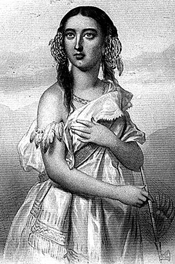
the 400th anniversary of the founding of Jamestown, the first permanent English-speaking settlement in the New World. And to commemorate the landing of those 104 adventurous Englishman the Virginia Arts Festival and the Virginia Opera co-commissioned “Pocahontas,” a tribute to the young Native American woman who charmed the new arrivals. The favorite daughter of Algonquian chief Powhatan, she learned English, converted to Christianity, married Virginia colonist John Rolfe and gave birth to a son, whom both Thomas Jefferson and Robert E. Lee claimed as an ancestor. Renamed Rebecca by a clergyman who saw her as the mother of two nations, Pocahontas traveled to England, where she was presented at court and, as she prepared to return to Jamestown, died suddenly at 24 in 1817. She is buried at Gravesend, and it is there that the one-act chamber opera by composer Linda Tutas Haugen and librettist Joan Vail Thorne begins.
From there it moves back to Jamestown and the early hostile confrontation between natives and settlers. Pocahontas appears now as an adolescent, a tomboy attractive to both parties and simultaneously as a mature woman respected on both side of the Atlantic. This interplay between the young and mature character is particularly effective in underscoring her role in two cultures.
Beyond the outer facts of her brief life, little is known about the “real” Pocahontas. Contemporary accounts were — in the style of the day — elaborately embellished, and later generations — including the 1995 Disney film — have added undocumented ornamentation. And although Haugen and Thorne obviously did an immense amount of study — including on-site observation of artifacts and landscape, they have made no effort to fill in blanks. Their endeavor focuses not on linear narration, but rather on an evocation of the unusual woman that Pocahontas was. While committed to cultural accuracy, the creative team has sought not to write history, but to explore the mystery of this woman who did much to establish peace between two peoples.
And the mesmerizing quality of Haugen’s score stresses that basic questions about Pocahontas remain open. “I ask myself who I am and I do not know the answer,” she sings. “There will never be an answer; I will always be ... a question.”
Further major players in the story as told by Thorne are Pocahontas’ father and mother, husband Rolfe and John Smith, head honcho of the Jamestown adventure.
Acclaimed a success by the enthusiastic audience that packed Norfork’s Roper Performing Arts Center for the world premiere on May 19, “Pocahontas” is an opera like no other. It is a pastiche that combines song and extensive spoken dialogue in a superbly crafted score. Haugen, noted for her use of ethnic voices and instruments in previous works, went to the tribes still resident in East for motifs that she has woven into the work, the instrumentation of which calls for specially crafted Native American flutes, drums and shakers. Haugen further includes a hymn tune from Thomas Commuck’s 1845 “Indian Melodies” and — to suggest the flavor of the Elizabethan age — bits of Byrd, Gabrielli and Orlando.
With a voice decidedly her own the composer has combined all this in a 90-minute seamless score for nine instrumentalists seated on stage behind the small, near-empty space upon which the story plays. “Pocahontas” is engaging and accessible without being pabulum for the people. The music is beautiful and often powerful; Rolfe’s wooing of the heroine and her death scene elevate this enigmatic woman into the company of Violetta and Mimi. (Although they add local color, the three Native American songs delivered by a vocal/drum duo from the Haliwa-Soponi and Appomattox Tribes stand outside the score and contribute little to the story.)
Virginia Opera assembled a superb cast of young singers for this production, slated also for performance in historic Williamsburg. Sopranos Laura Choi Stuart and Dawn Zahralban were superbly matched as the mature and youthful heroine, and bass Branch Fields sang Rolfe with resonant richness. Lyric tenor Brandon Wood was a handsome and sometimes roughish Smith, and Andrew Fernando a major presence as Powhatan.
Pam Berlin directed the staging with a firm hand; Marlene Pauley conducted with authority. Choreographer Todd Rosenlieb wisely opted for stylized dance, eschewing the pow-wow that others might have found essential. Costumes by designer Michael Schweikardt were true to the period; on her first appearance Pocahontas was dressed as in the painting by Simon de Passe, her sole surviving visual image.
In making the commission Robert Cross, founding director of the Virginia Arts Festival, specified that “Pocahontas” was to be not “a kiddie opera,” but rather a “family-friendly work to which parents would enjoy taking their children.” And the reaction of the opening-night audience, among which were many kids, suggested that he got what he ordered.
Pocahontas is famous beyond her native region, and this opera deserves stagings elsewhere. Because of its modest dimensions, however, it will not have the appeal of Mark Adamo’s “Little Women” or Jake Heggie’s “End of the Affair,” two recent and widely performed chamber operas. “Pocahontas,” however, is nicely suited for academic opera programs and for studio production by major companies. Haugen’s music is wonderfully singable and ideal for voices still in the development stage.
Festival performances of the opera profited, of course, from the “you-are-there”proximity of the historical triangle Jamestown, Williamsburg and Yorktown, magnificently developed sites with an abundance of authentic documentation intelligently and tastefully displayed. Patriotism has become a discomforting concept of late; a visit to this region from which America grew is reassuring.
Footnote: Aside from its obvious roots in Jamestown “Pocahontas” is something of a Minnesota Opera. Composer Haugen holds degrees from St. Olaf and the University, where she studied with Dominic Argento. Librettist Vail has worked closely with St. Paul-based composer Stephen Paulus, and conductor Pauley, also a St. Olaf alumna, is a clarinetist in the St. Paul Chamber Orchestra, which she conducts regularly.
Wes Blomster