24 Jun 2007
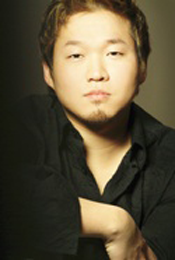
Countertenor David DQ Lee: Winning Hearts and Minds at Cardiff Singer of the World
Perhaps it is a sign that, at last, the countertenor voice has come of age in the hearts and minds of both audiences and the opera establishment.
English Touring Opera are delighted to announce a season of lyric monodramas to tour nationally from October to December. The season features music for solo singer and piano by Argento, Britten, Tippett and Shostakovich with a bold and inventive approach to making opera during social distancing.
Conductor Oliver Zeffman has commissioned the very first opera for a socially distanced world, which is now available to watch exclusively on Apple Music. Eight Songs From Isolation has been written by eight leading composers, specifically for streaming - rather than live performance - and is the first opera written for a time when the performers were unable to meet in person.
Leading freelance musicians unite in Parliament Square to call for targeted support for colleagues in the arts and entertainment sector.
Duo Lewis Murphy (composer) and Laura Attridge (writer) have launched a charitable song project entitled Notes From Isolation. The resulting songs, featuring some of the UK's top singing talent, are being released online between August and October 2020 and can be enjoyed free of charge.
The Royal Opera House is thrilled to announce an exciting, wide-ranging new line-up for its autumn programme. For the first time, extraordinary performances will be accessible online for a global audience through livestreams and for socially distanced live audiences at our home in Covent Garden. In a global first, we present a new opera in hyper-reality, alongside repertory favourites from both artistic companies.
Some of the most famous and outstanding stars from the opera world are to take part in a very special evening from Wexford Festival Opera, including Aigul Akhmetshina, Joseph Calleja, Daniela Barcellona, Juan Diego Flórez, Igor Golovatenko, Ermonela Jaho, Sergey Romanovsky, and many more.
Following its successful launch in 2019, OperaStreaming streams nine operas on YouTube from the historic opera houses of Emilia-Romagna during the 2020-21 season, with fully-staged productions of Verdi's La traviata in October from Modena and Verdi'sOtello from Bologna in...
‘A brief history of song’ is the subtitle of the 2020 Oxford Lieder Festival (10th-17th October), which will present an ambitious, diverse and imaginative programme of 40 performances and events.
Bampton Classical Opera returns to the Baroque splendour of London’s St John’s Smith Square on November 6 with a concert performance of Gluck’s one-act opera The Crown, the first in the UK since 1987. The performance will also be filmed and available to watch on demand on the Bampton website from 9 November.
While many of us spent lockdown at home taking it a little easier, composer Andrew Synnott wrote an opera.
Owen Wingrave is part of the new Interim Season of 19 brand new events, all free to view online between September and December 2020.
The Arts Council has awarded innovative UK charity Music and Theatre For All (MTFA) a major new grant to develop three ambitious new projects in the wake of Covid 19.
English National Opera (ENO) will reopen the London Coliseum to socially distanced audiences on 6 and 7 November for special performances of Mozart’s Requiem. These will provide audiences with an opportunity to reflect upon and to commemorate the difficulties the nation has faced during the pandemic.
The Royal Opera House is proud to continue its curated #OurHouseToYourHouse programme into the autumn, bringing audiences the best of the ROH through a new series of Friday Premieres and cultural highlights.
After six months of closure, the Royal Opera House is thrilled to be opening its doors to the public as part of Open House London weekend, giving visitors a taste of one of the world’s most famous theatres for free.
The Academy of St Martin in the Fields is thrilled to announce re:connect - an eight concert series with live socially distanced audiences at its namesake church, St. Martin-in-the-Fields. The autumn concerts will take place at 5pm & 7:30pm on two Saturdays per month with guest artists including baritone Roderick Williams, soprano Carolyn Sampson and composer-conductor-pianist Ryan Wigglesworth performing a wide range of repertoire.
Music and poetry unite and collide across centuries, from the Medieval to the Enlightenment to the present day. This year, the Oxford Lieder Festival will present a thrilling and innovative programme comprising more than forty events streamed over eight days.
The English Concert with artistic director Harry Bicket is delighted to announce a series of concerts from 1-15 October 2020. The concerts take place in historic London venues with star soloists and will be performed and streamed live to a paying audience at 7pm GMT on each performance date. The programmes include first-class vocal and instrumental works from the two pillars of the English Baroque, covering different aspects of the repertoire.
Glyndebourne has announced plans for a ‘staycation’ series of socially-distanced indoor performances, starting on 10 October 2020.
The Royal Opera House is delighted to announce two packed evenings of opera and ballet, live from our stage in Covent Garden and available to view wherever you are in the world online.
Perhaps it is a sign that, at last, the countertenor voice has come of age in the hearts and minds of both audiences and the opera establishment.
If we take the bi-annual Cardiff Singer of the World competition as a litmus test, we can see that in the last 3 competitions, in 2003, 2005 and the recently completed 2007 there has been a small but steady increase in the voice-type’s presence on the finalist’s stage and an ever-better result. From Matthias Rexroth four years ago, to Sergejs Jegers in 2005, to this year’s winner of his Concert competition on the 12th June, David DQ Lee, a pattern of ever increasing success is emerging.
What the Korean-Canadian countertenor also demonstrated with verve and style last week was his ability to present repertoire not traditionally associated with the voice-type and make it his own. His mix of excellent technique, careful preparation with text, instinctive musicality and a strong stage presence that could inhabit any role or poetic ideal required, was a winning combination with both judges and the audience, and again demonstrated how far the music world has come in its perception of countertenors. If David DQ Lee has in large part others to thank for this growing acceptance of repertoire covering some 300 years, then he is the first to acknowledge that debt. It was this — and other debts — which he was happy to discuss when I caught up with him in Cardiff just days after his Concert win.
We met in a local café and he was obviously delighted with his success, even though he was not one of the five to reach the Grand Final. His reaction was both charming and good humoured: “It’s wonderful, I’m even getting recognised in the street here, which hasn’t happened to me before and people are saying “well done” and “I loved your performance, good luck!” Although of course I’m not difficult to spot here in Cardiff as I’m Korean, and have big streaked hair!” At just twenty nine years old, he is at that crucial stage in any opera singer’s career when he is both competing in competitions and learning fast by taking smaller roles in big houses, or bigger roles in small houses. All to play for, and a time to consolidate everything learnt so far and to push onto the next rung of the ladder. And David DQ Lee has a lot of musical experience in his past already which is a good foundation for that future.
He had a difficult childhood, with parents divorced when he was six, followed by having to leave even his mother and move at just thirteen from Korea to the west coast of Canada to live with a guardian and with no maternal guidance at all. This might have been too much for many young people, but it has been, he thinks, the very best thing that could have happened as it taught him self-reliance, adaptability and the importance of getting on with people no matter where he found himself. Just as important was his deep involvement in, and training by, the World Vision Korean Children’s Choir as a boy soprano and later the British Columbia Boys Choir where he led both the alto and bass sections, switching nonchalantly between octaves at a moment’s notice using both his countertenor and bass-baritone. This very high level of choral and voice training has been an essential element in his vocal development, he says, and also gave him an essential sense of family with his choral colleagues as they travelled the world together. “Yes, they were my family really and I made friends in the Choir, as a small boy, that I still have today….it was a wonderful time in my life and I’m so grateful for everything that it gave me”.
What his time with the Korean and Canadian choirs didn’t give him however, was any great knowledge of the great baroque operas of Handel or the role of the modern countertenor voice in them, and David himself admits that it was that memorable film of 1994 “Farinelli il Castrato” that actually booted him into a whole new world of singing and his present burgeoning career on the opera stage. It was only watching that film, when the famously-morphed voices of countertenor and mezzo soprano launched into the wonderful aria “Lascia ch'io pianga” from Handel’s Rinaldo that Lee realised that the song, which he had learned to sing as a boy soprano as just an isolated solo piece, actually had a history, a place, and a future in baroque opera. Suddenly he knew what, and how, he could realise his ambitions as an artist and musician and it was like being propelled out of a starting gate into a whole new race for artistic fulfilment. “I was in tears listening to that aria….this was it! Of course I later found out about that voice in the film being “manufactured”, but still I knew now where I was going and I went out and bought every CD I could find of the countertenor voice and baroque opera arias — Derek Lee Ragin, Drew Minter, James Bowman, Michael Chance…..David Daniels wasn’t recording then so I discovered him later. Those first four countertenors became my role models and inspiration early on and then one day I came across a copy of Opera News dedicated to baroque opera with a big piece on the rise of Daniels as an operatic countertenor after his success in Tamerlano — so everything began to fall into place in that last summer of High School for me and I decided to go on to the Vancouver Academy of Music.
Of course, I was the first countertenor they’d had! I had to audition, so because I was unsure of how they would view me I offered four songs — two alto baroque arias and two bass-baritone ones. It really freaked them out and I’m sure they didn’t know what to do with me. Anyway, after I was accepted, I suggested that they could assign anyone they wanted as my teacher, any voice type, and I’d accept it. I was really lucky as I was assigned to a mezzo soprano, Phyllis Mailing, who took me on and taught me just like any other singer with no concessions. That lady became just so important to me. She was not just my teacher; she was my mentor, my friend, and actually became my Canadian “mother”, a mother I’d longed for but not had from the age of 13 to when I was 18 and met her at the Academy. At that time she was the only person who could tell me off, tell me what to do - you know, she would never let me sing in that old choral “white” tone: she’d say “what are you doing? Use your vibrato, use your muscle, that’s how you get your support”. She taught me like any other mezzo, and I know that if it wasn’t for her, I would not be here now. She passed away in November 2004 and that was a terrible blow to me. I sang at her funeral, and I shall never forget her. I am sure she watches over me now”.
Judging by reaction both there in Cardiff and around the globe, David DQ Lee’s natural talent was well guided indeed, and I asked him about his plans and hopes for the future. Did he think he would continue to offer a wide range of repertoire in recital as well as furthering his opera career? “Absolutely, I love to sing the French art song repertoire in particular and I do study many, many singers’ interpretations when I first approach a piece. I like to immerse myself in the text, and gradually come to a way to make it my own. That’s how I like to work. I’m so grateful to David Daniels for opening up this rep both on CD and in recital and showing it as perfectly acceptable for a countertenor to sing — and why not? It’s just outdated preconceptions of the voice type that hold people back. I’m a huge admirer of him for doing that, as well as of his amazing artistry and beautiful voice. And the other person I really admire is Rene Jacobs as a conductor: he’s so alive, so intense and makes beautiful music”. And more opera? “Oh yes, I do hope so. I’m singing the title role of Radamisto in Hamburg again in the autumn, and I’ve enjoyed doing Tolomeo in Cesare in Vancouver — I’d love to sing that role again soon, it’s such fun and really suits me I think. I’ve a concert in Madrid this September — excerpts from Pergolesi’s Stabat Mater at the Teatro Real and then I’m also going to sing the role of Prince Orlofsky in Die Fledermaus at Santiago Opera in Chile. Yes, quite a trek, but they asked me to do it after I won the Francisco Viñ International Singing Competition in Barcelona and it should be fun down there — I can pretend to get drunk on vodka and lurch around the stage! Something else which is important to me is to try to expand the knowledge of baroque repertoire in my home country of Korea and I’m going to sing my first Glück’s Orfeo ed Euridice there soon.”
Finally, where would he like to see himself in five years time? “I like to set myself goals, with deadlines, and I guess it would be to be singing at both Covent Garden and the Met — no point not being ambitious….I think it’s possible.”
© Sue Loder 2007