Subscribe to
Opera Today

Receive articles and news via RSS feeds or email subscription.


twitter_logo[1].gif


UCP_9780226043425.gif

Recently in Performances

Baltimore Premieres Camelot Requiem

In May of 2013, the Spire Series at the First Presbyterian Church in Baltimore, Maryland, observed the fiftieth anniversary of the death of President John F. Kennedy by presenting a work dealing with the 1963 assassination.

Domingo Conducts Holdridge’s New Opera Dulce Rosa

Dulce Rosa, a brand new opera, had its world premiere Friday night, May 17, 2013 at the Broad Stage in Santa Monica, California. It was produced by Los Angeles Opera, but staged in the smaller theater.

Verdi’s Falstaff at Glyndebourne

Richard Jones’ 2009 production of Verdi’s Falstaff translates the action from the first Elizabethan age to the start of the second.

Gareth John, Wigmore Hall

Baritone Gareth John is rapidly accumulating a war-chest of honours. Winner of the 2013 Kathleen Ferrier Award, he recently won the Royal Academy of Music Patrons’ Award and was presented the Silver Medal by the Worshipful Company of Musicians.

La bohème at ENO

This second revival of Jonathan Miller’s La bohème was the first time I had caught the production.

Rolando Villazón: Verdi (International Opera Stars Series 2013)

It’s Verdi’s bicentenary year and Rolando Villazón has two new CDs to plug — titled somewhat confusingly, ‘Villazón: Verdi’ and ‘Villazón’s Verdi’, the latter a ‘personal selection’ of favourite numbers performed by stars of the past and present.

Brahms Third in San Francisco

Nicola Luisotti and the San Francisco Opera Orchestra climbed out of the War Memorial pit, braved the wind whipped bay and held spellbound an audience at Cal Performances’ Zellerbach Auditorium at UC Berkeley.

Glyndebourne: Ariadne auf Naxos

Utterly mad but absolutely right — Richard Strauss’s Ariadne auf Naxos started the Glyndebourne 2013 season with an explosion. Strauss could hardly have made his intentions more clear. Ariadne auf Naxos is not “about” Greek myth so much as a satire on art and the way art is made.

Wozzeck at ENO

“Man is an abyss. It makes one dizzy to look into it.” So utters Georg Büchner’s Woyzeck, repeating what was also a recurring motif in the playwright’s own letters.

Mulhouse: Rare Britten Well Done

National Opera Company of the Rhine has marked this year’s Benjamin Britten celebration with a remarkably compelling, often gripping new production of the seldom-seen Owen Wingrave.

Frankfurt's Intriguing Idomeneo

Once upon a time, Frankfurt Opera had the baddest ass reputation in Germany as “the” cutting edge producer of must-see opera.

Rigoletto at Lyric Opera of Chicago

Productions of Giuseppe Verdi’s Rigoletto can serve as a vehicle for individual singers to make a strong impression and become afterward associated with specific roles in the opera.

Britten Sinfonia with Ian Bostridge

Just in case we were not aware that the evening’s programme was ‘themed’, the Britten Sinfonia designed a visual accompaniment to their musical exploration of night, sleep and dreams.

Aida, Manitoba Opera

Poor Aida! She never seems to have anything go her way.

Superlative singing: Don Carlo, Royal Opera House

Is it possible to upstage Jonas Kaufmann? Kaufmann was brilliant in this Verdi Don Carlo at the Royal Opera House, London, but the rest of the cast was so good that he was but first among equals. Don Carlo is a vehicle for stars, but this time the stars were everyone on stage and in the pit. Even the solo arias, glorious as they are, grow organically out of perfect ensemble. This was a performance that brought out the true beauty of Verdi's music.

Sarah Connolly: French Song at Wigmore Hall

The big names were absent: Duparc, D’Indy, Debussy, Ravel … and while Fauré, Chausson, Roussel and several members of Les Six put in an appearance, in less than familiar guises, this survey of French song of the early 20th century and interwar years deliberately took us on a journey through infrequently travelled terrain.

Rare restoration: Handel’s Esther 1720

Composed between 1718 and 1720, Handel’s Esther is sometimes described as the ‘first English Oratorio’, but is in fact a hybrid form, mixing elements of oratorio, masque, pastoral and opera.

The Damnation of Faust, London

Hector Berlioz's légende dramatique, La Damnation de Faust, exists somewhere between cantata and opera. Berlioz's flexible attitude to dramatic form made the piece unworkable on the stages of early 19th century Paris and his music is so vivid that you wonder whether the piece needs staging at all.

Elizabeth Connell Memorial Concert, St John's Smith Square

St. John’s Smith Square was the site of Elizabeth Connell’s final London concert, intended as a farewell to London on her moving to Australia. It was rendered ultimately final by her unexpected death.

Aida with all the Trimmings, Even a Blue Silk Elephant!

With the building of the Suez Canal, Egypt became more interesting to Western Europeans. Khedive Ismail Pasha wanted a hymn by Verdi for the opening of a new opera house in Cairo, but the composer said he did not write occasional pieces.

OPERA TODAY ARCHIVES »

Performances

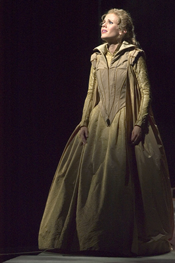
Sarah Coburn (Photo: © George Mott/Glimmerglass Opera)
16 Aug 2007

Haydn’s L’Anima del Filosofo (Orfeo ed Eurydice) — A rare performance at Glimmerglass this summer, as part of their “Orpheus” 2007 Festival Season

On a cold winter’s day in Vienna, just before Christmas 1790, Mr. Haydn dined with Mr. Mozart for the last time.

F. J. Haydn: L’Anima del Filosofo
Above: Sarah Coburn (Photo: © George Mott/Glimmerglass Opera)


Within a year the younger man would be dead, and the older would be in London putting the finishing touches to an opera that never saw the light of day in full public performance until, in 1951 it was staged in Florence with Maria Callas, Boris Christoff and Tygge Tyggeson in the leading roles. This is just part of the strange story of an opera that nearly never was, because although Haydn was fully paid in advance for his version of the Orfeo and Eurydice legend by the London-based impresario and violinist Johann Peter Salomon, it became the victim of politics and critical machinations that finally prevented it from opening at all.

Haydn was happy enough with the project (being paid in advance must have helped) and described the libretto, by Carlo Badini, as “entirely different from that of Glück’s”. What he didn’t say was that said Badini was also famed for his destructive gossip and very influential critical writings which could literally make or break a theatre’s reputation at that time. In this writing of the famous tale, the story starts with Eurydice fleeing the unwanted attentions of her father’s favoured suitor for her, and becoming the focus of Orfeo’s love; however, by the end of Act One she is dead from a snake-bite. The rest of the four acts concern Orfeo’s struggle to retrieve her from Hades, his famous error, and in this version of the tale, his eventual destruction by the Bacchae women, enraged by his avowed shunning of women’s love following his final loss of Eurydice.

There were only 3 main roles in the opera that Haydn wrote — Orfeo, written for leading tenor of the time Giacomo Davide who was described later as possessing “a clear and flexible voice, with an extensive falsetto”, Eurydice, sung by soprano Rosa Lops and the Genio (an oracle/soothsayer figure) who was apparently to be sung by a not-very-good castrato of the time, possibly one Signor Dorelli. Confusingly, by the time the opera came to rehearsal, there was another role included in the MS — that of Creonte, father of Eurydice. Sadly, despite getting to dress-rehearsal, local politics prevented the King’s Theatre from opening on time and Haydn never saw his opera open to the public.

It is no wonder then that this particular operatic version of the famous myth fell into that huge abyss of “forgotten” works as the late18th century geared itself up for the immense musical developments on the horizon. Yet, it is a jewel of its time, with some stunning music as well as dramatic vigour and this 2007 Glimmerglass concert performance has been looked forward to for some time by those who remember or have heard, either Callas in ’51, the 1967 live recording by Dame Joan Sutherland and Nicolai Gedda at the Edinburgh Festival, or of course the more recent revival by Cecilia Bartoli.

However, it was rather a disappointment to find that circumstances and time constraints had yielded some pretty savage cuts here on the shores of Lake Otsego. Michael Macleod, the new General and Artistic Director, explained that he had been anxious to do something meaningful on the traditional Sunday morning slot on Gala Weekend in this his first year at the helm of the Festival Opera. What better than to maintain the ethic of Glimmerglass and make more good music with a little known take on the myth, and better still, a work by one of his great loves, Haydn? Sadly, the time available between the 11 am start and the afternoon matinee at 3 pm of the staged L'Orfeo by Monteverdi meant that the concert performance was truncated with huge swathes of recitative removed. The story was moved on succinctly but prosaically by an on-stage Narrator, and several arias also cut.

What was left seemed more a showcase for soprano Sarah Coburn, an opportunity this technically elegant singer took full advantage of. She sang the arias of Eurydice and the Genio (the latter's big number “Al tuo seno fortunate” being eerily reminiscent of Mozart's Queen of the Night’s) with precision (mostly) and vocal poise. Not exciting, but obviously well-read and produced with only fleeting glances at the score before her. Equally effective was the baritone of young Corey Crider as Creonte. Much less successful was the Orfeo of tenor Norman Shankle, who appeared both nervous and under-prepared, his hands (and eyes) never far from the printed music, and his production sounding unsure and tentative, at best. This curate’s egg of a production was held together by some nice idiomatic playing by the Opera Orchestra, with special mention going to the flutes, under the shared batons of Antony Walker and Anne Manson.

Mr. MacLeod explained afterwards that the reason for the split duties for the conductors was part of a process of selection for vacant post of the Festival’s next Music Director. Whatever the reason, it was a rather novel experience for the audience as the two conductors had two very different styles, although it was hard to split them on the resultant sound.

The performance is repeated on the 19th August.

© Sue Loder 2007

For tickets (limited availability): Glimmerglass Opera Box Office (607) 547-2255 and more information from the website: http://www.glimmerglass.org/Haydn.html
Send to a friend

Send a link to this article to a friend with an optional message.

Friend's Email Address: (required)

Your Email Address: (required)

Message (optional):