16 Aug 2007
Michael Maniaci Flies High as Orphée at Glimmerglass
The legend of Orpheus and Eurydice has come down through the centuries to us, on the way inspiring some sixty-four other known operas.
English Touring Opera are delighted to announce a season of lyric monodramas to tour nationally from October to December. The season features music for solo singer and piano by Argento, Britten, Tippett and Shostakovich with a bold and inventive approach to making opera during social distancing.
This tenth of ten Live from London concerts was in fact a recorded live performance from California. It was no less enjoyable for that, and it was also uplifting to learn that this wasn’t in fact the ‘last’ LfL event that we will be able to enjoy, courtesy of VOCES8 and their fellow vocal ensembles (more below …).
Ever since Wigmore Hall announced their superb series of autumn concerts, all streamed live and available free of charge, I’d been looking forward to this song recital by Ian Bostridge and Imogen Cooper.
Although Stile Antico’s programme article for their Live from London recital introduced their selection from the many treasures of the English Renaissance in the context of the theological debates and upheavals of the Tudor and Elizabethan years, their performance was more evocative of private chamber music than of public liturgy.
Evidently, face masks don’t stifle appreciative “Bravo!”s. And, reducing audience numbers doesn’t lower the volume of such acclamations. For, the audience at Wigmore Hall gave soprano Elizabeth Llewellyn and pianist Simon Lepper a greatly deserved warm reception and hearty response following this lunchtime recital of late-Romantic song.
For this week’s Live from London vocal recital we moved from the home of VOCES8, St Anne and St Agnes in the City of London, to Kings Place, where The Sixteen - who have been associate artists at the venue for some time - presented a programme of music and words bound together by the theme of ‘reflection’.
'Such is your divine Disposation that both you excellently understand, and royally entertaine the Exercise of Musicke.’
‘And there was war in heaven: Michael and his angels fought against the dragon; and the dragon fought and his angels, And prevailed not; neither was their place found any more in heaven … that old serpent … Satan, which deceiveth the whole world: he was cast out into the earth, and his angels were cast out with him.’
There was never any doubt that the fifth of the twelve Met Stars Live in Concert broadcasts was going to be a palpably intense and vivid event, as well as a musically stunning and theatrically enervating experience.
‘Love’ was the theme for this Live from London performance by Apollo5. Given the complexity and diversity of that human emotion, and Apollo5’s reputation for versatility and diverse repertoire, ranging from Renaissance choral music to jazz, from contemporary classical works to popular song, it was no surprise that their programme spanned 500 years and several musical styles.
The Academy of St Martin in the Fields have titled their autumn series of eight concerts - which are taking place at 5pm and 7.30pm on two Saturdays each month at their home venue in Trafalgar Square, and being filmed for streaming the following Thursday - ‘re:connect’.
The London Symphony Orchestra opened their Autumn 2020 season with a homage to Oliver Knussen, who died at the age of 66 in July 2018. The programme traced a national musical lineage through the twentieth century, from Britten to Knussen, on to Mark-Anthony Turnage, and entwining the LSO and Rattle too.
With the Live from London digital vocal festival entering the second half of the series, the festival’s host, VOCES8, returned to their home at St Annes and St Agnes in the City of London to present a sequence of ‘Choral Dances’ - vocal music inspired by dance, embracing diverse genres from the Renaissance madrigal to swing jazz.
Just a few unison string wriggles from the opening of Mozart’s overture to Le nozze di Figaro are enough to make any opera-lover perch on the edge of their seat, in excited anticipation of the drama in music to come, so there could be no other curtain-raiser for this Gala Concert at the Royal Opera House, the latest instalment from ‘their House’ to ‘our houses’.
"Before the ending of the day, creator of all things, we pray that, with your accustomed mercy, you may watch over us."
The doors at The Metropolitan Opera will not open to live audiences until 2021 at the earliest, and the likelihood of normal operatic life resuming in cities around the world looks but a distant dream at present. But, while we may not be invited from our homes into the opera house for some time yet, with its free daily screenings of past productions and its pay-per-view Met Stars Live in Concert series, the Met continues to bring opera into our homes.
Music-making at this year’s Grange Festival Opera may have fallen silent in June and July, but the country house and extensive grounds of The Grange provided an ideal setting for a weekend of twelve specially conceived ‘promenade’ performances encompassing music and dance.
There’s a “slide of harmony” and “all the bones leave your body at that moment and you collapse to the floor, it’s so extraordinary.”
“Music for a while, shall all your cares beguile.”
The hum of bees rising from myriad scented blooms; gentle strains of birdsong; the cheerful chatter of picnickers beside a still lake; decorous thwacks of leather on willow; song and music floating through the warm evening air.
The legend of Orpheus and Eurydice has come down through the centuries to us, on the way inspiring some sixty-four other known operas.
Beginning with the art form’s pro-genitor, Peri’s L’Euridice written in 1600, that list of sixty-five includes two great masterpieces but only one that has never really left the world’s stages for a record 245 years.
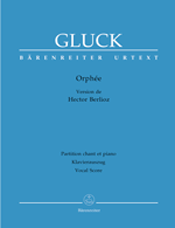
That masterpiece is, of course, Gluck’s version of the timeless tale, “Orphée et Eurydice”, and in itself it has, over the years, been the subject of re-writings for different voices, genders and vocal ranges for the hero: from alto castrato (the original 1762 Italian version) through soprano castrato to high tenor, and then to Berlioz’s renowned arrangement in 1859, transposed by him for the great mezzo soprano of the time, Pauline Viardot. This was based on Gluck’s 1774 Paris version for “haute-contre” (high tenor, not countertenor) and transposed up to Viardot’s mezzo range.
A bewildering vocal history indeed; and, in the great tradition of this opera’s many vicissitudes, Glimmerglass Opera have achieved another two firsts. This summer’s new production by director Lillian Groag is using the new Bärenreiter edition of the Viardot/Berlioz arrangement for the first time in the USA and, perhaps more significantly, the title role is being sung by the exciting young American male soprano Michael Maniaci, who recently made waves at La Fenice with his performances of the title role in Meyerbeer’s “Il crociato in Egitto”, followed closely by his well-received Nireno in the Met’s “Giulio Cesare”.
Recent operatic history tells us that the demanding role of Orfeo has been sung usually by females — mezzo-sopranos and contraltos — and only recently have we seen a return to the male domain with CD recordings by tenors David Hobson and Richard Croft, and live performances such as countertenor David Daniels’ magisterial performance in Mark Morris’s new staging of the Italian version for alto at the Metropolitan Opera earlier this year — the first time a man has sung the role there. However, it is doubtful if there has ever been a professional staging of the Berlioz arrangement using a male soprano, and Glimmerglass are to be congratulated on their desire to push boundaries and to continue the writing of this iconic opera’s life story.
When it came to the new staging, I wondered if director Lillian Groag felt any pressure from the weight of history behind this opera? “I feel that with the great plays and operas in our canon everybody “knows” how they should be done and yet no one agrees as to what that “right” way is — so instead I always ask why this play or opera right here and now? In this opera I am looking at how the 4 characters — Orphée, Eurydice, l’Amour and the Chorus, or community, are affected by the process of grief, solace and return to life.”
For Groag, the hardest dramaturgical question was if Eurydice comes back to life, then the truly iconic myth is dismantled and apparently loses all meaning. However, in consultation with her costume designer Constance Hoffman, she came to the conclusion that it came down to religion or, in this case with the fatal look back, a failure of faith, the great sin in all theologies. “Calzabigi’s (the librettist of the original Italian version) and Gluck’s worldview was Christian and the Christian theology is the only one that has, to my knowledge, the possibility of redemption through suffering. This links directly to Eurydice’s final resurrection — through Orphée’s appalling suffering - which is gently remindful of the hope by which Christianity contrived to thrive in the Western World. I am an atheist, but I do see this as a profoundly Christian work.”
A hint as to Groag’s surprising, and ironic conclusion to this production can be found in her words above. She chooses to see the cycle of Life, Nature and man’s Redemption through Love as the key to this myth’s relevance today. The peasants cheerily celebrating yet another harvest in the opening scene comes full circle as our reunited lovers survey the chilling sight of their story starting over at the opera’s conclusion.
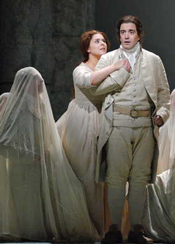
The opera opens here in some hypothetical 18th century world of rural bliss, with earth-toned costumed peasants set amongst the abandoned ruins of some Greek temples. The reference to time passing is one that recurs more than once. The Elysium Fields scene is another idea that works well: the Enlightenment’s vision of the Good Life — all arts, sciences and crafts applied in a peaceful society where harmony was the goal — was lit gracefully by Robert Wierzel. However, although Groag’s and her team’s initiatives often succeed well enough visually, there are considerable longueurs both here and in the opening scenes where singers and actors were apparently left to their own devices to the detriment of the cohesive whole. Luckily, John Conklin’s evocative neo-classical sets and Wierzel’s subtle lighting helped hold the whole thing together and, with Michael Maniaci drawing upon all his reserves of dramatic insight, directorial gaps are largely disguised.
It is this insight, coupled with the growing ability to move both body and voice into whatever realm is required by the text and music that makes Maniaci such a convincing and exciting stage performer. Here, he is the epitome of vulnerable young love — wounded by grief and at the mercy of the Gods. The voice, that of a true male soprano rather than countertenor using falsetto, is strong, centred and controlled throughout the range, and is one of today’s most interesting operatic phenomena, taking the high male instrument another step further to mainstream operatic “normality”. In this work he is required to sing, full and true, from G below middle C right up to soprano high C. It may not be his perfect vocal vehicle as it lies lower than ideal for him, but with the exception of the two lowest notes which take him beyond his current comfort zone, he operates with élan and strong dramatic sense. His full-throated soprano can float above the staff with ease, yet retains a difficult-to-describe but essential maleness about it.
Despite his avowed preference for simplicity Glück permitted a certain amount of ornamentation in his French revision; for instance in the mesmerising extended aria for Orphée, 'Amour, viens render a mon âme' that closes Act 1. Berlioz’s later arrangement for Viardot also encompassed a hair-raising cadenza written by the singer herself. Maniaci revels in the vocal challenge, displaying both technical brilliance and sense of style, with some amazing vocal gymnastics that set the hall alight.
Balancing this bravura performance, in Act 2, when Orphée descends to Hades we hear his heartfelt legato singing of Orphée’s plea to the Furies, 'Laissez-vous toucher par mes pleurs', which brought 'the demigod of music' to life and made us believe in his mystical powers of persuasion. Here the excellently demonic chorus rebut him time and again with their “Non!”s until at last they fall victim to his music. The iconic tune “J’ai perdu mon Eurydice” was elegantly yet powerfully sung; no mistaking this hero’s mental anguish as both singer and orchestra upped the tempo in the final repeat bringing an almost desperate quality to the aria.
Maniaci’s colleagues were equally convincing and committed: the sparkling soprano of Brenda Rae as L’Amour and the full vibrant singing of Amanda Pabyan as Eurydice were nuanced and distinctively phrased. Pabyan in particular was most affecting in her portrayal of the young woman too quick to blame her lover for his apparent indifference. In her reading of the part, we felt Eurydice to be the catalyst for disaster, rather than Orphée. Young Caitlin Lynch made a good impression as the Happy Shade, as did the two dancers, Trey Gillen and Katarzyna Skarpetowska, who led the choral movement sequences eloquently in elegant choreography by Nicola Bowie. Julian Wachner led the Glimmerglass Opera Orchestra in a fluent and pleasing reading of the score.
A “genuine classical drama” was what Gluck and Calzabigi originally wanted the audiences to see, and you could argue that the physical and vocal matching of role to character is crucial to make this happen. With a mezzo soprano singing this Berlioz arrangement, that equivalence is lost — would it be going to far to suggest that at last we have the thought-provoking realisation of Berlioz’s true musical intentions: the great mythic hero sung in the mezzo soprano range by a man? Probably it is, but that doesn’t undermine or diminish what Michael Maniaci has achieved. Another small piece of operatic history has been written here at Glimmerglass in 2007.
© Sue Loder 2007
Performances continue August 11th, 19th, 25th and 28th.
For tickets (limited availability): Glimmerglass Opera Box Office (607) 547-2255 and more information from the website: http://www.glimmerglass.org