Recently in Performances
English Touring Opera are delighted to announce a season of lyric monodramas to tour nationally from October to December. The season features music for solo singer and piano by Argento, Britten, Tippett and Shostakovich with a bold and inventive approach to making opera during social distancing.
This tenth of ten Live from London concerts was in fact a recorded live performance from California. It was no less enjoyable for that, and it was also uplifting to learn that this wasn’t in fact the ‘last’ LfL event that we will be able to enjoy, courtesy of VOCES8 and their fellow vocal ensembles (more below …).
Ever since Wigmore Hall announced their superb series of autumn concerts, all streamed live and available free of charge, I’d been looking forward to this song recital by Ian Bostridge and Imogen Cooper.
Although Stile Antico’s programme article for their Live from London recital introduced their selection from the many treasures of the English Renaissance in the context of the theological debates and upheavals of the Tudor and Elizabethan years, their performance was more evocative of private chamber music than of public liturgy.
Evidently, face masks don’t stifle appreciative “Bravo!”s. And, reducing audience numbers doesn’t lower the volume of such acclamations. For, the audience at Wigmore Hall gave soprano Elizabeth Llewellyn and pianist Simon Lepper a greatly deserved warm reception and hearty response following this lunchtime recital of late-Romantic song.
For this week’s Live from London vocal recital we moved from the home of VOCES8, St Anne and St Agnes in the City of London, to Kings Place, where The Sixteen - who have been associate artists at the venue for some time - presented a programme of music and words bound together by the theme of ‘reflection’.
'Such is your divine Disposation that both you excellently understand, and royally entertaine the Exercise of Musicke.’
‘And there was war in heaven: Michael and his angels fought against the dragon; and the dragon fought and his angels, And prevailed not; neither was their place found any more in heaven … that old serpent … Satan, which deceiveth the whole world: he was cast out into the earth, and his angels were cast out with him.’
There was never any doubt that the fifth of the twelve Met Stars Live in Concert broadcasts was going to be a palpably intense and vivid event, as well as a musically stunning and theatrically enervating experience.
‘Love’ was the theme for this Live from London performance by Apollo5. Given the complexity and diversity of that human emotion, and Apollo5’s reputation for versatility and diverse repertoire, ranging from Renaissance choral music to jazz, from contemporary classical works to popular song, it was no surprise that their programme spanned 500 years and several musical styles.
The Academy of St Martin in the Fields have titled their autumn series of eight concerts - which are taking place at 5pm and 7.30pm on two Saturdays each month at their home venue in Trafalgar Square, and being filmed for streaming the following Thursday - ‘re:connect’.
The London Symphony Orchestra opened their Autumn 2020 season with a homage to Oliver Knussen, who died at the age of 66 in July 2018. The programme traced a national musical lineage through the twentieth century, from Britten to Knussen, on to Mark-Anthony Turnage, and entwining the LSO and Rattle too.
With the Live from London digital vocal festival entering the second half of the series, the festival’s host, VOCES8, returned to their home at St Annes and St Agnes in the City of London to present a sequence of ‘Choral Dances’ - vocal music inspired by dance, embracing diverse genres from the Renaissance madrigal to swing jazz.
Just a few unison string wriggles from the opening of Mozart’s overture to Le nozze di Figaro are enough to make any opera-lover perch on the edge of their seat, in excited anticipation of the drama in music to come, so there could be no other curtain-raiser for this Gala Concert at the Royal Opera House, the latest instalment from ‘their House’ to ‘our houses’.
"Before the ending of the day, creator of all things, we pray that, with your accustomed mercy, you may watch over us."
The doors at The Metropolitan Opera will not open to live audiences until 2021 at the earliest, and the likelihood of normal operatic life resuming in cities around the world looks but a distant dream at present. But, while we may not be invited from our homes into the opera house for some time yet, with its free daily screenings of past productions and its pay-per-view Met Stars Live in Concert series, the Met continues to bring opera into our homes.
Music-making at this year’s Grange Festival Opera may have fallen silent in June and July, but the country house and extensive grounds of The Grange provided an ideal setting for a weekend of twelve specially conceived ‘promenade’ performances encompassing music and dance.
There’s a “slide of harmony” and “all the bones leave your body at that moment and you collapse to the floor, it’s so extraordinary.”
“Music for a while, shall all your cares beguile.”
The hum of bees rising from myriad scented blooms; gentle strains of birdsong; the cheerful chatter of picnickers beside a still lake; decorous thwacks of leather on willow; song and music floating through the warm evening air.
Performances
14 Nov 2007
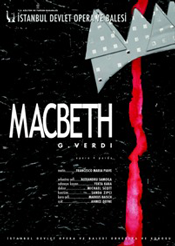
Macbeth in Istanbul
Attending the opera may not be the first thing you think of when visiting Istanbul, but opera is to be found (if less well advertised than the local Bach Festival) at the Ataturk Cultural Center on Taksim Square, the heart of modern Istanbul.
Ataturk, the father of modern Turkey, loved opera, ballet
and theater and recommended them strongly – along with such Western
artifacts as the Roman alphabet, the panama hat, and votes – and scarfless
hair – for women. He saw the theater as a key to entering the modern world
– and isn’t it?
You will know you have come to the right place on Taksim because colorful
posters for the opera season cover the wall to the left of the Ataturk
Center. (Tickets are sold at a kiosk to the right of the building.) The
Center was built in 1969 and is sedately modern, neither flamboyant nor
hideous – 1969 was a dull time for international architecture from New York
to New Delhi. The auditorium is comfortable and of a comfortable size.
A Turkish friend who sings himself spoke unkindly of opera in his native
land, but I thought, if their Macbeth is as good as the Forza del Destino (or
Moč Sudbine) I heard in Zagreb seven years ago – honest, idiomatic,
provincial Verdi starring the stoutest woman in Croatia, lovely voice, no top
notes, and only the basso embarrassing – then I’ll enjoy myself. It was
my last night in Istanbul, and much as I delight in Turkish folk music, I
longed for an evening free of the Middle Eastern wail. To my great pleasure,
what I got was honest, idiomatic, provincial Verdi, in a production set on
telling the story, not some director’s interpretation of the story, with an
all-Turkish cast who knew how to sing Italian opera and did so, led by a
soprano with a lovely voice (including the top) who was easily the stoutest
woman I saw in Turkey.
Perihan Nayır Artan knew her business. Passionate in her entrance without
fudging the coloratura, keyed up during the duet, her pretty voice abruptly
hard at such moments as “Dammi al ferro,” when she demands Macbeth give
her the bloody daggers, and convincingly lost in an inner hell during the
sleepwalk, when the voice floated, contradicting the horrors she sang of.
I’d like to hear her Aida someday. Murat Güney gracefully sang a somewhat
distanced Macbeth, regretful but not exactly tormented as his world falls
apart, still a warrior despite an aluminum sword that bent at the first blow.
Tenor Hüseyin Likos, Macduff, seemed ready for Verdi’s shriller leading
roles like Radames and Manrico. After a few rough spots in the overture,
Markus Baisch kept the orchestra pumping if not exactly eldritch in this
score’s often highly original use of winds and strings to produce uncanny
– in 1847, unprecedented – effects.
Yekta Kara’s production was basic but not risible. (From house photos, I
gather the real money is saved to dazzle in Arabian Nights operas like
Mozart’s Sihirli Flüt and S. Ada’s Ali Baba and the Forty Thieves. They
also give Mozart’s Seraglio every summer – in the Topkapi seraglio.)
Special effects were minimal, but the story was clearly and effectively told.
The witches wore white – appearing to be surgical nurses, with bloody
aprons they lent to Banquo’s murderers. The men were in black and only Lady
M got to wear a color – guess which. The direction rather privileged the
witches, who were shown manipulating all the other characters, even in scenes
where they do not usually appear (Lady M’s cabaletta invoking “ye spirits
that tend on mortal thoughts” and also, their fingers dripping blood down a
wall, during “Le luce langue”). The witches handed Macbeth paper and pen
to write home, delivered the letter, rescued Fleance, undermined victorious
Malcolm, and sang the lines behind the apparitions in the cauldron scene –
forces of chaos, enemies to all human effort. This, I think, gives them too
much power and takes it from Macbeth – in Shakespeare, he is clearly the
author of his own misfortunes, committing his crimes though imaginatively
aware of how how disastrous this choice will be. In Kara’s production, he
has an alibi – the devil makes him do it – and thus his own character
becomes less interesting.
The words were easily comprehensible to anyone familiar with opera
Italian, but there were no surtitles – which may be why the story was so
clearly told. There was also no prompter’s box – instead lines were
hissed from stage right. This would annoy hell out of me in Wagner or Mozart,
but in a creep show like Macbeth, it rather added to the atmosphere.
John Yohalem