Subscribe to
Opera Today

Receive articles and news via RSS feeds or email subscription.


twitter_logo[1].gif


UCP_9780226043425.gif

Recently in Performances

Baltimore Premieres Camelot Requiem

In May of 2013, the Spire Series at the First Presbyterian Church in Baltimore, Maryland, observed the fiftieth anniversary of the death of President John F. Kennedy by presenting a work dealing with the 1963 assassination.

Domingo Conducts Holdridge’s New Opera Dulce Rosa

Dulce Rosa, a brand new opera, had its world premiere Friday night, May 17, 2013 at the Broad Stage in Santa Monica, California. It was produced by Los Angeles Opera, but staged in the smaller theater.

Verdi’s Falstaff at Glyndebourne

Richard Jones’ 2009 production of Verdi’s Falstaff translates the action from the first Elizabethan age to the start of the second.

Gareth John, Wigmore Hall

Baritone Gareth John is rapidly accumulating a war-chest of honours. Winner of the 2013 Kathleen Ferrier Award, he recently won the Royal Academy of Music Patrons’ Award and was presented the Silver Medal by the Worshipful Company of Musicians.

La bohème at ENO

This second revival of Jonathan Miller’s La bohème was the first time I had caught the production.

Rolando Villazón: Verdi (International Opera Stars Series 2013)

It’s Verdi’s bicentenary year and Rolando Villazón has two new CDs to plug — titled somewhat confusingly, ‘Villazón: Verdi’ and ‘Villazón’s Verdi’, the latter a ‘personal selection’ of favourite numbers performed by stars of the past and present.

Brahms Third in San Francisco

Nicola Luisotti and the San Francisco Opera Orchestra climbed out of the War Memorial pit, braved the wind whipped bay and held spellbound an audience at Cal Performances’ Zellerbach Auditorium at UC Berkeley.

Glyndebourne: Ariadne auf Naxos

Utterly mad but absolutely right — Richard Strauss’s Ariadne auf Naxos started the Glyndebourne 2013 season with an explosion. Strauss could hardly have made his intentions more clear. Ariadne auf Naxos is not “about” Greek myth so much as a satire on art and the way art is made.

Wozzeck at ENO

“Man is an abyss. It makes one dizzy to look into it.” So utters Georg Büchner’s Woyzeck, repeating what was also a recurring motif in the playwright’s own letters.

Mulhouse: Rare Britten Well Done

National Opera Company of the Rhine has marked this year’s Benjamin Britten celebration with a remarkably compelling, often gripping new production of the seldom-seen Owen Wingrave.

Frankfurt's Intriguing Idomeneo

Once upon a time, Frankfurt Opera had the baddest ass reputation in Germany as “the” cutting edge producer of must-see opera.

Rigoletto at Lyric Opera of Chicago

Productions of Giuseppe Verdi’s Rigoletto can serve as a vehicle for individual singers to make a strong impression and become afterward associated with specific roles in the opera.

Britten Sinfonia with Ian Bostridge

Just in case we were not aware that the evening’s programme was ‘themed’, the Britten Sinfonia designed a visual accompaniment to their musical exploration of night, sleep and dreams.

Aida, Manitoba Opera

Poor Aida! She never seems to have anything go her way.

Superlative singing: Don Carlo, Royal Opera House

Is it possible to upstage Jonas Kaufmann? Kaufmann was brilliant in this Verdi Don Carlo at the Royal Opera House, London, but the rest of the cast was so good that he was but first among equals. Don Carlo is a vehicle for stars, but this time the stars were everyone on stage and in the pit. Even the solo arias, glorious as they are, grow organically out of perfect ensemble. This was a performance that brought out the true beauty of Verdi's music.

Sarah Connolly: French Song at Wigmore Hall

The big names were absent: Duparc, D’Indy, Debussy, Ravel … and while Fauré, Chausson, Roussel and several members of Les Six put in an appearance, in less than familiar guises, this survey of French song of the early 20th century and interwar years deliberately took us on a journey through infrequently travelled terrain.

Rare restoration: Handel’s Esther 1720

Composed between 1718 and 1720, Handel’s Esther is sometimes described as the ‘first English Oratorio’, but is in fact a hybrid form, mixing elements of oratorio, masque, pastoral and opera.

The Damnation of Faust, London

Hector Berlioz's légende dramatique, La Damnation de Faust, exists somewhere between cantata and opera. Berlioz's flexible attitude to dramatic form made the piece unworkable on the stages of early 19th century Paris and his music is so vivid that you wonder whether the piece needs staging at all.

Elizabeth Connell Memorial Concert, St John's Smith Square

St. John’s Smith Square was the site of Elizabeth Connell’s final London concert, intended as a farewell to London on her moving to Australia. It was rendered ultimately final by her unexpected death.

Aida with all the Trimmings, Even a Blue Silk Elephant!

With the building of the Suez Canal, Egypt became more interesting to Western Europeans. Khedive Ismail Pasha wanted a hymn by Verdi for the opening of a new opera house in Cairo, but the composer said he did not write occasional pieces.

OPERA TODAY ARCHIVES »

Performances

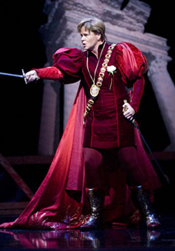
Susan Graham as Ariodante (Photo: Terrence McCarthy courtesy of San Francisco Opera)
06 Jul 2008

San Francisco Opera summer season, 2008

David Gockley heard the cries of many an opera fan that Pamela Rosenberg had denied them their 'stars,' so for his summer season, 2008, he brought them Natalie Dessay, Susan Graham, Ruth Ann Swenson, and Stefan Margita.

San Francisco Opera Summer 2008
Richard Wagner: Das Rheingold
Gaetano Donizetti: Lucia di Lammermoor
G. F. Handel: Ariodante

Above: Susan Graham as Ariodante (Photo: Terrence McCarthy courtesy of San Francisco Opera)


Stefan Margita? Well he may not be a household name, even in the dwellings of opera lovers, but he dominated the production of Wagner's Das Rheingold, seen in the last performance of its run on Saturday, June 28th. Francesca Zambello's concept, first seen in Washington D.C., supposedly centers on an "American" perspective. Much more of what that might entail appeared in the program essay than on stage. Alberich carried a pickax, so he might have been a prospector. Since his discovery of the gold actually comes by accident, that profile made little sense. The Rheinmaidens looked much as they usually do, and the first stage set of ramps swamped by mist made an amorphous impression. Zambello resorted to rather trite imagery for the film screen back drop, including a mountain stream and space imagery right out of any number of corny science fiction films for the opera's prelude. The prospective tenants of Valhalla came dressed as Gatsby-era upper crust types, with gentlemen in pale linen (Donner carried a croquet mallet). For once, Wotan actually was dozing as Fricka woke him, but since she did it with a TV sitcom swap across the head, Wotan started diminished and really never showed any of the character's grandeur or strength. Mark Delevan, however, gave evidence that he has the voice for the role, and could well grow into a more impressive interpretation.

But the opera became Loge's once the elegant, obsequious figure of Stefan Margita slank on stage. Although his voice failed to carry well anytime he turned away from the audience, he had absolute command of the stage otherwise. And conductor Donald Runnicles sooner or later let the orchestra flood over all the singers. The best of Zambello's invention went to the giants, superbly sung and acted by Andrea Silvestrelli (Fasolt) and Günther Groissböck (Fafner). In an interesting twist, the Freia of Tamara Wapinsky apparently found, as Madeline Kahn did in Young Frankenstein, the "sweet mystery of life" with Fasolt, as she clung to him amorously after her abduction, returned reluctantly to her family, and then was inconsolable when Fafner went in for a little fratricide.

Zambello may yet fully develop the "American" perspective as the cycle continues in future seasons. On Saturday night, the production took a lower profile while the singers and orchestra carried the night.

The Sunday matinee audience for Lucia Di Lammermoor basked in the radiant star power of Natalie Dessay, and at least for the first act, her Edgardo, Giuseppe Filianoti, shone as bright. However, after singing with brilliant tone and force through the sextet, the tenor started to wane in the second act. By his great climatic scene, the voice had grown husky and strained at the top. Nonetheless, he was rewarded for the passion of his efforts with a healthy ovation at curtain.

But Dessay brought the crowd to their collective feet. She did not overplay the character's neurosis, and her mad scene truly put the emphasis on the music's depiction of the breakdown, rather than histrionics. The high notes carried a hint of scratchiness, otherwise, the performance almost appeared effortless. Not so that of Gabriele Viviani, the Enrico, whose stout baritone carried well but without any distinctive qualities.

The production, co-directed by Graham Vick and Marco Gandini, gave an atmospheric sense of the moors, especially in the final scene. Brooding skies and a single blasted, twisted tree served most of the other scenes, with sliding panels quickly establishing new locations. The most effective moment came with Lucia's appearance for the mad scene, a "slow reveal" that frankly acknowledged the central place this scene has in the opera's staying power. Conductor Jean-Yves Ossonce provided efficient, if characterless, support.

Unfortunately, OperaToday reviewers are not immune to transportation difficulties, and a slow leak (which should not a problem for a typical gasbag critic) from a tire prevented your reviewer from making the curtain for Tuesday's night's Ariodante . The last half of act one was caught from orchestra standing room, and then, exhausted, your reviewer slipped out of the War Memorial after act two. The conducting of Patrick Summers, routine to a fault, had not helped matters.

No blame for this whatsoever goes to the excellent cast. Susan Graham and Ruth Ann Swenson both sang exquisitely, with admirable support from Richard Croft and Eric Owens. As the villain of the piece, Sonia Prina hammed it up enthusiastically enough but looked fairly ridiculous. The sets and costumes came from Dallas Opera (direction by John Copley and design by John Conklin ). Tall marble columns slid into different formations for each scene, but it always seemed to be the same set. The lavish costumes only emphasized the barrenness of the staging. Some years ago a video appeared of an ENO production of the opera, featuring Ann Murray, which had much more wit and eroticism than this lame affair. Sadly, as your reviewer left after act two so did quite a few other audience members. Maybe they had tire problems to attend to as well...

So ends the 2007-08 SFO season. But the 2008-09 season premieres in just a matter of weeks, with stars such as Dmitri Hvorostovsky and Anna Netrebko lined up. Gockley should perhaps look into bringing back Stefan Margita soon as well.

Chris Mullins
Send to a friend

Send a link to this article to a friend with an optional message.

Friend's Email Address: (required)

Your Email Address: (required)

Message (optional):