Subscribe to
Opera Today

Receive articles and news via RSS feeds or email subscription.


Recently in Commentary

Octavio Roca on Carmen

Carmen Forever By Octavio Roca October 19, 2004 Bizet's legendary heroine still inspires artists and opera lovers. The woman is fascinating, no question about it. Little by little, we are still getting to know Carmen. The fascination is strong, and...

FT on Countertenor Lawrence Zazzo

US countertenor who is a wow in Europe By Francis Carlin Published: October 28 2004 03:00 | Last updated: October 28 2004 03:00 It is always a good sign when you find a singer attending a performance of something else...

A Tribute to Robert Merrill (1919-2004)

MEMORIES OF ROBERT MERRILL: AMERICAN OPERATIC ICON by James Engdahl, Engdahl Artists International Robert Merrill, born Moishe Miller in the Williamsburg section of Brooklyn, passed away last Saturday, October 22, 2004, as he watched the first game of the World...

FT on the Future of Wexford Opera Festival

Wexford's dilemma for future operas By Andrew Clark Published: October 27 2004 03:00 | Last updated: October 27 2004 03:00 When Wexford's opera festival was young and innocent, audiences used to talk of "one for the head, one for the...

Looking for Wolfgang in All the Wrong Places

Scientists dig up family skeletons Luke Harding in Berlin Wednesday October 27, 2004 The Guardian It has been a mystery for more than a century - is a skull in an Austrian basement really that of arguably the greatest composer...

The Guardian Profiles René Jacobs

Not so hippy now Since the 1960s, René Jacobs has been a pioneer of the early music movement. Stephen Everson hears how his vision has evolved Friday October 22, 2004 The Guardian Anyone who still thinks "authentic" performances of baroque...

An Interview with Michael Kaye on Puccini Rediscovered

*New Repertoire Discoveries for Singers: An Interview with Michael Kaye* by Maria Nockin Did you ever wonder why that last Tales of Hoffmann you sang had all those photocopied sheets added in? Or why the version of "Butterfly" you learned...

The Independent: John Tavener Rejects Orthodox Faith; To Compose Theatric Work Based on Krishna

Top composer Tavener turns to Islam for inspiration The Orthodox faith inspired him for more than 25 years, but after a rift with his spiritual adviser, the composer has rejected its 'tyranny' in a major work based on the Koran....

Ópera Actual Interviews Anne Sofie von Otter

El sexo en la ópera no es sólo vulgar: ya nos aburre Fuera de la escena, la mezzo sueca es áspera y poco acogedora. Sus escasas sonrisas son un premio y sus respuestas son rápidas y precisas. Una evidente robustez...

Daily Telegraph Interviews Pierre Boulez

Mistakes? I've made a few... (Filed: 04/10/2004) Pierre Boulez, the greatest and most uncompromising composer-conductor of our time, is mellowing as he approaches 80. He talks to Ivan Hewett However hard one normally prepares for interviews, there's always the feeling...

Deborah Voigt withdraws from Vancouver Opera’s production of Der Rosenkavalier

*Deborah Voigt withdraws from Vancouver Opera's production of Der Rosenkavalier* Vancouver, BC ~ American soprano Deborah Voigt, who was to make her role début as the Marschallin in the company's première production of Richard Strauss's Der Rosenkavalier, has withdrawn from...

Licia Albanese at the Opening of the San Francisco Performing Arts Library and Museum's Exhibition "Madame Butterfly: From Puccini to Miss Saigon"

Many a tear was shed when soprano Licia Albanese sang. Now she is celebrating her signature work, 'Madama Butterfly.' Allan Ulrich, Special to The Chronicle Monday, October 4, 2004 Was she or wasn't she? Licia Albanese is adamant. "Diva? Hah!...

Le Figaro Interviews Felicity Lott

Deux reprises, des tournées, un DVD, le prix de la critique : La Belle Hélène par le tandem Minkowski/Pelly fut l’un des plus grands et des plus durables succès du Châtelet. De quoi donner envie de reconduire l’équipe gagnante dans un autre Offenbach : ce sera La Grande Duchesse de Gérolstein. Mais à une condition : que la vedette en soit à nouveau Dame Felicity Lott, la plus française des chanteuses britanniques, dont la classe et le naturel s’imposent de l’opérette viennoise à l’opéra-bouffe français, en passant par la nostalgie du Chevalier à la rose ou le désespoir de La Voix humaine. Nous avons rencontré cette femme délicieuse début septembre, juste avant que le spectacle n’inaugure la nouvelle salle de Grenoble, «rodage» précédant les représentations parisiennes.

Le Monde on Film Makers and Opera

L'opéra au cinéma, entre chic et surprise LE MONDE | 30.09.04 | 14em5 La mise en scène d'opéra est, pour des cinéastes comme Benoît Jacquot, Atom Egoyan, Robert Altman... l'occasion d'expériences exceptionnelles. "Il y a dans l'opéra un truc qui...

A Profile of Anna Netrebko

In the October 2004 issue of BBC Music magazine, Amanda Holloway writes: The phrase most often used of Anna Netrebko is a 'package': stunning looks, acting ability and a gorgeous, effortless lyric soprano voice. The following is a profile...

Pavarotti’s forgotten predecessor: Bruno Prevedi

By Jan Neckers The line of Decca-tenors seems to run straight from Del Monaco to Bergonzi to Pavarotti. Granted there are some intrusions by Giuseppe Campora, Giuseppe Di Stefano and Franco Corelli but their names are not widely associated with...

Joseph Schmidt (1904-2004)

This is not a biography of the Jewish tenor. Just some personal thoughts on a few interesting aspects. Those interested in a biographical article and an outstanding discography better purchase the June 2000 issue of The Record Collector where your servant and Hansfried Sieben devoted more than sixty small print pages to the tenor. Those able to read German can still buy Alfred Fasbind’s biography published at the Schweizer Verlagshaus in Zürich 1992. It is still available in some German bookshops and maybe with the author himself (Rosenbergstrasse 16, 8630 Rüti, Switzerland).

THE RISE OF NEAPOLITAN COMIC OPERA

Goldberg No. 27 By Brian Robins During the eighteenth century Naples was one of the largest and most vibrant cities in Europe. Hot, dirty and overcrowded, it was a city of teeming life and colour that flowed from court and...

Kiri Te Kanawa in Philadelphia

Soprano still sings, and talks about it By David Patrick Stearns Inquirer Music Critic The majestic voice of Metropolitan Opera radio announcer Milton Cross became painfully flummoxed at the name Kiri Te Kanawa. It was the soprano's 1974 debut at...

Chicago Tribune on Bolcom's Wedding

William Bolcom: The `Wedding' planner By John von Rhein Tribune music critic September 12, 2004 Elden is William Bolcom's middle name, but it might just as well be Eclectic. He's perhaps the most versatile "serious" composer now at work in...

OPERA TODAY ARCHIVES »

Commentary

Charles Edwards
04 Nov 2008

Elektra at Royal Opera House

“Opera directing is very different to theatre directing”, says Charles Edwards, director of Elektra at the Royal Opera House this season. “It has to be the music that motivates you”. For this production, he works with Mark Elder, “an extraordinarily theatrically-minded conductor who sees theatre in everything he hears”.

Elektra at Royal Opera House — An interview with Charles Edwards

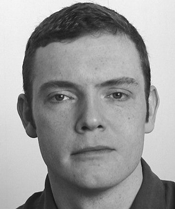
Above: Charles Edwards


Elektra is a kind of Holy Stück”, he adds. Sir Thomas Beecham conducted it at the Royal Opera House in 1910, a year after it was written, so it carries a venerable performance tradition. But every production is different. “It’s an opera with a fantastic inner logic to it, like Wozzeck, in terms of orchestral and psychological insight…. a kind of psychogram, drawing a picture of what’s happening in the minds of the characters. Citing the sequence where Klytemnestra recounts her traumatic dream, Edwards notes how close Strauss comes to atonality. The music wavers between tones because Klytemnestra can’t find her place emotionally. Strauss was writing well before Schoenberg, and conceptually this is very advanced. It’s as if the composer was on a “cliff edge, looking over into an abyss and pulling back.” Although there are elements of later Strauss in this music, the composer is on dangerous new ground.

Elektra also stands on the precipice in historic terms. This was the Vienna of Freud and artistic innovation. “Hofmannsthal’s libretto isn’t Wagnerian, it’s highly colloquial language, it was daring, yet he didn’t undertake lightly the task of reinterpreting the ancient tragedy in modern, psychological terms”. This was a pivot point in European history, nations tottering on the edge of the First World War, and the end of the Austro-Hungarian, German and Russian empires. Hence costumes which evoke Kaiser and Tsar, and sets which juxtapose ancient Greek ruins and early Bauhaus architecture. “The whole weight of history is pressing down”. It’s significant that the production was first conceived on the brink of the invasion of Iraq. If anything, the last five years have sharpened the focus. “We cannot ignore the past”. Klytemnestra wants to forget Agamemnon’s murder, but the truth catches up on her. The characters are locked in a cycle of retribution and violence. “Revenge, revenge, revenge” says Edwards, “it’s been going on since the beginning of mankind”.

“Ich trage die Last des Glückes”, Elektra carries the burden of the past, until she herself dies. Her final dance is not a dance of triumph – she doesn’t die in other versions of the legend, but in Hofmannsthal’s version, she is killed, just like those who killed her father, because she wanted vengeance too much. “That’s what that final C Major chord means”, says Edwards. As Mark Elder pointed out, it comes suddenly, in contrast to the minor keys that lead up to this point. “Strauss is turning a blinding light upon us” says Edwards, “This is not celebration, it’s interrogation : Is this what we really want ?” Elektra has been rehearsing her victory for a long time, but when it becomes reality, it finishes her off.

In this production, Edwards wants the music to come through clearly. “This won’t be a total Schlacht of sound, a generalised bloodbath of noise where you can’t really hear the words. The louder the orchestra, the more the singers have to force their voices and that lessens what they can really do”. Of course Elektra can be loud, but this can obscure the deeper levels of meaning. No diva “bathing in vast amounts of decibels”, then ? “Mark Elder knew absolutely that he wanted to avoid the caricature of Elektra as a mad harpie. A lot of her music is soft, amazingly tender. The dynamic between Elektra and Chrysothemis is fundamental. Elektra, for all her righteousness, is deeply damaged : everything that weiblich, human and fertile about her, she’s had to repress, yet she doesn’t hold it against her sister who stands for all she can never have”.

That’s why Edwards is so thrilled about Susan Bullock who will be this Elektra. “She understood, instinctively, she has an astonishing theatrical imagination. She is the greatest English singing actress in this role in the world”. Many who have heard Bullock will agree. Although she has created the part more than 50 times, she comes to the production with an open mind, eager to develop. Her experience counts. “Because of the physical requirements of opera, singers, like dancers, absolutely have to get the character ‘into their bodies’ and grow with it flexibly”.

Bullock’s approach to Elektra determines this characterization of Chrysothermis. “Nagellack”, a conductor once told Edwards, was the essence of the part, as if she had to be some hardened Jean Harlow vamp. “I don’t think Chrysothemis ever puts nail polish on” he says, however. She’s the one who believes in babies and intimacy. “She’s as strong as Elektra but more rational. Elektra has this hallucinogenic monologue where she’s fantasizing about revenge, and Chrysothemis comes in quietly and warns her that the immediate problem pressing on her is that their mother wants to lock her up. Anne Schwanewilms will be singing the role.

Chrysothemis is pure, but Elektra has been corrupted, along the way, and not simply by her father’s death. Has Aegisth abused her ? His hold over Klytemnestra is sexual, but this production shows that her body has collapsed, while he is still “this priapic power-crazed individual who satisfies himself wherever he can”. That’s why the maids are pregnant ! Aegisth doesn’t think beyond the moment any more than Klytemnestra can think of the past. There’s an unhealthy power struggle between Aegisth and Elektra. “We’re playing this as a kind of sex game, as she can be quite dominating as she has some kind of power over him. Maybe she can tell her mother he’s fiddling with her ? there’s mileage in that. There’s no way out for Elektra, no sexual release or outflow. It comes from a poisoned place because she’s had to stifle all the natural warmth and sexual maturity she should have been able to grow into.” We can imagine Freudian things now that Hofmannsthal would not have dared express a hundred years ago. Here, even Orestes isn’t “some proto Wotan hero, but traumatised”.

“If only I could erase the word ‘revival’ from the operatic lexicon !” says Edwards. “The word Weideraufnahme, a “new take”, is more appropriate. Five years have passed, and if anything, the interpretation takes on extra significance now that all that’s safe and certain seems to be crumbling around us. Edwards credits his cast, who have melded well. The family in the plot may be dysfunctional, but the singers work together like a community. “It’s much more ensemble. Everyone’s on stage at the end, the whole piece is cyclical. Toscaninni said there is no such thing as small parts, only small artists and there are no small artists in this production. Everyone is going on a journey, all their roles figure”.

This Elektra is on at the Royal Opera House, London on November 8th, 12th, 15th, 18th, 21st, 24th. Click here for details.

Charles Edwards has extensive directing and design experience throughout Europe. In the United States he has designed productions for Dallas, Houston and Chicago.

Anne Ozorio
Send to a friend

Send a link to this article to a friend with an optional message.

Friend's Email Address: (required)

Your Email Address: (required)

Message (optional):