08 Dec 2008
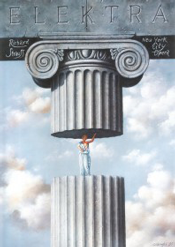
Elektra, Avery Fisher Hall, New York
Elektra begins with an explosion and remains, with a few lyric interludes, on that extreme pitch throughout its two hours.
English Touring Opera are delighted to announce a season of lyric monodramas to tour nationally from October to December. The season features music for solo singer and piano by Argento, Britten, Tippett and Shostakovich with a bold and inventive approach to making opera during social distancing.
This tenth of ten Live from London concerts was in fact a recorded live performance from California. It was no less enjoyable for that, and it was also uplifting to learn that this wasn’t in fact the ‘last’ LfL event that we will be able to enjoy, courtesy of VOCES8 and their fellow vocal ensembles (more below …).
Ever since Wigmore Hall announced their superb series of autumn concerts, all streamed live and available free of charge, I’d been looking forward to this song recital by Ian Bostridge and Imogen Cooper.
The Sixteen continues its exploration of Henry Purcell’s Welcome Songs for Charles II. As with Robert King’s pioneering Purcell series begun over thirty years ago for Hyperion, Harry Christophers is recording two Welcome Songs per disc.
Although Stile Antico’s programme article for their Live from London recital introduced their selection from the many treasures of the English Renaissance in the context of the theological debates and upheavals of the Tudor and Elizabethan years, their performance was more evocative of private chamber music than of public liturgy.
In February this year, Albanian soprano Ermonela Jaho made a highly lauded debut recital at Wigmore Hall - a concert which both celebrated Opera Rara’s 50th anniversary and honoured the career of the Italian soprano Rosina Storchio (1872-1945), the star of verismo who created the title roles in Leoncavallo’s La bohème and Zazà, Mascagni’s Lodoletta and Puccini’s Madama Butterfly.
Evidently, face masks don’t stifle appreciative “Bravo!”s. And, reducing audience numbers doesn’t lower the volume of such acclamations. For, the audience at Wigmore Hall gave soprano Elizabeth Llewellyn and pianist Simon Lepper a greatly deserved warm reception and hearty response following this lunchtime recital of late-Romantic song.
Collapsology. Or, perhaps we should use the French word ‘Collapsologie’ because this is a transdisciplinary idea pretty much advocated by a series of French theorists - and apparently, mostly French theorists. It in essence focuses on the imminent collapse of modern society and all its layers - a series of escalating crises on a global scale: environmental, economic, geopolitical, governmental; the list is extensive.
For this week’s Live from London vocal recital we moved from the home of VOCES8, St Anne and St Agnes in the City of London, to Kings Place, where The Sixteen - who have been associate artists at the venue for some time - presented a programme of music and words bound together by the theme of ‘reflection’.
'Such is your divine Disposation that both you excellently understand, and royally entertaine the Exercise of Musicke.’
Amongst an avalanche of new Mahler recordings appearing at the moment (Das Lied von der Erde seems to be the most favoured, with three) this 1991 Mahler Second from the 2nd Kassel MahlerFest is one of the more interesting releases.
‘And there was war in heaven: Michael and his angels fought against the dragon; and the dragon fought and his angels, And prevailed not; neither was their place found any more in heaven … that old serpent … Satan, which deceiveth the whole world: he was cast out into the earth, and his angels were cast out with him.’
If there is one myth, it seems believed by some people today, that probably needs shattering it is that post-war recordings or performances of Wagner operas were always of exceptional quality. This 1949 Hamburg Tristan und Isolde is one of those recordings - though quite who is to blame for its many problems takes quite some unearthing.
There was never any doubt that the fifth of the twelve Met Stars Live in Concert broadcasts was going to be a palpably intense and vivid event, as well as a musically stunning and theatrically enervating experience.
‘Love’ was the theme for this Live from London performance by Apollo5. Given the complexity and diversity of that human emotion, and Apollo5’s reputation for versatility and diverse repertoire, ranging from Renaissance choral music to jazz, from contemporary classical works to popular song, it was no surprise that their programme spanned 500 years and several musical styles.
The Academy of St Martin in the Fields have titled their autumn series of eight concerts - which are taking place at 5pm and 7.30pm on two Saturdays each month at their home venue in Trafalgar Square, and being filmed for streaming the following Thursday - ‘re:connect’.
The London Symphony Orchestra opened their Autumn 2020 season with a homage to Oliver Knussen, who died at the age of 66 in July 2018. The programme traced a national musical lineage through the twentieth century, from Britten to Knussen, on to Mark-Anthony Turnage, and entwining the LSO and Rattle too.
With the Live from London digital vocal festival entering the second half of the series, the festival’s host, VOCES8, returned to their home at St Annes and St Agnes in the City of London to present a sequence of ‘Choral Dances’ - vocal music inspired by dance, embracing diverse genres from the Renaissance madrigal to swing jazz.
Just a few unison string wriggles from the opening of Mozart’s overture to Le nozze di Figaro are enough to make any opera-lover perch on the edge of their seat, in excited anticipation of the drama in music to come, so there could be no other curtain-raiser for this Gala Concert at the Royal Opera House, the latest instalment from ‘their House’ to ‘our houses’.
"Before the ending of the day, creator of all things, we pray that, with your accustomed mercy, you may watch over us."
Elektra begins with an explosion and remains, with a few lyric interludes, on that extreme pitch throughout its two hours.
Strauss, world-famous, by 1907, for his orchestra-straining tone poems and, furthermore, the arch-hero-villain of the opera stage for his Salome, was looking for something still more monstrous, more gut-wrenching and soul-stopping and blood-chilling for a sequel — and having, in Elektra, explored ancient history’s most dysfunctional family, drew back from the pandemoniac abyss for the remainder of his long, largely placid career.
Elektra is extreme opera-going, its single act of an adamantine intensity and focus. And if opera companies can distract you by doing something grand or monstrous with the sets or the costumes or the final matricidal dance of triumph by the shattered, emotionally eviscerated heroine, to give the thing in concert, with nothing between you and the musical shock but a titling machine (which, if anything, enhances the horror of the story, the everyday terms of hate and vengeance), calls for a cast, an orchestra, a conductor willing to submit to the demands of horror to produce art.
The four performances of Elektra given by the New York Philharmonic this month achieved that horror, that intensity, that focus, that elevating shock. It was a performance to send chills up the spine. And, though concert it was, it was in a sense staged, for there was a bit of playing area around the conductor (and a ledge stage left for the serving maids and other walk-on parts — each with its brief but extreme demands), and the singers clearly had acted these roles before and gave us thrilling, fully acted performances (the final dance aside) of their ghastly roles.
Loren Maazel was the hero of the hour, a man in total control of his material and his instrument (hundred-headed, like the primeval giants mastered by Zeus). Each taut rhythm, each gristly underlying motif had its crisp, proper place, and yet each one sounded wild, impulsive, impromptu when it came; each bark or bleat or snarl of untamed animal concealed within the score (I’d never noticed before how many there are): dogs baying, wolves howling, cows pleading as they are rushed to slaughter, carrion birds exulting, snakes twining, horses screaming (they are said to have torn Orestes apart), to say nothing of the nameless horrors that fill Clytemnestra’s dreams (described by her in succulent, gruesome detail, as if confided not to a daughter but a psychoanalyst with an unfortunate agenda) and furies of every variety filling the air with contagious hysteria. Each accent of the stage action, illustrated by the score, fell into place with the implacable precision of one’s secret terrors. The orchestra played like gods of our inner underworlds, knowing just where to stretch and threaten and pretend to console.
Deborah Polaski, who has sung most of the more haggard ladies of the heroic repertory, from Kundry to Brunnhilde, knows where the dramatic hysteria lies in the title role and where it can relax. Her looks of scorn, of pretend sympathy, of self-pity when the return of Orestes recalls her to the innocent girl she once was enhanced her vocal portrayal of these facets of character. Her voice is still in fine shape, only the whispers of the duet with Orestes betraying a certain wear and tear. Never before had I noticed how very similar the sexless Elektra is to her artistic sister, Salome — another innocent who takes vengeance on the world for too terrible, too abrupt a knowledge of the evil lurking in a mother’s soul, a stepfather’s lust, a cruel, selfish society.
Anne Schwanewilms, who has made a name for herself singing Strauss and his contemporaries in such European capitals as Berlin, London and Chicago, sang Chrysothemis. It was especially enjoyable to note the interaction between her and Polaski, the latter’s contempt, the former’s exasperation and “must-she-go-on-like-this?” glances to heaven and earth to save her from her manic sister. She is a tall, handsome woman with a clear but light soprano, not an instrument (I would guess) to hold its own with the orchestra-combating extremes of Wagner or Verdi or even Strauss (Ariadne, say) but very right for Strauss’s soaring, less earthy roles: the Marschallin, Arabella, Aithra, Daphne. Chrysothemis’s yearning for simple life, her horror of the mythic emotions of the rest of her family, are intended to set those emotions in proper context, and she sang them with the feeling of a woman who knows she is trapped: she has mythologized the ordinary, and she lets us feel the pleasure of not being stuck in an epic ourselves.
Jane Henschel sang Clytemnestra. The role — a woman slowly being driven mad by guilt and apprehension — is often performed with an eldritch wreck of a voice, but Henschel, who has a beautiful low mezzo of heroic size (her Met debut was as the Nurse in Die Frau ohne Schatten), reminded us of the lady’s past as a queen and a woman of passion; she did not wallow in sickly torment but projected her fear, her confusion, her tragedy in graceful, phrases that lost nothing in shock value by being beautiful. Elektra can see only evil in her mother, but Strauss saw something else, something once noble and womanly, the woman who gave birth to beautiful daughters, and Henschel gave us that woman as no Clytemnestra of my experience has done since Christa Ludwig.
The lesser roles were cast with care. Julian Tovey, making his New York debut, sings with a cool glamour but did not quite equal the ominous alarm awakened by the brasses at Orestes’s appearance, and Richard Margison sang ably but somewhat missed the comical quality that James King brought to the part in his final New York appearance, as Aegisthus in a concert Elektra at Carnegie Hall — a comedy the more troubling because we know he will be murdered the moment he leaves the stage. Among the many small parts, I especially enjoyed Matt Boehler as Orestes’s nervous tutor and Linda Pavelka’s surging phrases among the usually too-anonymous maidservants.
This concert will be repeated on Tuesday and Saturday, and broadcast on WQXR on December 18.
John Yohalem