18 Dec 2008
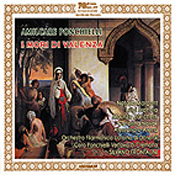
I mori di Valenza — Ponchielli’s Unfinished Opera
It almost seems as if every composer was entitled to have at least one unfinished work.
English Touring Opera are delighted to announce a season of lyric monodramas to tour nationally from October to December. The season features music for solo singer and piano by Argento, Britten, Tippett and Shostakovich with a bold and inventive approach to making opera during social distancing.
This tenth of ten Live from London concerts was in fact a recorded live performance from California. It was no less enjoyable for that, and it was also uplifting to learn that this wasn’t in fact the ‘last’ LfL event that we will be able to enjoy, courtesy of VOCES8 and their fellow vocal ensembles (more below …).
Ever since Wigmore Hall announced their superb series of autumn concerts, all streamed live and available free of charge, I’d been looking forward to this song recital by Ian Bostridge and Imogen Cooper.
The Sixteen continues its exploration of Henry Purcell’s Welcome Songs for Charles II. As with Robert King’s pioneering Purcell series begun over thirty years ago for Hyperion, Harry Christophers is recording two Welcome Songs per disc.
Although Stile Antico’s programme article for their Live from London recital introduced their selection from the many treasures of the English Renaissance in the context of the theological debates and upheavals of the Tudor and Elizabethan years, their performance was more evocative of private chamber music than of public liturgy.
In February this year, Albanian soprano Ermonela Jaho made a highly lauded debut recital at Wigmore Hall - a concert which both celebrated Opera Rara’s 50th anniversary and honoured the career of the Italian soprano Rosina Storchio (1872-1945), the star of verismo who created the title roles in Leoncavallo’s La bohème and Zazà, Mascagni’s Lodoletta and Puccini’s Madama Butterfly.
Evidently, face masks don’t stifle appreciative “Bravo!”s. And, reducing audience numbers doesn’t lower the volume of such acclamations. For, the audience at Wigmore Hall gave soprano Elizabeth Llewellyn and pianist Simon Lepper a greatly deserved warm reception and hearty response following this lunchtime recital of late-Romantic song.
Collapsology. Or, perhaps we should use the French word ‘Collapsologie’ because this is a transdisciplinary idea pretty much advocated by a series of French theorists - and apparently, mostly French theorists. It in essence focuses on the imminent collapse of modern society and all its layers - a series of escalating crises on a global scale: environmental, economic, geopolitical, governmental; the list is extensive.
For this week’s Live from London vocal recital we moved from the home of VOCES8, St Anne and St Agnes in the City of London, to Kings Place, where The Sixteen - who have been associate artists at the venue for some time - presented a programme of music and words bound together by the theme of ‘reflection’.
'Such is your divine Disposation that both you excellently understand, and royally entertaine the Exercise of Musicke.’
Amongst an avalanche of new Mahler recordings appearing at the moment (Das Lied von der Erde seems to be the most favoured, with three) this 1991 Mahler Second from the 2nd Kassel MahlerFest is one of the more interesting releases.
‘And there was war in heaven: Michael and his angels fought against the dragon; and the dragon fought and his angels, And prevailed not; neither was their place found any more in heaven … that old serpent … Satan, which deceiveth the whole world: he was cast out into the earth, and his angels were cast out with him.’
If there is one myth, it seems believed by some people today, that probably needs shattering it is that post-war recordings or performances of Wagner operas were always of exceptional quality. This 1949 Hamburg Tristan und Isolde is one of those recordings - though quite who is to blame for its many problems takes quite some unearthing.
There was never any doubt that the fifth of the twelve Met Stars Live in Concert broadcasts was going to be a palpably intense and vivid event, as well as a musically stunning and theatrically enervating experience.
‘Love’ was the theme for this Live from London performance by Apollo5. Given the complexity and diversity of that human emotion, and Apollo5’s reputation for versatility and diverse repertoire, ranging from Renaissance choral music to jazz, from contemporary classical works to popular song, it was no surprise that their programme spanned 500 years and several musical styles.
The Academy of St Martin in the Fields have titled their autumn series of eight concerts - which are taking place at 5pm and 7.30pm on two Saturdays each month at their home venue in Trafalgar Square, and being filmed for streaming the following Thursday - ‘re:connect’.
The London Symphony Orchestra opened their Autumn 2020 season with a homage to Oliver Knussen, who died at the age of 66 in July 2018. The programme traced a national musical lineage through the twentieth century, from Britten to Knussen, on to Mark-Anthony Turnage, and entwining the LSO and Rattle too.
With the Live from London digital vocal festival entering the second half of the series, the festival’s host, VOCES8, returned to their home at St Annes and St Agnes in the City of London to present a sequence of ‘Choral Dances’ - vocal music inspired by dance, embracing diverse genres from the Renaissance madrigal to swing jazz.
Just a few unison string wriggles from the opening of Mozart’s overture to Le nozze di Figaro are enough to make any opera-lover perch on the edge of their seat, in excited anticipation of the drama in music to come, so there could be no other curtain-raiser for this Gala Concert at the Royal Opera House, the latest instalment from ‘their House’ to ‘our houses’.
"Before the ending of the day, creator of all things, we pray that, with your accustomed mercy, you may watch over us."
It almost seems as if every composer was entitled to have at least one unfinished work.
Donizetti never finished his Le duc d’albe, Meyerbeer his Africaine, Schubert his last symphony, Halevy his Noe, and Ponchielli his Mori di Valenza. Ponchielli’s failure to finish this project is a great shame. He worked on it around 1874-75, shortly before the first version of La gioconda, when he was at the height of his powers. The opera had to wait almost 40 years, until before the start of the First World War until Arturo Cadore, a great admirer of the composer’s, set out to finish the job. Fortunately, he was able to do so using essentially Ponchielli’s style to compose the missing fourth act, and to orchestrate the rest of the score.
It was finally performed at the Palais Garnier in Monte Carlo on March 17, 1914 with Lydia Lipkowska as Elèma, Jacqueline Royer as Carmine, a very young Giovanni Martinelli as Fernando, George Baklanoff as Delascar, and Roberto Marvini as the king. It was given in the Milan Arena that July, and finally in Cremona during the ensuing Carnival season. It was seriously considered for the 1958 season in Cremona, but the city authorities decided against it.
Bongiovanni has previously performed a tremendous service to opera lovers by releasing live performances of less well known operas performed in Italy, including many unusual works by composers like Cimarosa, Donizetti, Giordano, Mercadante, Ponchielli, Rossini, and many others. But this recording seems to be different. Rather than being an actual performance at a theater, the booklet mentions a recording in the auditorium in Castelfidardo, and the Sala Maffei in Cremona during January 2007. Let us hope that this will be the first of many such recordings, and that, if no live performances are forthcoming, works like Ponchielli’s Figliuol Prodigo, Mercadante’s I Normanni a Parigi and I briganti as well as Pacini’s Arabi nelle Gallie, Bondelmonte and Lorenzino de’Medici will get the same treatment.
The action of the opera takes place in Madrid and Valencia in the early 17th century, at a time when a large contingent of Moors was still living openly in Spain, and allowed to practice their religion.
Act I takes place in Valencia: As the opera starts, Delascar, head of the Moors , is reading a note that his son has been imprisoned, and sentenced to death. Elèma, his beautiful daughter tells her father that she could save her brother, if only she could speak to the king. Elèma reminds Delascar that she had met King Phillip five years earlier, when he was a guest at Delascar’s home. She had been picking flowers, giving him one as he passed. The king was evidently very taken with her. He kissed the flower, telling her that should she ever need a favor, it was her’s for the asking. He even wrote this on a scrap of paper and gave it to her. Elèma relates the story to her father, but he is doubtful, reminding her that the king is a servant of Rome. Just then, trumpets announce the arrival of an old Spanish knight, Giovanni d’Aguilar, who is a friend of Delascar’s. D’Aguilar, his daughter, Carmine, and her bethrothed, Fernando d’Alabayda, are all on their way to Madrid. Delascar asks D’Aguilar to take Elèma with him to Madrid and introduce her to the King. Of course, D’Aguilar agrees.
During the finale of the first act, Fernando, who had not yet met Elèma admires her beauty and momentarily forgets about Carmine, while Carmine and Elèma become friendly. All the principals leave for Madrid except Delascar.
Act II is in two scenes. The first takes place at the D’Aguilar palace. Elèma admits to Carmine that she is in love when Fernando enters. He tells them that Elèma is thought to be the courtesan of the king, but assures Elèma that he does not believe this to be true, and that he will defend her at all costs. From Fernando’s behavior, Carmine senses that he no longer loves her, but loves Elèma instead.
The scene changes to the gardens of the Buen Ritiro in Madrid. After the chorus comments on what they perceive to be the king’s new mistress (Elèma, of course), Fernando, alone, expresses guilt feelings about now loving Elèma instead of Carmine. Just then, Elèma and the king enter. The king asks Fernando about Carmine, but he just bows and leaves. Elèma asks the king to intercede in favor of the moors, when the latter names his price: a word of love from her, which she refuses, saying that she fears the resulting scorn. The Duke of Lerma enters, telling the king that Fernando has dared to draw his sword in the royal palace. The latter asks for an explanation, and Fernando tells him that a lady’s honor was outraged, pointing to Elèma. The king approves Fernando’s action, asks Elèma for her arm and reminds the courtiers that it is he who reigns.
Act III takes place in the throne room of the royal palace. Carmine, alone, muses about the recent happenings, and realizes that Elèma did not want to steal Fernando’s love from her. Elèma enters, Carmine tells her that she will be her friend in joy and sorrow, and then leaves. Alone, Elèma states that she will go away, but that she wants Carmine to marry Fernando tomorrow. Fernando enters and tells Elèma that he will leave Spain forever the next day. Asked about Carmine, he says that she will forget him. Elèma replies that Carmine will die if he leaves, and begs him for mercy. Fernando states his love for Elèma who inadvertently admits that she loves him in return. He is now happy, but she orders him to marry Carmine tomorrow, which Fernando agrees to do. A crowd is heard screaming and yelling, as they chase an old Moorish man. Fernando runs out with his sword to save him — it is Delascar.
The King, alone, enters with a paper in his hand. It is the edict which would expel the moors that the Duke of Lerma and his followers want him to sign. He says to himself that only Elèma could save her people by becoming the queen of his heart. The Duke of Lerma announces Carmine. Knowing her to be Elema’s friend, the king expresses hope. When he realizes her entreaties have nothing to do with Elema, he becomes furious and signs the document, then announces this to Lerma and the courtiers. Delascar tries to object, but the king tells him it is too late — the decree has been signed. The king also has Fernando thrown into prison for daring to threaten his person.
In Act IV, the moors have returned to Valencia where they plan to board ships for Morocco. They are bitterly lamenting the need to leave Spain, which had been their home for seven centuries, while Delascar expresses his outrage about his daughter’s readiness to sacrifice their honor. He tells the chorus that he plans to join them in exile. They leave, Elèma enters with Carmine, telling her that she will soon be married to Fernando. The latter is brought in by the king, who frees him, and tells him to marry Carmine. Leaving, the king tells Elèma that she will obtain from him all that she wished. Left alone, Elèma expresses her misery at Fernando’s choosing Carmine (forgetting that she had ordered him to),and starts to pray. Her father, entering, tells her that the king has signed a pardon for Delascar, and asks her to what she owes this favor. She replies: “to my prayers, to your daughter’s tears”. He tells her that she prayed for him in vain, that it is his duty to share the fate of his brothers, and hers to follow him. He seems willing to forgive her for the shame she has caused him, but, when she continues to refuse, because love keeps her there, he curses her and stabs her with his dagger. The king and the others enter, as Elèma dies sweetly in Fernando’s arms..
I mori diValenza is the fourth of Ponchielli’s neglected other operas to become available on CD. I Lituani, originally issued on LP in 1979 had been the first of these. This was followed by a long drought, with no further Ponchielli operas showing up in stores until the 21st century, when there was a revival of Marion Delorme in Montpellier, France, which was issued on the Accord label. More recently, I promessi Sposi was given as a concert in Sondalo, Italy, and released by Bongiovanni , followed by I Mori di Valenza on the same label in 2007. I am confident that more of Ponchielli’s works will turn up in the coming years.
Musically, I mori di Valenza has many similarities to La gioconda, but is not quite on the level as the better known work, although that might have been a bit too much to expect. La gioconda is one of the great masterpieces of Italian opera, and has long been a staple of the standard repertory, with the exception of Northern Europe and France. Perhaps, the most striking similarities are between the two soprano roles, both heroines have the same self-sacrificing nature, and both being killed at the end by the baritone.
The two principal roles in Mori di Valenza are Elèma with three arias and Delascar with two. They also have two major duets. They are interpreted by Natalia Margarit and Maurizio Zanchetti respectively. Both are fine singers, although neither has as yet attained stardom and both took part in the previously mentioned concert of I Promessi Sposi in Sondalo. Margarit has also recorded a solo CD of arias from mostly unfamiliar works on the Bongiovanni label, while Zanchetti recorded a complete Chatterton by Leoncavallo for the same firm. The other roles are all taken by other promising young singers.
This recording can be highly recommended to all lovers of Italian opera, but especially those who enjoy Ponchielli and La gioconda.
Tom Kaufman