15 Mar 2009
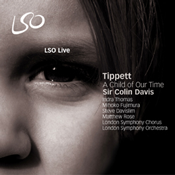
Tippett: A Child of Our Time
Although an ineffable aura of the 1960s emanates from Michael Tippett’s oratorio A Child of Our Time, its composition came at the start of WWII in Europe.
English Touring Opera are delighted to announce a season of lyric monodramas to tour nationally from October to December. The season features music for solo singer and piano by Argento, Britten, Tippett and Shostakovich with a bold and inventive approach to making opera during social distancing.
This tenth of ten Live from London concerts was in fact a recorded live performance from California. It was no less enjoyable for that, and it was also uplifting to learn that this wasn’t in fact the ‘last’ LfL event that we will be able to enjoy, courtesy of VOCES8 and their fellow vocal ensembles (more below …).
Ever since Wigmore Hall announced their superb series of autumn concerts, all streamed live and available free of charge, I’d been looking forward to this song recital by Ian Bostridge and Imogen Cooper.
The Sixteen continues its exploration of Henry Purcell’s Welcome Songs for Charles II. As with Robert King’s pioneering Purcell series begun over thirty years ago for Hyperion, Harry Christophers is recording two Welcome Songs per disc.
Although Stile Antico’s programme article for their Live from London recital introduced their selection from the many treasures of the English Renaissance in the context of the theological debates and upheavals of the Tudor and Elizabethan years, their performance was more evocative of private chamber music than of public liturgy.
In February this year, Albanian soprano Ermonela Jaho made a highly lauded debut recital at Wigmore Hall - a concert which both celebrated Opera Rara’s 50th anniversary and honoured the career of the Italian soprano Rosina Storchio (1872-1945), the star of verismo who created the title roles in Leoncavallo’s La bohème and Zazà, Mascagni’s Lodoletta and Puccini’s Madama Butterfly.
Evidently, face masks don’t stifle appreciative “Bravo!”s. And, reducing audience numbers doesn’t lower the volume of such acclamations. For, the audience at Wigmore Hall gave soprano Elizabeth Llewellyn and pianist Simon Lepper a greatly deserved warm reception and hearty response following this lunchtime recital of late-Romantic song.
Collapsology. Or, perhaps we should use the French word ‘Collapsologie’ because this is a transdisciplinary idea pretty much advocated by a series of French theorists - and apparently, mostly French theorists. It in essence focuses on the imminent collapse of modern society and all its layers - a series of escalating crises on a global scale: environmental, economic, geopolitical, governmental; the list is extensive.
For this week’s Live from London vocal recital we moved from the home of VOCES8, St Anne and St Agnes in the City of London, to Kings Place, where The Sixteen - who have been associate artists at the venue for some time - presented a programme of music and words bound together by the theme of ‘reflection’.
'Such is your divine Disposation that both you excellently understand, and royally entertaine the Exercise of Musicke.’
Amongst an avalanche of new Mahler recordings appearing at the moment (Das Lied von der Erde seems to be the most favoured, with three) this 1991 Mahler Second from the 2nd Kassel MahlerFest is one of the more interesting releases.
‘And there was war in heaven: Michael and his angels fought against the dragon; and the dragon fought and his angels, And prevailed not; neither was their place found any more in heaven … that old serpent … Satan, which deceiveth the whole world: he was cast out into the earth, and his angels were cast out with him.’
If there is one myth, it seems believed by some people today, that probably needs shattering it is that post-war recordings or performances of Wagner operas were always of exceptional quality. This 1949 Hamburg Tristan und Isolde is one of those recordings - though quite who is to blame for its many problems takes quite some unearthing.
There was never any doubt that the fifth of the twelve Met Stars Live in Concert broadcasts was going to be a palpably intense and vivid event, as well as a musically stunning and theatrically enervating experience.
‘Love’ was the theme for this Live from London performance by Apollo5. Given the complexity and diversity of that human emotion, and Apollo5’s reputation for versatility and diverse repertoire, ranging from Renaissance choral music to jazz, from contemporary classical works to popular song, it was no surprise that their programme spanned 500 years and several musical styles.
The Academy of St Martin in the Fields have titled their autumn series of eight concerts - which are taking place at 5pm and 7.30pm on two Saturdays each month at their home venue in Trafalgar Square, and being filmed for streaming the following Thursday - ‘re:connect’.
The London Symphony Orchestra opened their Autumn 2020 season with a homage to Oliver Knussen, who died at the age of 66 in July 2018. The programme traced a national musical lineage through the twentieth century, from Britten to Knussen, on to Mark-Anthony Turnage, and entwining the LSO and Rattle too.
With the Live from London digital vocal festival entering the second half of the series, the festival’s host, VOCES8, returned to their home at St Annes and St Agnes in the City of London to present a sequence of ‘Choral Dances’ - vocal music inspired by dance, embracing diverse genres from the Renaissance madrigal to swing jazz.
Just a few unison string wriggles from the opening of Mozart’s overture to Le nozze di Figaro are enough to make any opera-lover perch on the edge of their seat, in excited anticipation of the drama in music to come, so there could be no other curtain-raiser for this Gala Concert at the Royal Opera House, the latest instalment from ‘their House’ to ‘our houses’.
"Before the ending of the day, creator of all things, we pray that, with your accustomed mercy, you may watch over us."
Although an ineffable aura of the 1960s emanates from Michael Tippett’s oratorio A Child of Our Time, its composition came at the start of WWII in Europe.
The immediate inspiration was Kristallnacht, the violent Nazi outburst motivated by the assassination of a German official by a desperate Polish Jew. Tippett struggled with a text to encompass this terrible subject, and after T. S. Eliott declined the opportunity to create one, the composer followed the poet’s advice and devised his own, a blend of his own words and those of several spirituals, such as “Deep River.”
Although the composition’s title derives from a novel by a German author (Ein Kind unserer Zeit), Tippett avoids conventional narrative, referring only briefly to the relevant historical event: “He shoots the official - but he shoots only his dark brother.” Most of the text adopts a Kahlil Gibran-type profundity.
Healing springs from the womb of time
The simple-hearted shall exult in the end
In other words, time heals all wounds, and the meek shall inherit the earth. The clarity and direct expression of the words to the spirituals comes as a welcome contrast, even as sung out by the over-enunciated, rich voices of the four soloists and chorus.
What carries the work past any perceived limitations of its text is the power of its music. Tippett sets the spirituals with exquisite taste, and he never chooses the easy route of producing ugly sounds to suggest the pain and horror of the subject. The great model seems to have been Bach’s Matthew Passion, with its urgency and somber beauty.
This live recording from December 2007 at the Barbican in London captures Colin Davis and the London Symphony Orchestra and chorus in crisp sound; the disc is a Hybrid-SACD. Davis conducts with precision, which is most welcome in the faster, fugal passages. However, he can’t find a way to bring the hour-long work to a more forceful conclusion; it’s one of those works that simply seems to stop. Soprano Indra Thomas tends to shrillness at the top; the body of her voice is attractive. Mohoko Fujimara’s alto sound works better for the spirituals. Tenor Steve Daislim and bass Matthew Rose blend well as they join the women in the final number, “Deep River.” Elsewhere they have no choice but to sound a bit fussy when vocalizing Tippett’s text.
Criticizing Tippett’s oratorio almost places one in the painfully uncomfortable position of defending the Nazis or denigrating the artistic value of spirituals when placed alongside art music. Perhaps thankfully, much of the time Tippett’s own awkward text is incomprehensible as sung, particularly by the chorus. LSO Live does provide the text in English, with brief but informative notes by Meiron Bowen and Paul Griffith. Opportunities to hear A Child of Our Time, especially in the U.S., probably will remain rare, which is reason enough to be glad for a recording of this quality.
Chris Mullins