19 Apr 2009
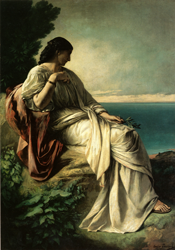
Iphigénie en Aulide at Teatro dell’Opera di Roma
Rome’s opera house was built in 1880, in the explosion of building that followed the unification of Italy with Rome as its capital.
English Touring Opera are delighted to announce a season of lyric monodramas to tour nationally from October to December. The season features music for solo singer and piano by Argento, Britten, Tippett and Shostakovich with a bold and inventive approach to making opera during social distancing.
This tenth of ten Live from London concerts was in fact a recorded live performance from California. It was no less enjoyable for that, and it was also uplifting to learn that this wasn’t in fact the ‘last’ LfL event that we will be able to enjoy, courtesy of VOCES8 and their fellow vocal ensembles (more below …).
Ever since Wigmore Hall announced their superb series of autumn concerts, all streamed live and available free of charge, I’d been looking forward to this song recital by Ian Bostridge and Imogen Cooper.
The Sixteen continues its exploration of Henry Purcell’s Welcome Songs for Charles II. As with Robert King’s pioneering Purcell series begun over thirty years ago for Hyperion, Harry Christophers is recording two Welcome Songs per disc.
Although Stile Antico’s programme article for their Live from London recital introduced their selection from the many treasures of the English Renaissance in the context of the theological debates and upheavals of the Tudor and Elizabethan years, their performance was more evocative of private chamber music than of public liturgy.
In February this year, Albanian soprano Ermonela Jaho made a highly lauded debut recital at Wigmore Hall - a concert which both celebrated Opera Rara’s 50th anniversary and honoured the career of the Italian soprano Rosina Storchio (1872-1945), the star of verismo who created the title roles in Leoncavallo’s La bohème and Zazà, Mascagni’s Lodoletta and Puccini’s Madama Butterfly.
Evidently, face masks don’t stifle appreciative “Bravo!”s. And, reducing audience numbers doesn’t lower the volume of such acclamations. For, the audience at Wigmore Hall gave soprano Elizabeth Llewellyn and pianist Simon Lepper a greatly deserved warm reception and hearty response following this lunchtime recital of late-Romantic song.
Collapsology. Or, perhaps we should use the French word ‘Collapsologie’ because this is a transdisciplinary idea pretty much advocated by a series of French theorists - and apparently, mostly French theorists. It in essence focuses on the imminent collapse of modern society and all its layers - a series of escalating crises on a global scale: environmental, economic, geopolitical, governmental; the list is extensive.
For this week’s Live from London vocal recital we moved from the home of VOCES8, St Anne and St Agnes in the City of London, to Kings Place, where The Sixteen - who have been associate artists at the venue for some time - presented a programme of music and words bound together by the theme of ‘reflection’.
'Such is your divine Disposation that both you excellently understand, and royally entertaine the Exercise of Musicke.’
Amongst an avalanche of new Mahler recordings appearing at the moment (Das Lied von der Erde seems to be the most favoured, with three) this 1991 Mahler Second from the 2nd Kassel MahlerFest is one of the more interesting releases.
‘And there was war in heaven: Michael and his angels fought against the dragon; and the dragon fought and his angels, And prevailed not; neither was their place found any more in heaven … that old serpent … Satan, which deceiveth the whole world: he was cast out into the earth, and his angels were cast out with him.’
If there is one myth, it seems believed by some people today, that probably needs shattering it is that post-war recordings or performances of Wagner operas were always of exceptional quality. This 1949 Hamburg Tristan und Isolde is one of those recordings - though quite who is to blame for its many problems takes quite some unearthing.
There was never any doubt that the fifth of the twelve Met Stars Live in Concert broadcasts was going to be a palpably intense and vivid event, as well as a musically stunning and theatrically enervating experience.
‘Love’ was the theme for this Live from London performance by Apollo5. Given the complexity and diversity of that human emotion, and Apollo5’s reputation for versatility and diverse repertoire, ranging from Renaissance choral music to jazz, from contemporary classical works to popular song, it was no surprise that their programme spanned 500 years and several musical styles.
The Academy of St Martin in the Fields have titled their autumn series of eight concerts - which are taking place at 5pm and 7.30pm on two Saturdays each month at their home venue in Trafalgar Square, and being filmed for streaming the following Thursday - ‘re:connect’.
The London Symphony Orchestra opened their Autumn 2020 season with a homage to Oliver Knussen, who died at the age of 66 in July 2018. The programme traced a national musical lineage through the twentieth century, from Britten to Knussen, on to Mark-Anthony Turnage, and entwining the LSO and Rattle too.
With the Live from London digital vocal festival entering the second half of the series, the festival’s host, VOCES8, returned to their home at St Annes and St Agnes in the City of London to present a sequence of ‘Choral Dances’ - vocal music inspired by dance, embracing diverse genres from the Renaissance madrigal to swing jazz.
Just a few unison string wriggles from the opening of Mozart’s overture to Le nozze di Figaro are enough to make any opera-lover perch on the edge of their seat, in excited anticipation of the drama in music to come, so there could be no other curtain-raiser for this Gala Concert at the Royal Opera House, the latest instalment from ‘their House’ to ‘our houses’.
"Before the ending of the day, creator of all things, we pray that, with your accustomed mercy, you may watch over us."
Rome’s opera house was built in 1880, in the explosion of building that followed the unification of Italy with Rome as its capital.
A sleepy papal city of pilgrims and ruins within ancient walls was transformed into a modern bustling metropolis, pierced by railways and Parisian-style boulevards, its acres of glorious ruin gradually unearthed from a thousand years of protective soil cover. That theater was completely rebuilt (as the proscenium proclaims) in 1928, under tiny King Victor Emmanuel III and Benito Mussolini, the “leader.” The result, on Piazza Gigli, is a “futuristic” travertine box surrounding a tinsel horseshoe with an improbably grandiose ceiling mural — what opera features a charioteer mastering four fierce horses with one hand and a naked blonde under his other arm? The building contains memorials to Gigli and Del Monaco, but not to Callas — who, fifty years ago, famously snubbed the president of the republic from this very stage.
The urbane gentleman who shared the box with me and two girls from Oslo (who thought they were attending Gluck’s Orfeo) said, “You’re lucky you came tonight — it was probably your last chance — they’re about to go on strike.” “Which unions are striking?” “All of them.” He was, happily, wrong, and I got to a second performance.
In March, the only opera to be seen in Rome was Gluck’s Iphigénie en Aulide, under the baton of Riccardo Muti, naturally sung in the original French by a Bulgarian diva and a Russian supporting cast, and staged (conservatively, rationally) by a Greek director. Posters elsewhere in town announced Masaniello, but that was a new rock opera about the Neapolitan folk rebellion, and not, alas, Auber’s 1828 masterpiece.
Iphigénie would seem an unusual opera for an Italian audience — the dialogue is accompanied declamation, barely set off from the arias, and there were no full stops after fiery vocal display (there is little fiery vocal display in Gluck’s “reform” operas) to inspire audience demonstration. Indeed, though the ends of the acts and the conclusion of the opera were met with enthusiasm, the opera itself was only interrupted by applause on two occasions — an outburst for Iphigénie’s great Act III aria, “Adieu, vivez pour Oreste,” and another for Clytemnestre’s tirade, “Jupiter, lance la foudre,” near the evening’s end. Older Italian opera-goers may have been puzzled. As for the younger ones — at the Tuesday performance, there were two rows of children in the orchestra section, looking about ten years old, fully suited and party-dressed. I cannot imagine they remained awake for three long hours of Gluck’s declamation (there is one duet and one brief quartet in the entire work), but awake or asleep, their behavior was impeccable. If there was a fidget or a cough, it drew no attention.
Yannis Kokkos’s staging was elegant, spare, classic, and focused on the story. Sliding panels shut off or opened the space, so the chorus could abruptly reappear, having changed from Greeks into Myrmidons or back again (Greeks wore wigs, Myrmidons breastplates). Whether Greek or Myrmidon, the chorus sang with mimed gestures, illustrating the text in a somewhat hieratical manner. A broad staircase pulled back to permit the ballet, then slid forward so the singers could pose upon it strikingly, the Greeks in white Louis XVI wigs, the leads in yards and yards of flowing cloak of some glistening drape, tossed about passionately to express emotion more flamboyantly than Gluck’s stately verses permitted — since I’d spent the day observing mythic and/or saintly figures on the walls of the Villa Borghese tossing fabric about for the same purpose, this made perfect sense to me. But costume drawings from the company’s last production of this opera, in 1953-54, displayed in cases in the salon, looked more amusing: ballet boys with Hector helmets and ladies in revealing peploi.
Most of the singers started weak but became stronger. Alexey Tikhomirov, the Agamemnon (whom the company seems to favor, based on the number of photos in the portico of the house — and he is a handsome, commanding figure), is a Russian bass, with a serene growl and a kingly set to the shoulder, but the higher reaches of the part brought strain and a very different timbre; at the March 26 performance, he petered out during the soul-searching monologue that ends Act II. Maxim Kuzmin-Karavaev sang a reassuring Calchas. Avi Klemberg seemed too light for Achille at first, on March 24, but he put some exciting force behind his desperate utterances in Act II. Pietro Pretti, Achille on the 26th, had a far easier tenor and was handsomer as well. Ekaterina Gubanova, the Clytemnestre, began slowly but built to terrific outbursts that galvanized the house — this is another of those operas (like Il Trovatore and Lohengrin) that are designed for the mezzo to steal, if she cares to, and has the power to sweep the soprano off the stage.
However, the star of the evening, in the title role, was Krassimira Stoyanova — little used in New York (where she has sung a thrilling Traviata and Donna Anna at the Met, plus Valentine in OONY’s Les Huguenots and, most excitingly, Anna Bolena) but a popular star in Vienna and Barcelona in such roles as Desdemona, Luisa Miller and La Juive.
Stoyanova has a creamy, pastel sound on which the tremors of Iphigénie’s doubts and terrors made a delicious effect, but she easily produced the power of the girl’s passionate affirmations of duty at the opera’s climax, when she goes willingly to the sacrifice that, in the end, the goddess does not demand for the very reason that Iphigénie has proved heroic. Like the rest of the cast, too, Stoyanova sang in quite comprehensible French (the surtitles were in Italian), and declaimed the drama with the dignity of the Comédie Française. There was a lovely moment when, having been presented with golden stalks of wheat by the welcoming Greeks, Iphigénie, in private, lets them fall, heartbroken, from her arms, and she was capable of taking part in the nuptial dances of Act II with dramatic gestures. Her sincerity, the attention she paid to whomever was addressing her, the rise of tension and strength in her voice as passion rose in the music, the way her voice blended with others on the few occasions this was permitted by the composer made for a most satisfying account of a long and sometimes shadowy part. Though not a great beauty, Madame Stoyanova looked appealingly pretty in white with a blue overmantel and her hair tied up à la Grecque. (She looked far handsomer in Rome than she did in that black shmatta in the Met’s Don Giovanni last fall.)
Kokkos is the sort of director who manages to get his singers to the lip of the stage whenever they have a lot to sing — a courtesy singers delight in, as it gives them a vocal advantage. It is to his credit that this usually did not seem unnatural, and the moving staircase permitted Agamemnon, for one, to be close to us and far away at the same time. The tiny goddess Diane who swung in on a moon-on-strings (rather the way the gods emerged from machines in Greek drama) was not impressive, the voice being thin and silvery and unworldly rather than powerful and godlike, but the ritual movement of the stately or angry choruses was very well managed.
Riccardo Muti cut the instruments down to something like the numbers Gluck must have employed, and his stately tempi supported the singers well and kept the event flowing at a stately, inevitable pace. He followed Gluck’s edition except in the final scene, where he substituted Richard Wagner’s revised ending of 1847, eliminating the wedding demanded by French formalists (in defiance of Homer and Euripides) in favor of Iphigénie’s transference to Tauris. This made a slight disturbance in the orchestral fabric of the occasion — from Gluck we are catapulted into something rather like the conclusion of Tannhäuser — but left those of us familiar with Iphigénie en Tauride more comfortable.
John Yohalem