20 Jun 2009
Bach's St. Matthew Passion at BAM
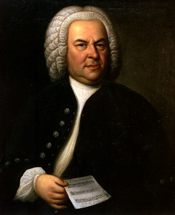
To the sorrow of all lovers of baroque opera, J.S. Bach never composed for the stage.
English Touring Opera are delighted to announce a season of lyric monodramas to tour nationally from October to December. The season features music for solo singer and piano by Argento, Britten, Tippett and Shostakovich with a bold and inventive approach to making opera during social distancing.
This tenth of ten Live from London concerts was in fact a recorded live performance from California. It was no less enjoyable for that, and it was also uplifting to learn that this wasn’t in fact the ‘last’ LfL event that we will be able to enjoy, courtesy of VOCES8 and their fellow vocal ensembles (more below …).
Ever since Wigmore Hall announced their superb series of autumn concerts, all streamed live and available free of charge, I’d been looking forward to this song recital by Ian Bostridge and Imogen Cooper.
The Sixteen continues its exploration of Henry Purcell’s Welcome Songs for Charles II. As with Robert King’s pioneering Purcell series begun over thirty years ago for Hyperion, Harry Christophers is recording two Welcome Songs per disc.
Although Stile Antico’s programme article for their Live from London recital introduced their selection from the many treasures of the English Renaissance in the context of the theological debates and upheavals of the Tudor and Elizabethan years, their performance was more evocative of private chamber music than of public liturgy.
In February this year, Albanian soprano Ermonela Jaho made a highly lauded debut recital at Wigmore Hall - a concert which both celebrated Opera Rara’s 50th anniversary and honoured the career of the Italian soprano Rosina Storchio (1872-1945), the star of verismo who created the title roles in Leoncavallo’s La bohème and Zazà, Mascagni’s Lodoletta and Puccini’s Madama Butterfly.
Evidently, face masks don’t stifle appreciative “Bravo!”s. And, reducing audience numbers doesn’t lower the volume of such acclamations. For, the audience at Wigmore Hall gave soprano Elizabeth Llewellyn and pianist Simon Lepper a greatly deserved warm reception and hearty response following this lunchtime recital of late-Romantic song.
Collapsology. Or, perhaps we should use the French word ‘Collapsologie’ because this is a transdisciplinary idea pretty much advocated by a series of French theorists - and apparently, mostly French theorists. It in essence focuses on the imminent collapse of modern society and all its layers - a series of escalating crises on a global scale: environmental, economic, geopolitical, governmental; the list is extensive.
For this week’s Live from London vocal recital we moved from the home of VOCES8, St Anne and St Agnes in the City of London, to Kings Place, where The Sixteen - who have been associate artists at the venue for some time - presented a programme of music and words bound together by the theme of ‘reflection’.
'Such is your divine Disposation that both you excellently understand, and royally entertaine the Exercise of Musicke.’
Amongst an avalanche of new Mahler recordings appearing at the moment (Das Lied von der Erde seems to be the most favoured, with three) this 1991 Mahler Second from the 2nd Kassel MahlerFest is one of the more interesting releases.
‘And there was war in heaven: Michael and his angels fought against the dragon; and the dragon fought and his angels, And prevailed not; neither was their place found any more in heaven … that old serpent … Satan, which deceiveth the whole world: he was cast out into the earth, and his angels were cast out with him.’
If there is one myth, it seems believed by some people today, that probably needs shattering it is that post-war recordings or performances of Wagner operas were always of exceptional quality. This 1949 Hamburg Tristan und Isolde is one of those recordings - though quite who is to blame for its many problems takes quite some unearthing.
There was never any doubt that the fifth of the twelve Met Stars Live in Concert broadcasts was going to be a palpably intense and vivid event, as well as a musically stunning and theatrically enervating experience.
‘Love’ was the theme for this Live from London performance by Apollo5. Given the complexity and diversity of that human emotion, and Apollo5’s reputation for versatility and diverse repertoire, ranging from Renaissance choral music to jazz, from contemporary classical works to popular song, it was no surprise that their programme spanned 500 years and several musical styles.
The Academy of St Martin in the Fields have titled their autumn series of eight concerts - which are taking place at 5pm and 7.30pm on two Saturdays each month at their home venue in Trafalgar Square, and being filmed for streaming the following Thursday - ‘re:connect’.
The London Symphony Orchestra opened their Autumn 2020 season with a homage to Oliver Knussen, who died at the age of 66 in July 2018. The programme traced a national musical lineage through the twentieth century, from Britten to Knussen, on to Mark-Anthony Turnage, and entwining the LSO and Rattle too.
With the Live from London digital vocal festival entering the second half of the series, the festival’s host, VOCES8, returned to their home at St Annes and St Agnes in the City of London to present a sequence of ‘Choral Dances’ - vocal music inspired by dance, embracing diverse genres from the Renaissance madrigal to swing jazz.
Just a few unison string wriggles from the opening of Mozart’s overture to Le nozze di Figaro are enough to make any opera-lover perch on the edge of their seat, in excited anticipation of the drama in music to come, so there could be no other curtain-raiser for this Gala Concert at the Royal Opera House, the latest instalment from ‘their House’ to ‘our houses’.
"Before the ending of the day, creator of all things, we pray that, with your accustomed mercy, you may watch over us."
To the sorrow of all lovers of baroque opera, J.S. Bach never composed for the stage.
He does not seem to have had any interest in the operatic form and, too, he never lived in a major court city (such as Dresden or Berlin), where an opera company would have been part of any composer’s focus — much less an urban center with its own opera tradition, such as Hamburg, Venice or London. Why, then, would we want to have one of his grander compositions — in this case, the St. Matthew Passion — enacted on stage, with the singers playing parts, when Bach seems to have intended the music and the message to reach our ears without benefit of stage pictures at all?
Handel’s oratorios are sometimes based on stage plays (Esther, Athalia, Hercules), and the laws against staging Bible stories in England were only withdrawn in the twentieth century — the arguments for presenting them fully staged are clear and often convincing, as are staged productions. Besides, Handel had plenty of stage experience and knew how to run the machine as well as anybody. Bach never got that experience.
What has been achieved in Jonathan Miller’s long-celebrated staging of St. Matthew, recently presented at the Brooklyn Academy of Music, is an emphasis on the story to vie with the music, an urgency to the unfolding drama, an intensification of the (perhaps obscure) message of the crucifixion. The singers are acting, and they are catching our eyes, and they are putting a force behind the meaning of the music that is rare in even the most intense concert or church performance — they are underlining the theatricality of ritual, the ritual nature of theater — they are pulling us into an event of two thousand years ago with the intent of obliging us to think about it, take it seriously, of not permitting us to pass it off, whether we agree with Bach’s (and St. Matthew’s) interpretation or not. Further to bring it home to an Anglophone audience, the work is sung not in Bach’s German but in Robert Shaw’s singable English translation.
Since the singers are in street clothes of our era (who ever thought of Jesus as a rather pudgy fellow in a red sweatshirt? — the dignified Curtis Streetman), the result is to make the story very “lived,” very immediate, to highlight the emotions of which Bach’s melodies sing. My date, a Christian lady of a certain age, said it added to her appreciation of the story that so many of the chorales were hymns she is used to singing in church. I associate them with concerts of Bach — but perhaps this ties us to something like the feelings of the audience for the original classical tragedies, when the Aeschylean chorus interrupts the action to sing of some relevant myth or other. We were getting an active story, portrayed by modern-dress “actors,” while the chorus gave us their asides as well as their active participation in the drama’s many small roles. But this theatricality was intentionally undercut, not only by costume but by positioning — the players, orchestra and singers, sat in the center of the stage, and audience members were seated around them, indistinguishable — except they were the ones with programs. We were asked to see this as a tale of the people, of ourselves, being told among ourselves, by performers who were also ourselves. Theater and ritual alike were deemphasized.
We could imagine that we were in Jerusalem that holy week, seeing these things as they happened — as Bach perhaps wished us to imagine ourselves. This called for singers (chorus as well as soloists) capable of acting out the story as well as singing it, and the self-deception allowing us to imagine we could sing as well as Rufus Müller (the Evangelist), Suzie LeBlanc and Daniel Taylor. I mention LeBlanc and Taylor particularly, because I am familiar with their work in various early music venues, and because both of them were exceptionally fine in their arias in St. Matthew: clear, focused voices so clear and full of belief as to give the illusion they were singing at no more than conversational volume.
For believers, I imagine, this approach would pack a thrilling punch. For those of any faith who believe in Bach and in the expressive possibilities of the voice, it was a joy to be part of so powerful a performance.
John Yohalem