Subscribe to
Opera Today

Receive articles and news via RSS feeds or email subscription.


twitter_logo[1].gif


9780521746472.png

Recently in Performances

The Importance of Being Earnest, Covent Garden

The Importance of Being Earnest , Gerald Barry’s fifth opera, was commissioned by the Los Angeles Philharmonic Orchestra and the Barbican, and was first performed in concert, Thomas Adès conducting the London premiere.

Death in Venice by ENO

‘Beauty is the one form of spirituality that we experience through the senses.’ In Thomas Mann’s, Death in Venice, Plato’s axiom stirs the hopes of the aging, intellectually stale poet, Gustav von Aschenbach, that he may rekindle his creativity.

Madama Butterfly, Opera Holland Park

There is a sense in which it all began in London, Puccini having been seized in 1900 with the idea of an opera on this subject after watching David Belasco’s play here.

An Evening of Zarzuela and Latin American Music at Los Angeles Opera

The tenor that the audience most wanted to hear, Plácido Domingo, opened the vocal program with “Junto al puente de la peña” (Next to the rock bridge) from La Canción del Olvido (The song of Oblivion) by José Serrano. He sounded rested and his voice soared majestically over the orchestra.

Così fan tutte in San Francisco

Tucked away somewhere in the San Francisco Opera warehouse was an old John Cox production of Così fan tutte from Monte Carlo. Well, not that old by current standards at San Francisco Opera.

Rossini Maometto Secondo Garsington Opera at Wormsley

Rossini's Maometto Secondo is a major coup for Garsington Opera at Wormsley, confirming its status as the leading specialist Rossini house in Britain. Maometto Secondo is a masterpiece, yet rarely performed because it's formidably difficult to sing. It's a saga with some of the most intense music Rossini ever wrote, expressing a drama so powerful that one can understand why early audiences needed "happy endings" to water down its impact

Peter Grimes in Concert

I suppose it was inevitable that, in this Britten Centenary year, the 66th Aldeburgh Festival would open with Peter Grimes.

Die Entführung aus dem Serail, Garsington Opera at Wormsley

Die Entführung aus dem Serail at Garsington Opera at Wormsley isn’t Mozart as you’d expect but it’s true to the spirit of Mozart who loved witty, madcap japes.

Le nozze di Figaro, Glyndebourne

What a pity! On a glorious — well, by recent English standards — summer’s day, there can be few more beautiful English countryside settings than Glyndebourne, with the added bonus, as alas much of the audience appears to understand it, of an opera house attached.

Queens, Heroines and Ladykillers

Described by one critic as “cosmically gifted”, during her tragically short career, American mezzo-soprano Lorraine Hunt Lieberson amazed and delighted audiences with the spellbinding beauty of her singing and the astonishing honesty of her performances.

Alzira by Chelsea Opera Group

“I wrote it almost without noticing.” So Verdi declared when reminded of his eighth — and perhaps least frequently performed, opera, Alzira. One might say that, since he composed the work, no-one else has much noticed either.

Les Contes d’Hoffmann in San Francisco

Just when you thought the protagonist was Hoffmann! Who, rather what stole the show?

La Tosca in Los Angeles

When is verismo verily veristic? Or what is a virginal girl dressed in communion white doing in the two murderous acts of the Los Angeles Opera’s current production of Tosca? And why does she sing the shepherd's song?

Lohengrin, Welsh National Opera

Wagner’s Lohengrin is not an unfamiliar visitor to the UK thanks, in the main, to Elijah Moshinsky’s perennial production at Covent Garden.

Philip Glass: The Perfect American

Philip Glass's The Perfect American at the ENO in London is a visual treat, but the libretto is mind-numbingly anodyne.

Jonathan Dove’s Mansfield Park

Jonathan Dove's Mansfield Park, with libretto by his regular collaborator Alasdair Middleton, has the remarkable distinction of being the first completed operatic adaptation of any Jane Austen novel to be staged.

Wagner 200th Anniversary Concert

London’s two principal opera companies have offered a baffling near-silence as their response to Wagner’s two-hundredth anniversary.

Toronto’s Triple Success

If a recent trio of musically superlative performances at Canadian Opera Company is indicative of their norm, the casting director should get a hefty bonus.

Alessandro Scarlatti’s Il Trionfo dell’Onore

Just when you imagine you’ve got the operatic time-line fixed in your mind in a clean sweep of what goes where and when and how, you hear another work from another forgotten corner of the repertory that upends one’s conclusions.

Handel’s Rodrigo by Operamission

Nothing inspires fable quite like defeat. The great riddle of Spanish history is how the Christian Visigoths managed to lose the Iberian peninsula to the Moors in one small battle in 711 and took eight hundred years to get it back.

OPERA TODAY ARCHIVES »

Performances

Ian Bostridge
06 Jun 2010

Bostridge and Pappano at Wigmore Hall

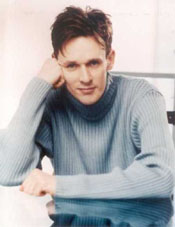
Bringing their recent recording of Schubert’s late songs to the concert stage, Ian Bostridge and Antonio Pappano swept through a sequence which ranged from bitter-sweet regret to angry self-reproach, from hesitant hope to turbulent despair, in this the second of two performances at the Wigmore Hall.

Bostridge and Pappano at Wigmore Hall

Ian Bostridge, tenor; Antonio Pappano piano. Wigmore Hall, London. Monday 31st May, 2010.


Serious, earnest, meticulous, intense … such qualities we have come to expect of any Bostridge performance. Some may find his cool, even severe, stage presence and arch gestures, occasionally distracting or overly mannered; but there is no doubting his commitment to the music and, equally, to the emotional drama of the texts. As ever, his diction was crisp and clear; the desire to convey every nuance of the poetry at times took precedence over pure vocal beauty or melodic lyricism, but was evidence of absolute dramatic integrity.

Although there was no continuous ‘narrative’ running through this recital, which was performed without an interval, two archetypal Romantic themes to which the texts repeatedly returned provided unity — unattainable love and alienation. The opening song, ‘Widerschein’ (‘Reflection’), established a subdued mood. Coloured by the lower registers of piano and voice, a halting, melodic line tells of the fisherman who waits ‘sullenly’ on the bridge for his absent love; as he dreams, a radiant vision is reflected in the water — a fitting metaphor for the unfulfilled yearning revealed in so many of the songs that followed. Here, Bostridge’s placement of the faltering vocal line was precise and controlled, but in ‘Der Winterabend’ (‘The winter evening’), his tone was more melancholic above restless semi-quavers in the right hand of the accompaniment. The melismatic close, ‘Seufze still, und sinne und sinne’ (‘Sign in silence, and muse and muse’), plaintively conveyed the old man’s ceaseless meditations as he awaits the coming of night and death. It is such attention to textual and musical detail that reveals Bostridge’s immersion and genuine involvement in the world of each song.

‘Die Sterne’ (‘The stars’) was more assertive, driven by the piano’s dactylic rhythm which mimics the stars’ heavenly shining. At times, however, Pappano’s boisterous accompaniment overwhelmed the voice; indeed, throughout the recital his playing, while undoubtedly committed, often lacked discretion and restraint, and was marked by over-use of the sustaining pedal and some cloudiness of texture.

‘Schwanengesang’ (‘Swan Song’), gathered into a collection — and shrewdly titled — by the Viennese publisher, Tobias Haslinger, comprises seven settings of Rellstab and six of Heine. This was an anguished account: not a ‘story’, rather variations on the theme of emotional vulnerability. Extreme contrasts characterise the Rellstab songs. The subtly shifting modulations of ‘Liebesbotschaft’ (‘Love’s message’), matched by a perfectly understated dialogue between the voice and the inner lines of the accompaniment, were followed by Pappano’s turbulent drum rhythms at the opening and close of ‘Kriegers Ahnung’ (‘Warrior’s foreboding’), where dreams of his beloved disturb the soldier’s intimations of imminent death. Bostridge and Pappano highlighted the inner contrasts too, underlining affective harmonic movements, drawing out the lyricism of the soldier’s bitter-sweet recollections, “How often have I dreamt sweet dreams/ resting on her warm breast!” Such melancholy brooding was deftly swept away by the feverish questioning of ‘Frühlings-Sehnsucht’ (‘Spring longing’); Pappano’s tremulous triplets precipitated a frenetic rush to the poet’s last passionate plea, “Who shall finally quell my longing?” The answer, “Nur Du!”, (“only you!”) was an exhausted cry of despair.

‘Ständchen’ (‘Serenade’) was fittingly more restrained; and here Pappano did sustain a deft staccato throughout, underpinning the gentle nocturnal imploring of the poet’s song, which rise to a suggestive final call, “Komm, beglücke mich!” (“Come — make me happy!”). ‘In der Ferne’ (‘Far away’) was a sombre rendition of the Romantic wanderer’s alienation: the voice sank to its lowest registers, a desolate pianissimo revealing that “alas, no blessing follows him/ on his way!” Bostridge balanced detailed attention to individual words — “Nirgend verweilender” (“you who never linger”) — with carefully shaped melodic arches, bringing a fleeting warmth to the protagonist’s memories of whispering breezes and sunbeams. ‘Abschied’ (‘Farewell’) was a jauntily ironic conclusion, with its tripping accompaniment rhythms and deceptively nonchalant “Farewells!”

The Heine songs are more concentrated in their intensity, and as the performers moved swiftly from one song to the next, there was a disturbing accumulation of dramatic tension. The misery and self-pity of ‘Der Atlas’ (‘Atlas’) was shocking in its honesty; the oppressiveness of ‘Die Stadt’ (‘’The town’) — with its diminished harmonies and bare, profound close — overwhelming. Bostridge brought a gentle tenderness to the major-key second verse of ‘Ihr Bild’ (“Her likeness”), striking after the cold unisons of the opening, and dashed away by the forceful admission in the last line, “I have lost you!” The stillness at the opening of ‘Am Meer’ (“By the sea”) seemed to offer the hint of some repose and consolation, but rapidly declined into a pained and angry revelation of a woman’s betrayal. But it was the closing song, ‘Der Doppelgänger’ (‘The wraith’), that brought forth the most remarkable display of emotional catharsis, building from veiled beginnings to tormented self-castigations. With astonishing courage, Bostridge relished the free declamations, interpreting every detail, fully becoming the man “wracked with pain” in both voice and body.

Seidl's 'Die Taubenpost' was performed as a brief encore, momentarily alleviating the anguish but not fully dispelling the darkness as we exited the Hall, into the fading evening light.

Claire Seymour
Send to a friend

Send a link to this article to a friend with an optional message.

Friend's Email Address: (required)

Your Email Address: (required)

Message (optional):