23 May 2011
Richard Coeur-de-Lion, New York
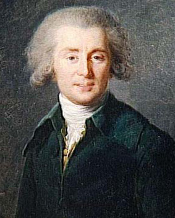
André-Modeste Grétry, the greatest opera composer ever to come from Belgium, made his way to Paris in 1767 at the age of 26.
English Touring Opera are delighted to announce a season of lyric monodramas to tour nationally from October to December. The season features music for solo singer and piano by Argento, Britten, Tippett and Shostakovich with a bold and inventive approach to making opera during social distancing.
This tenth of ten Live from London concerts was in fact a recorded live performance from California. It was no less enjoyable for that, and it was also uplifting to learn that this wasn’t in fact the ‘last’ LfL event that we will be able to enjoy, courtesy of VOCES8 and their fellow vocal ensembles (more below …).
Ever since Wigmore Hall announced their superb series of autumn concerts, all streamed live and available free of charge, I’d been looking forward to this song recital by Ian Bostridge and Imogen Cooper.
Although Stile Antico’s programme article for their Live from London recital introduced their selection from the many treasures of the English Renaissance in the context of the theological debates and upheavals of the Tudor and Elizabethan years, their performance was more evocative of private chamber music than of public liturgy.
Evidently, face masks don’t stifle appreciative “Bravo!”s. And, reducing audience numbers doesn’t lower the volume of such acclamations. For, the audience at Wigmore Hall gave soprano Elizabeth Llewellyn and pianist Simon Lepper a greatly deserved warm reception and hearty response following this lunchtime recital of late-Romantic song.
For this week’s Live from London vocal recital we moved from the home of VOCES8, St Anne and St Agnes in the City of London, to Kings Place, where The Sixteen - who have been associate artists at the venue for some time - presented a programme of music and words bound together by the theme of ‘reflection’.
'Such is your divine Disposation that both you excellently understand, and royally entertaine the Exercise of Musicke.’
‘And there was war in heaven: Michael and his angels fought against the dragon; and the dragon fought and his angels, And prevailed not; neither was their place found any more in heaven … that old serpent … Satan, which deceiveth the whole world: he was cast out into the earth, and his angels were cast out with him.’
There was never any doubt that the fifth of the twelve Met Stars Live in Concert broadcasts was going to be a palpably intense and vivid event, as well as a musically stunning and theatrically enervating experience.
‘Love’ was the theme for this Live from London performance by Apollo5. Given the complexity and diversity of that human emotion, and Apollo5’s reputation for versatility and diverse repertoire, ranging from Renaissance choral music to jazz, from contemporary classical works to popular song, it was no surprise that their programme spanned 500 years and several musical styles.
The Academy of St Martin in the Fields have titled their autumn series of eight concerts - which are taking place at 5pm and 7.30pm on two Saturdays each month at their home venue in Trafalgar Square, and being filmed for streaming the following Thursday - ‘re:connect’.
The London Symphony Orchestra opened their Autumn 2020 season with a homage to Oliver Knussen, who died at the age of 66 in July 2018. The programme traced a national musical lineage through the twentieth century, from Britten to Knussen, on to Mark-Anthony Turnage, and entwining the LSO and Rattle too.
With the Live from London digital vocal festival entering the second half of the series, the festival’s host, VOCES8, returned to their home at St Annes and St Agnes in the City of London to present a sequence of ‘Choral Dances’ - vocal music inspired by dance, embracing diverse genres from the Renaissance madrigal to swing jazz.
Just a few unison string wriggles from the opening of Mozart’s overture to Le nozze di Figaro are enough to make any opera-lover perch on the edge of their seat, in excited anticipation of the drama in music to come, so there could be no other curtain-raiser for this Gala Concert at the Royal Opera House, the latest instalment from ‘their House’ to ‘our houses’.
"Before the ending of the day, creator of all things, we pray that, with your accustomed mercy, you may watch over us."
The doors at The Metropolitan Opera will not open to live audiences until 2021 at the earliest, and the likelihood of normal operatic life resuming in cities around the world looks but a distant dream at present. But, while we may not be invited from our homes into the opera house for some time yet, with its free daily screenings of past productions and its pay-per-view Met Stars Live in Concert series, the Met continues to bring opera into our homes.
Music-making at this year’s Grange Festival Opera may have fallen silent in June and July, but the country house and extensive grounds of The Grange provided an ideal setting for a weekend of twelve specially conceived ‘promenade’ performances encompassing music and dance.
There’s a “slide of harmony” and “all the bones leave your body at that moment and you collapse to the floor, it’s so extraordinary.”
“Music for a while, shall all your cares beguile.”
The hum of bees rising from myriad scented blooms; gentle strains of birdsong; the cheerful chatter of picnickers beside a still lake; decorous thwacks of leather on willow; song and music floating through the warm evening air.
André-Modeste Grétry, the greatest opera composer ever to come from Belgium, made his way to Paris in 1767 at the age of 26.
His grand operas were flops and he himself disarmingly confessed to having little talent for harmony, but the tunefulness of his light operas—we might call them operettas or opéras-bouffes if those terms had been coined yet—made him the toast of the town, an international success, and enabled him to survive the Revolution despite the distinctly royalist overtones of his biggest hit, Richard Coeur-de-Lion (1784, revised 1785). The big number, “O Richard, O mon roi, l’univers t’abandonne” (Oh, Richard, my king, though the universe abandons thee”) was sung by loyal but indiscreet officers toasting Louis XVI at a difficult moment during the uprisings, with disastrous consequences. Grétry sat out the bad times, then brought the opera back when Napoleon proclaimed himself emperor.
Grétry was a man on one of the cusps of opera, the confusing but inspiring time when opera seria was expiring and no one was sure what the new music would produce for the stage. Gluck (who composed light operas and opere serie as well as the “reform” dramas for which we remember him best) was an important influence, on the era and on Grétry. Gluck and Mozart and a whole array of lesser lights, step by step, transformed opera, and it is difficult not to be fascinated by the explorations that led them there. That means the operas of Monsigny, of J.C. Bach, of Salieri, of Paisiello, of Martin y Soler—all of them familiar to Mozart. So was Grétry, who was at the first peak of his popularity when Mozart paid his famous visit to Paris in 1778.
Grétry’s use of spoken dialogue rather than the Italian invention of recitative between numbers, combined with his intentional and dramatic blurring of the edges between dialogue and musical numbers makes him the harder to present in translation, though in his own era full translations of Richard were popular in London and many other towns. Like Opera Lafayette, which presented a rather disappointing account of Grétry’s Le Magnifique last fall, American Classical Orchestra (which has also given his Zémire et Azor) has compromised by having the dialogue in English, the singing in French. Whatever continuity Grétry was aiming for is thereby sacrificed, and since this is precisely why his operas were important, it seems an unfortunate choice. Too, Opera Lafayette’s singers were not very good and the plot of Le Magnifique seemed especially silly and dubiously coherent. Richard was, at least, presented with good voices and ardent actors, and one could almost overlook the awkward jump into and out of song.
Richard is a rescue opera—though such operas (Fidelio being the most notable) are usually assigned to the era after the Revolution. The principal figure is not the title character, England’s Crusader king, a captive in Germany, but the troubadour Blondel who (in this version anyway) wanders around the neighborhood pretending to be a blind minstrel, hoping to get a lead on his royal friend’s whereabouts. This produces (in Act II) a duet, within and without the castle walls and, the identification being made, to a stratagem to get him out. Connoisseurs of Mission: Impossible will sneer at the simplicity of the plot, and the emotional level is hardly that of Fidelio, but people have to start somewhere.
Baritone Robert Balonek, in the starring role of the troubadour Blondel, revealed a light, full, meaty, attractive baritone that made this faithful intriguer comprehensible and sympathetic, and he’s easy on the eyes as well as the ears. I look forward to hearing him again.
Molly Davey sang Laurette, whose aria is nowadays the best-known item in the score, being the reverie of the Countess in Tchaikovsky’s Queen of Spades. It is a curious number, seeming somehow more appropriate to the sinister, apprehensive moment in that opera than it is in Grétry’s light original. Davey sang it very oddly: some phrases clear, light and high-flying, others from an entirely different voice lurking in the mezzo range, and still others, here and elsewhere all night, in an almost inaudible squeak. She should consider getting her various voices to study with the same teacher. At least they should be more intimately introduced to one another.
Joshua Benevento sang a pleasant, not terribly distinguished King Richard, Cory Clines a sturdy innkeeper, Anthony Caputo a mellow prison commander—more a lover (of Laurette) than a villain like Pizarro in Fidelio. Bright-voiced Catherine Webber sang the trouser role of Blondel’s pert young guide.
Thomas Crawford led this charming performance. The American Classical Orchestra makes use of valveless brasses (trumpets, horns) and skin heads on their drums, but happily, their antiquarianism does not prevent them playing in tune. While no substitute for a full staging, the American Classical Orchestra’s concert provided an enjoyable introduction to this winsome score.
John Yohalem