10 Feb 2012
Dido and Aeneas, Manitoba
Winnipeg music lovers were willingly transported back several centuries as Daniel Taylor and Montreal-based Theatre of Early Music graced Westminster United Church with a program of infrequently heard music.
English Touring Opera are delighted to announce a season of lyric monodramas to tour nationally from October to December. The season features music for solo singer and piano by Argento, Britten, Tippett and Shostakovich with a bold and inventive approach to making opera during social distancing.
This tenth of ten Live from London concerts was in fact a recorded live performance from California. It was no less enjoyable for that, and it was also uplifting to learn that this wasn’t in fact the ‘last’ LfL event that we will be able to enjoy, courtesy of VOCES8 and their fellow vocal ensembles (more below …).
Ever since Wigmore Hall announced their superb series of autumn concerts, all streamed live and available free of charge, I’d been looking forward to this song recital by Ian Bostridge and Imogen Cooper.
Although Stile Antico’s programme article for their Live from London recital introduced their selection from the many treasures of the English Renaissance in the context of the theological debates and upheavals of the Tudor and Elizabethan years, their performance was more evocative of private chamber music than of public liturgy.
Evidently, face masks don’t stifle appreciative “Bravo!”s. And, reducing audience numbers doesn’t lower the volume of such acclamations. For, the audience at Wigmore Hall gave soprano Elizabeth Llewellyn and pianist Simon Lepper a greatly deserved warm reception and hearty response following this lunchtime recital of late-Romantic song.
For this week’s Live from London vocal recital we moved from the home of VOCES8, St Anne and St Agnes in the City of London, to Kings Place, where The Sixteen - who have been associate artists at the venue for some time - presented a programme of music and words bound together by the theme of ‘reflection’.
'Such is your divine Disposation that both you excellently understand, and royally entertaine the Exercise of Musicke.’
‘And there was war in heaven: Michael and his angels fought against the dragon; and the dragon fought and his angels, And prevailed not; neither was their place found any more in heaven … that old serpent … Satan, which deceiveth the whole world: he was cast out into the earth, and his angels were cast out with him.’
There was never any doubt that the fifth of the twelve Met Stars Live in Concert broadcasts was going to be a palpably intense and vivid event, as well as a musically stunning and theatrically enervating experience.
‘Love’ was the theme for this Live from London performance by Apollo5. Given the complexity and diversity of that human emotion, and Apollo5’s reputation for versatility and diverse repertoire, ranging from Renaissance choral music to jazz, from contemporary classical works to popular song, it was no surprise that their programme spanned 500 years and several musical styles.
The Academy of St Martin in the Fields have titled their autumn series of eight concerts - which are taking place at 5pm and 7.30pm on two Saturdays each month at their home venue in Trafalgar Square, and being filmed for streaming the following Thursday - ‘re:connect’.
The London Symphony Orchestra opened their Autumn 2020 season with a homage to Oliver Knussen, who died at the age of 66 in July 2018. The programme traced a national musical lineage through the twentieth century, from Britten to Knussen, on to Mark-Anthony Turnage, and entwining the LSO and Rattle too.
With the Live from London digital vocal festival entering the second half of the series, the festival’s host, VOCES8, returned to their home at St Annes and St Agnes in the City of London to present a sequence of ‘Choral Dances’ - vocal music inspired by dance, embracing diverse genres from the Renaissance madrigal to swing jazz.
Just a few unison string wriggles from the opening of Mozart’s overture to Le nozze di Figaro are enough to make any opera-lover perch on the edge of their seat, in excited anticipation of the drama in music to come, so there could be no other curtain-raiser for this Gala Concert at the Royal Opera House, the latest instalment from ‘their House’ to ‘our houses’.
"Before the ending of the day, creator of all things, we pray that, with your accustomed mercy, you may watch over us."
The doors at The Metropolitan Opera will not open to live audiences until 2021 at the earliest, and the likelihood of normal operatic life resuming in cities around the world looks but a distant dream at present. But, while we may not be invited from our homes into the opera house for some time yet, with its free daily screenings of past productions and its pay-per-view Met Stars Live in Concert series, the Met continues to bring opera into our homes.
Music-making at this year’s Grange Festival Opera may have fallen silent in June and July, but the country house and extensive grounds of The Grange provided an ideal setting for a weekend of twelve specially conceived ‘promenade’ performances encompassing music and dance.
There’s a “slide of harmony” and “all the bones leave your body at that moment and you collapse to the floor, it’s so extraordinary.”
“Music for a while, shall all your cares beguile.”
The hum of bees rising from myriad scented blooms; gentle strains of birdsong; the cheerful chatter of picnickers beside a still lake; decorous thwacks of leather on willow; song and music floating through the warm evening air.
Winnipeg music lovers were willingly transported back several centuries as Daniel Taylor and Montreal-based Theatre of Early Music graced Westminster United Church with a program of infrequently heard music.
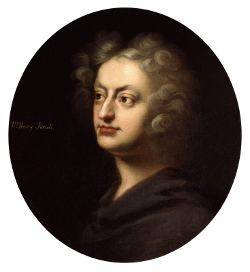
This co-production by the Manitoba Chamber Orchestra and Manitoba Opera brought 17th century English baroque composer Henry Purcell’s Dido and Aeneas to the stage, along with a selection of his other solo works and with works by Tallis and Handel.
The 50-minute Dido and Aeneas is heralded by many as the very first English language opera and, despite the lack of costumes or sets, it leapt to life before our eyes. This matchless ensemble was a joy from beginning to end. It was incredible to discover that while each splendid soloist was truly unique, possessing a timbre, expression and tone all their own, they combined as a chorus into a superbly blended unit. Taylor moved seamlessly from conductor to countertenor soloist (in the role of the evil Sorceress.) He led an accomplished seven-piece baroque orchestra (including lute) with a subtle touch, resulting in an impressively authentic rendition.
Soprano Noemi Kiss as Dido, Queen of Carthage, was in fine voice, sculpting deep feeling into her phrases, with the lightest of vibrato — suited to the era. We truly believed her when she sang of her predicament, her growing love for Aeneas. The famous aria/lament, “When I am laid in earth” was positively heart-wrenching as “remember me” hung in the air hauntingly, ensuring that we would.
Grace Davidson as Belinda, in whom Dido confides, brought a refreshing innocence to her role, with a lovely clarity of voice only curiously tinged with a somewhat lisping “s,” most noticeable in “Thanks to these lonesome vales …”
Aeneas was fittingly tall, dark and handsome with British-Canadian baritone Alexander Dobson truly living the part. Moving with dramatic conviction, he wooed Dido with his impressive range — a delightfully rich low register and surprisingly sweet ease up top as well. His flawless enunciation made the lyrics jump off the stage.
Taylor transformed himself from conductor to Sorceress by unleashing his mop of wavy hair and adopting a wild-eyed facial expression. With deliberation and intense audacity, he put forth his distinctive voice in a spotless soprano range, with timbre and texture that are purely Taylor. His divinely voiced cohorts, witches Meara Conway, soprano and Meg Bragle, mezzo were deliciously conniving, chuckling over their conspiracy.
Agnes Zsigovics as the Second Woman brought the same ringing tone she employed in her earlier solo, “Pilgrim’s Home” from Handel’s Theodora. Her clean, assertive style sets her apart.
Tenor Benjamin Butterfield had but a cameo role as the sailor in the production, but how he milked it! With true nautical spirit, he urged his colleagues on with smiling singing and plenty of hand rubbing. Fortunately, we had another opportunity to hear this peerless artist in “Total Eclipse” from Handel’s Samson in the first half of the program. We were immediately struck by the ease and passion of his delivery and the dazzling tone purity.
The epitome of control, the chorus ended this mesmerizing performance with a gossamer sadness that left the audience silent — until they erupted into a much-deserved standing ovation.
Gwenda Nemerofsky