08 Feb 2012
Dvořák’s The Jacobin, London
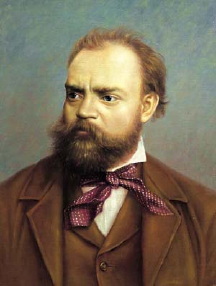
In advance of the new Rusalka at the Royal Opera House, the Barbican and the BBC Symphony Orchestra brought an electrifying performance of Dvořák's The Jacobin to London.
English Touring Opera are delighted to announce a season of lyric monodramas to tour nationally from October to December. The season features music for solo singer and piano by Argento, Britten, Tippett and Shostakovich with a bold and inventive approach to making opera during social distancing.
This tenth of ten Live from London concerts was in fact a recorded live performance from California. It was no less enjoyable for that, and it was also uplifting to learn that this wasn’t in fact the ‘last’ LfL event that we will be able to enjoy, courtesy of VOCES8 and their fellow vocal ensembles (more below …).
Ever since Wigmore Hall announced their superb series of autumn concerts, all streamed live and available free of charge, I’d been looking forward to this song recital by Ian Bostridge and Imogen Cooper.
The Sixteen continues its exploration of Henry Purcell’s Welcome Songs for Charles II. As with Robert King’s pioneering Purcell series begun over thirty years ago for Hyperion, Harry Christophers is recording two Welcome Songs per disc.
Although Stile Antico’s programme article for their Live from London recital introduced their selection from the many treasures of the English Renaissance in the context of the theological debates and upheavals of the Tudor and Elizabethan years, their performance was more evocative of private chamber music than of public liturgy.
In February this year, Albanian soprano Ermonela Jaho made a highly lauded debut recital at Wigmore Hall - a concert which both celebrated Opera Rara’s 50th anniversary and honoured the career of the Italian soprano Rosina Storchio (1872-1945), the star of verismo who created the title roles in Leoncavallo’s La bohème and Zazà, Mascagni’s Lodoletta and Puccini’s Madama Butterfly.
Evidently, face masks don’t stifle appreciative “Bravo!”s. And, reducing audience numbers doesn’t lower the volume of such acclamations. For, the audience at Wigmore Hall gave soprano Elizabeth Llewellyn and pianist Simon Lepper a greatly deserved warm reception and hearty response following this lunchtime recital of late-Romantic song.
Collapsology. Or, perhaps we should use the French word ‘Collapsologie’ because this is a transdisciplinary idea pretty much advocated by a series of French theorists - and apparently, mostly French theorists. It in essence focuses on the imminent collapse of modern society and all its layers - a series of escalating crises on a global scale: environmental, economic, geopolitical, governmental; the list is extensive.
For this week’s Live from London vocal recital we moved from the home of VOCES8, St Anne and St Agnes in the City of London, to Kings Place, where The Sixteen - who have been associate artists at the venue for some time - presented a programme of music and words bound together by the theme of ‘reflection’.
'Such is your divine Disposation that both you excellently understand, and royally entertaine the Exercise of Musicke.’
Amongst an avalanche of new Mahler recordings appearing at the moment (Das Lied von der Erde seems to be the most favoured, with three) this 1991 Mahler Second from the 2nd Kassel MahlerFest is one of the more interesting releases.
‘And there was war in heaven: Michael and his angels fought against the dragon; and the dragon fought and his angels, And prevailed not; neither was their place found any more in heaven … that old serpent … Satan, which deceiveth the whole world: he was cast out into the earth, and his angels were cast out with him.’
If there is one myth, it seems believed by some people today, that probably needs shattering it is that post-war recordings or performances of Wagner operas were always of exceptional quality. This 1949 Hamburg Tristan und Isolde is one of those recordings - though quite who is to blame for its many problems takes quite some unearthing.
There was never any doubt that the fifth of the twelve Met Stars Live in Concert broadcasts was going to be a palpably intense and vivid event, as well as a musically stunning and theatrically enervating experience.
‘Love’ was the theme for this Live from London performance by Apollo5. Given the complexity and diversity of that human emotion, and Apollo5’s reputation for versatility and diverse repertoire, ranging from Renaissance choral music to jazz, from contemporary classical works to popular song, it was no surprise that their programme spanned 500 years and several musical styles.
The Academy of St Martin in the Fields have titled their autumn series of eight concerts - which are taking place at 5pm and 7.30pm on two Saturdays each month at their home venue in Trafalgar Square, and being filmed for streaming the following Thursday - ‘re:connect’.
The London Symphony Orchestra opened their Autumn 2020 season with a homage to Oliver Knussen, who died at the age of 66 in July 2018. The programme traced a national musical lineage through the twentieth century, from Britten to Knussen, on to Mark-Anthony Turnage, and entwining the LSO and Rattle too.
With the Live from London digital vocal festival entering the second half of the series, the festival’s host, VOCES8, returned to their home at St Annes and St Agnes in the City of London to present a sequence of ‘Choral Dances’ - vocal music inspired by dance, embracing diverse genres from the Renaissance madrigal to swing jazz.
Just a few unison string wriggles from the opening of Mozart’s overture to Le nozze di Figaro are enough to make any opera-lover perch on the edge of their seat, in excited anticipation of the drama in music to come, so there could be no other curtain-raiser for this Gala Concert at the Royal Opera House, the latest instalment from ‘their House’ to ‘our houses’.
"Before the ending of the day, creator of all things, we pray that, with your accustomed mercy, you may watch over us."
In advance of the new Rusalka at the Royal Opera House, the Barbican and the BBC Symphony Orchestra brought an electrifying performance of Dvořák's The Jacobin to London.
While not really “rare” (a friend has seen 5 productions, including Prague). The Jacobin isn’t standard fare outside Czechoslovakia, but hearing it enhances Dvořák’s other works. This performance conducted by Jiři Bělohlávek was exceptionally vivid, almost eclipsing Jiři Pinkas’s acclaimed recording. When this gets broadcast and released on CD, it will set a new benchmark.
Right from the prelude, it was clear that Bělohlávek’s vision of the work is passionately inspired. Angular rhythms sharply defined, reflecting the pungent, sharp consonants of the Czech language. More significantly he doesn’t soften the wayward crosscurrents, but understands why they’re fundamental to the meaning of the opera. Its subject is radical — the overthrow of oppressive regimes. Even Pinkas had to be careful in 1970’s when his recording was made, under the communist regime. Now Bělohlávek can reveal The Jacobin in its true colours.
The opera is set in a Bohemian village where the local ruler controls all aspects of the peasants’ lives. Dvořák makes much of church and children’s choirs, for they represent the population, subservient to authority, acting as a group without independent thought. But it’s almost 1789, and far away in France, revolution is simmering. So the Jacobin is a threat to the cozy, paternalistic system, especially because he’s an outsider from far away. Or so the locals think. But he isn’t. The dangerous stranger is the son of Count Vilém, but the Count’s mind has been poisoned by Adolf, the usurper. Dvořák was writing at a time when Austria ruled Czechoslovakia, and nationalist sentiments were running high. So The Jacobin is inflammatory, with its suggestion that the natural order has been encroached upon. Under the Nazi occupation of Czechoslovakia, “Adolf’s” name had to changed, but the same principle applied in Habsburg times. Bohuš, the Count’s only son, the maligned “Jacobin” is the next legitimate ruler.
Dvořák writes gloriously folkloristic colour in order to emphasize Bohemian identity. Indeed, it’s so vivid that the opera might easily be dismissed as bucolic fantasy. But Bělohlávek’s approach shows how much more there is to this music than quaintness. This is Dvořák, the composer who engaged with the New World, who connected to what was happening around him. Beneath the picturesque surface, life could be savage. the authorities acted arbitrarily. The Burgrave Filip threatens to have Jiři, his rival in love, conscripted. That wasn’t an empty threat as local authorities exercised that kind of power, which often meant death. Later, the Stranger (Bohuš in disguise) gets arrested and could easily have been disappeared forever. So the dark edge to Bělohlávek’s interpretation is absolutely perceptive, the dissonances and countermelodies expressing the turbulent upheaval essential to meaning.
Yet the energy Bělohlávek gets from his orchestra and singers also reflects the subversive humour in the opera. The subplot revolves around Benda, the music teacher, who is a failed composer, much more obsessed by getting his performances off the ground than in what’s really going on round him. He stops the Burgrave from conscripting Jiři, not because it’s a cruel abuse of authority but because he needs a tenor for his music! Wry self mockery on Dvořák’s part? This opera isn’t about the power of music as such, but how that power is used. Benda’s daughter Terinka is in love with young Jiři, so they have to hide their love by pretending to sing a duet. But when Benda looks at the sheet music, it’s clear they aren’t following the script. The Jacobin’s wife, Julie, uses music even more proactively. Her husband is in prison and could be killed at any time, so she sneaks into the castle and plays the harp and melts the Count’s heart. Bohuš isn’t a Jacobin, she says, but a Girondist on the run. That’s OK then, says the count, and father and son reunite. Adolf is ousted and the succession will go to Julie’s children “who have never known their native land”. Fabulous rousing finale!
The female roles in The Jacobin are crucial, for it’s the women who are proactive, not the men. We don’t know why Julie was such a threat that she was the reason the Count kicked out his son in the first place, but she’s the one who has saved Bohuš in exile and now saves him again, by pluckily hiding in the old Countess’s room (“where nothing has changed”) and plays the harp melody which melts the Count’s heart. Dana Burešová is a principal of the National Theatre in Prague, where Bělohlávek regularly works. She’s now familiar in London, because Bělohlávek has made it his mission to bring Czech repertoire to this country, and Burešová shows how much better it is when sung idiomatically, in its own language.
Indeed, Dvořák emphasized the female presence by adding the aria “In autumn’s hazel shrubs, love no longer gives glory”. It expands Terinka’s role in the plot immeasurably because it’s so beautiful, and lovingly sung by Lucie Fišer Silkenová. Even the old wet nurse, Lotinka (Lynette Alcantara) is pivotal, though she hasn’t much to sing.
Svatopluk Sem created a darkly brooding, assertive Bohuš. He, too, is a leading figure in Prague. Jaroslav Březina isn’t Benno Blachut, but then, no-one is, and Březina’s extensive experience created a Benda with real depth of character, very impressive. Jan Martinik’s Count Vilém covered a wide range, emotionally and musically, and Aleš Voráček’s Jiři was fresh and pert. Jiři Hájek’s Adolf was creepily sinister, not an exaggerated stage villain but a man of sly menace, true to the role. Jozef Benci’s Burgrave Filip was very good. Filip is ponderous, stupid and slime, but Benci shows he’s not fundamentally evil, just blinded by vanity and power, as so many apparatchiks are.
How fortunate we are in London to at last have a proper connection to Czech repertoire through Bělohlávek His role in promoting Janácek, Martinu, Smetana, Suk, and Dvořák is inestimable, because his approach is so idiomatic, non-anglicized and extremely perceptive. We’re into a whole new era of appreciating Czech music. The impact of this electrifying performance was enhanced by discreet semi-staging (Kenneth Richardson) who has worked closely with Bělohlávek many times before. The focus is thus on the music, not the “folklore”. In the finale, the choruses, very nearly fooled into denouncing the Jacobin, now praise him, waving Czech flags. “Slava! Slava!” they have been singing to the powers that be. This time, at last, Svoboda!
Anne Ozorio