05 Oct 2012
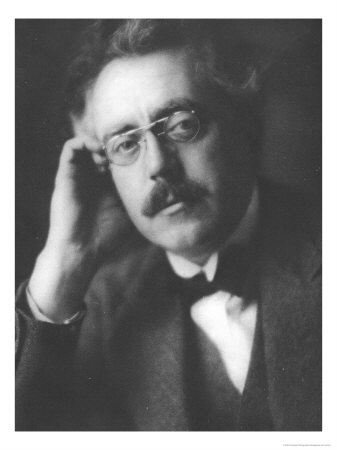
Frank Bridge Song Focus
Frank Bridge (1879-1941) was a professional violinist and violist, a talented conductor, a versatile composer and skilled teacher; yet he remains something of an enigma and his music relatively unknown.
English Touring Opera are delighted to announce a season of lyric monodramas to tour nationally from October to December. The season features music for solo singer and piano by Argento, Britten, Tippett and Shostakovich with a bold and inventive approach to making opera during social distancing.
This tenth of ten Live from London concerts was in fact a recorded live performance from California. It was no less enjoyable for that, and it was also uplifting to learn that this wasn’t in fact the ‘last’ LfL event that we will be able to enjoy, courtesy of VOCES8 and their fellow vocal ensembles (more below …).
Ever since Wigmore Hall announced their superb series of autumn concerts, all streamed live and available free of charge, I’d been looking forward to this song recital by Ian Bostridge and Imogen Cooper.
Although Stile Antico’s programme article for their Live from London recital introduced their selection from the many treasures of the English Renaissance in the context of the theological debates and upheavals of the Tudor and Elizabethan years, their performance was more evocative of private chamber music than of public liturgy.
Evidently, face masks don’t stifle appreciative “Bravo!”s. And, reducing audience numbers doesn’t lower the volume of such acclamations. For, the audience at Wigmore Hall gave soprano Elizabeth Llewellyn and pianist Simon Lepper a greatly deserved warm reception and hearty response following this lunchtime recital of late-Romantic song.
For this week’s Live from London vocal recital we moved from the home of VOCES8, St Anne and St Agnes in the City of London, to Kings Place, where The Sixteen - who have been associate artists at the venue for some time - presented a programme of music and words bound together by the theme of ‘reflection’.
'Such is your divine Disposation that both you excellently understand, and royally entertaine the Exercise of Musicke.’
‘And there was war in heaven: Michael and his angels fought against the dragon; and the dragon fought and his angels, And prevailed not; neither was their place found any more in heaven … that old serpent … Satan, which deceiveth the whole world: he was cast out into the earth, and his angels were cast out with him.’
There was never any doubt that the fifth of the twelve Met Stars Live in Concert broadcasts was going to be a palpably intense and vivid event, as well as a musically stunning and theatrically enervating experience.
‘Love’ was the theme for this Live from London performance by Apollo5. Given the complexity and diversity of that human emotion, and Apollo5’s reputation for versatility and diverse repertoire, ranging from Renaissance choral music to jazz, from contemporary classical works to popular song, it was no surprise that their programme spanned 500 years and several musical styles.
The Academy of St Martin in the Fields have titled their autumn series of eight concerts - which are taking place at 5pm and 7.30pm on two Saturdays each month at their home venue in Trafalgar Square, and being filmed for streaming the following Thursday - ‘re:connect’.
The London Symphony Orchestra opened their Autumn 2020 season with a homage to Oliver Knussen, who died at the age of 66 in July 2018. The programme traced a national musical lineage through the twentieth century, from Britten to Knussen, on to Mark-Anthony Turnage, and entwining the LSO and Rattle too.
With the Live from London digital vocal festival entering the second half of the series, the festival’s host, VOCES8, returned to their home at St Annes and St Agnes in the City of London to present a sequence of ‘Choral Dances’ - vocal music inspired by dance, embracing diverse genres from the Renaissance madrigal to swing jazz.
Just a few unison string wriggles from the opening of Mozart’s overture to Le nozze di Figaro are enough to make any opera-lover perch on the edge of their seat, in excited anticipation of the drama in music to come, so there could be no other curtain-raiser for this Gala Concert at the Royal Opera House, the latest instalment from ‘their House’ to ‘our houses’.
"Before the ending of the day, creator of all things, we pray that, with your accustomed mercy, you may watch over us."
The doors at The Metropolitan Opera will not open to live audiences until 2021 at the earliest, and the likelihood of normal operatic life resuming in cities around the world looks but a distant dream at present. But, while we may not be invited from our homes into the opera house for some time yet, with its free daily screenings of past productions and its pay-per-view Met Stars Live in Concert series, the Met continues to bring opera into our homes.
Music-making at this year’s Grange Festival Opera may have fallen silent in June and July, but the country house and extensive grounds of The Grange provided an ideal setting for a weekend of twelve specially conceived ‘promenade’ performances encompassing music and dance.
There’s a “slide of harmony” and “all the bones leave your body at that moment and you collapse to the floor, it’s so extraordinary.”
“Music for a while, shall all your cares beguile.”
The hum of bees rising from myriad scented blooms; gentle strains of birdsong; the cheerful chatter of picnickers beside a still lake; decorous thwacks of leather on willow; song and music floating through the warm evening air.
Frank Bridge (1879-1941) was a professional violinist and violist, a talented conductor, a versatile composer and skilled teacher; yet he remains something of an enigma and his music relatively unknown.
Bridge’s compositional career divided into two distinct parts: initially influenced by the expressive romanticism of Fauré and Brahms, in the mid-1920s he embraced the radicalism of the Second Viennese School - evidence of both his openness to new European musical developments and possibly of a loss of faith in the lyrical idiom of the past following the First World War.
Bridge songs, of which there are more than fifty, belong to the earlier period, two thirds being written before 1907; as evidenced in this charming and thoughtfully planned programme - the first of two recitals forming a ‘Frank Bridge Song Focus’ at the Wigmore Hall - the songs are affecting, memorable and varied in form and scope, revealing a sensitive if not overly demonstrative or dramatic approach to world-setting.
Pianist Iain Burnside, the curator of the two concerts, devised a wonderful programme, assembling Bridge’s songs into poetic groupings and interposing songs by other, predominantly British composers. The sequences unfolded organically, with seldom a break between songs, soprano Ailish Tynan and tenor Robert Murray moving in understated fashion, to the centre of the platform in turn - or even performing, seated, from the side. The effect was to create a coherent, natural progression, foregrounding the songs and their sentiments, revealing links, developing evolving narratives.
We began with poetry of the ‘English Romantics’, the rapid cascading accompaniment of ‘Go not, happy day’ (Tennyson) launching the poet-speaker’s mood of relaxed, joyful ebullience as he rejoices in his love, which suffuses the whole world with a rosy radiance. Robert Murray pinpointed the simple sentiment with clarity and immediacy; similarly, ‘The Devon maid’ (Keats), delivered from the side of the platform, possessed a gentle wit, a slight rallentando, “And we will sign in the daisy’s eye/ And kiss on the grass green pillow”, suggesting the singer’s bliss! Here, and throughout the evening, Murray’s diction was superb.
Ailish Tynan found a radiant tone for the poet-speaker’s declaration of love at the close of “Adoration” (Keats), in which Burnside’s subtly emphasised appoggiaturas delicately punctuated the still, quiet ambience. In Charles Parry’s ‘Bright Star’ and ‘La Belle dame sans merci’, Tynan painted the text beautifully, finding rhetorical force, “her eyes were wild”, and pathos in recalling the haggard knight-at-arms, “so woe-begone”. From the unison, folk-like beginning of the latter, the urgency of the narrative grew with the increasing tempo and complexity of texture, the piano both anticipating and echoing voice with haunting melancholy.
Murray opened the Heine sequence with ‘E’en as a lovely flower’, floating the opening line and finding a stirring change of colour to match the surprising harmonic shift as “sadness/ Comes stealing over my heart”, before closing in ethereal vein, with a vision of the loved one, “So lovely, pure and fair”. In contrast, ‘Whenever I hear the strain’ by Maude Valérie White, whirled with a wild energy, Murray injecting a disturbing, hostile resentment into the final lines, “Love tortures my heart and brain/ With many a bitter pang”. In the oft-set ‘Ich grolle nicht’, Murray drew on weighty, darker hues, while in the final short lyric, ‘All things that we clasp’, Tynan perfectly captured the ambiguity of the text.
Three Bridge settings of the little known Mary Coleridge formed ‘The Female Muse’. Burnside summoned an insouciant rhythmic lilt in ‘Thy hand in mine’, in which Tynan and Murray shared the stanzas, enhancing the symmetry of the lines, “They hand in mine … Thy heart in mine”. ‘Where she lies asleep’ is beautifully crafted and compelling, and Murray’s sweet pianissimo lured the listener into the intimate portrait of one who “sleeps so lightly”, before Burnside’s extrovert, declamatory accompaniment and the theatrical interchange between the singers in the subsequent ‘Love went a-riding’ brought the first half of the recital to a dramatic close.
We travelled to Ireland after the interval, and Tynan relished the rich resonances of ‘Goldenhair’ and the folky rubato of ‘So early in the morning’, the latter building through each verse to an exclamation of bright joy, before cadencing insouciantly. Murray used his head voice effective in ‘Mantle of blue’, the sparse texture and delicately sustained vocal line conjuring a lullaby-like luminosity.
The final sequence, ‘The Last Invocation’, rose to fresh expressive heights - perhaps ironically, for here the folksong settings of Benjamin Britten threatened to outshine the songs of his revered teacher, Bridge. Tynan was absolutely at home in the role of balladeer in ‘The trees they grow so high’, seated beside Burnside and spinning an effortless melody, poignantly telling of love and life and death. The complexity of Britten’s ‘The last rose of summer’ - a shimmering accompaniment ripple transforming into an alert, off-beat triplet, as the high melodic melisma gains rhythmic urgency and direction - reveals an imaginative, idiosyncratic approach to text setting which is absent from the more conventional Bridge settings. But, Murray and Burnside brought vigour and realism to Bridge’s ‘’Tis but a week’, with its trampling horses and gay blackbirds, tinged with the sadness of loss and times past. Similarly, the word-painting and imitative motifs of ‘Blow out, you bugles’ intensify the more abstract emotions of the latter part of Rupert Brooke’s sonnet, where Murray conveyed reverence, anguish and finally passionate sincerity.
Tynan’s tender rendition of the final song, Bridge’s ‘The last invocation’, indubitably confirmed the composer’s haunting imagination.
Claire Seymour
Programme:
English Romantics
Bridge: Go not happy day; Adoration
Parry: Bright Star
Bridge: The Devon Maid
Stanford: La Belle Dame sans merci
Heine
Bridge: E’en as a lovely flower
Ives: Ich grolle nicht
Bridge: The Violets Blue
White: Hör’ ich das Liedchen klingen
Bridge: All things that we clasp
The Female Muse
Mary Coleridge: Thy hand in mine; Where she lies asleep; Love went a-riding
The Orange And The Green
Bridge: Golden Hair; Mantle of blue; So early in the morning; When you are old
The Last Invocation
Britten: The trees they grow so high
Bridge: What shall I your true love tell?; ’Tis but a week
Britten: The last rose of summer
Bridge: Into her keeping; Blow out you bugles; The last invocation
Ailish Tynan, soprano; Robert Murray, tenor; Iain Burnside, piano. Wigmore Hall, London, Wednesday, 26th September 2012.