English Touring Opera are delighted to announce a season of lyric monodramas to tour nationally from October to December. The season features music for solo singer and piano by Argento, Britten, Tippett and Shostakovich with a bold and inventive approach to making opera during social distancing.
This tenth of ten Live from London concerts was in fact a recorded live performance from California. It was no less enjoyable for that, and it was also uplifting to learn that this wasn’t in fact the ‘last’ LfL event that we will be able to enjoy, courtesy of VOCES8 and their fellow vocal ensembles (more below …).
Ever since Wigmore Hall announced their superb series of autumn concerts, all streamed live and available free of charge, I’d been looking forward to this song recital by Ian Bostridge and Imogen Cooper.
Although Stile Antico’s programme article for their Live from London recital introduced their selection from the many treasures of the English Renaissance in the context of the theological debates and upheavals of the Tudor and Elizabethan years, their performance was more evocative of private chamber music than of public liturgy.
Evidently, face masks don’t stifle appreciative “Bravo!”s. And, reducing audience numbers doesn’t lower the volume of such acclamations. For, the audience at Wigmore Hall gave soprano Elizabeth Llewellyn and pianist Simon Lepper a greatly deserved warm reception and hearty response following this lunchtime recital of late-Romantic song.
For this week’s Live from London vocal recital we moved from the home of VOCES8, St Anne and St Agnes in the City of London, to Kings Place, where The Sixteen - who have been associate artists at the venue for some time - presented a programme of music and words bound together by the theme of ‘reflection’.
‘And there was war in heaven: Michael and his angels fought against the dragon; and the dragon fought and his angels, And prevailed not; neither was their place found any more in heaven … that old serpent … Satan, which deceiveth the whole world: he was cast out into the earth, and his angels were cast out with him.’
There was never any doubt that the fifth of the twelve Met Stars Live in Concert broadcasts was going to be a palpably intense and vivid event, as well as a musically stunning and theatrically enervating experience.
‘Love’ was the theme for this Live from London performance by Apollo5. Given the complexity and diversity of that human emotion, and Apollo5’s reputation for versatility and diverse repertoire, ranging from Renaissance choral music to jazz, from contemporary classical works to popular song, it was no surprise that their programme spanned 500 years and several musical styles.
The Academy of St Martin in the Fields have titled their autumn series of eight concerts - which are taking place at 5pm and 7.30pm on two Saturdays each month at their home venue in Trafalgar Square, and being filmed for streaming the following Thursday - ‘re:connect’.
The London Symphony Orchestra opened their Autumn 2020 season with a homage to Oliver Knussen, who died at the age of 66 in July 2018. The programme traced a national musical lineage through the twentieth century, from Britten to Knussen, on to Mark-Anthony Turnage, and entwining the LSO and Rattle too.
With the Live from London digital vocal festival entering the second half of the series, the festival’s host, VOCES8, returned to their home at St Annes and St Agnes in the City of London to present a sequence of ‘Choral Dances’ - vocal music inspired by dance, embracing diverse genres from the Renaissance madrigal to swing jazz.
Just a few unison string wriggles from the opening of Mozart’s overture to Le nozze di Figaro are enough to make any opera-lover perch on the edge of their seat, in excited anticipation of the drama in music to come, so there could be no other curtain-raiser for this Gala Concert at the Royal Opera House, the latest instalment from ‘their House’ to ‘our houses’.
The doors at The Metropolitan Opera will not open to live audiences until 2021 at the earliest, and the likelihood of normal operatic life resuming in cities around the world looks but a distant dream at present. But, while we may not be invited from our homes into the opera house for some time yet, with its free daily screenings of past productions and its pay-per-view Met Stars Live in Concert series, the Met continues to bring opera into our homes.
Music-making at this year’s Grange Festival Opera may have fallen silent in June and July, but the country house and extensive grounds of The Grange provided an ideal setting for a weekend of twelve specially conceived ‘promenade’ performances encompassing music and dance.
The hum of bees rising from myriad scented blooms; gentle strains of birdsong; the cheerful chatter of picnickers beside a still lake; decorous thwacks of leather on willow; song and music floating through the warm evening air.
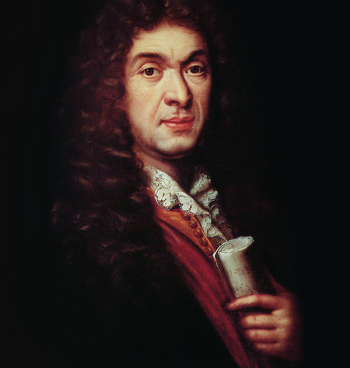
Jean-Baptiste Lully's Phaeton is rarely heard live in Britain, so this performance with a superlative cast was a special occasion. It was part of the Barbican Hall's continuing series of baroque, and particularly French baroque operas.
Jean-Baptiste Lully: Phaeton
Phaeton: Emiliano Gonzales Toro, Clymene: Ingrid Perruche, Theone/Astree: Isabell Druet, Libye: Sophie Bevan, Epaphus: Andrew Foster-Williams, Merops/Automne, Jupiter: Matthew Brook, Protee/Saturne: Benoit Arnould, Triton/Le Soleil, La Deesse de la Terre: Cyri Auvity, Une Heure/Une Berger egyptienne: Virginie Thomas, Les Talens Lyriques, Namur Chamber Choir, Conductor : Christophe Rousset, Barbican Hall, London
Phaeton was the tenth of Lully’s tragedies lyriques written with librettist Philippe Quinault. The works were ground-breaking, in them Lully effectively created the genre of French opera, synthesizing elements from ballet and drama. Yet composers such as Charpentier and Rameau, seem to have taken the genre to its real heights, and opportunities to hear Lully’s operas live in London are extremely rare. So it was a pleasure to welcome Christophe Rousset and les Talens Lyriques to London’s Barbican Hall on Friday 8 March 2013 for a concert performance of Phaeton.
Phaeton is written in five acts, plus a prologue; the prologue has little relevance to the drama and simply is an excuse to laud Lully’s patron Louis XIV. The plot of the opera is moderately complicated, with many of the cast related to each other or descended from the Gods. The sort of mythical soap opera which was beloved of baroque opera librettists and which, for modern day audiences, rather requires a family tree and a good memory. Essentially it is a moral tale about hubris, and can be seen as a warning to anyone who tries to come close to the Sun’s power (i.e. to Louis himself).
Phaeton is the son of the Sun god Apollo but his not himself a god; Phaeton is, however, very ambitious and not very likeable. Theone is in love with Phaeton, but he is chosen by Merops as the husband for his daughter Libye. Phaeton promptly drops Theone and agrees to marry Libye. However Libye and Epaphus (son of Jupiter) are in love, so an annoyed Epaphus casts aspersions on Phaeton’s parentage. To prove he is the son of Apollo, Phaeton drives his father’s chariot of the sun and burns himself. Also threading through this is Phaeton’s strong relationship to his mother Clymene, who elicits a prophecy from Protee in act which tells her that Phaeton is doomed to die.
Lully had a superb sense of dramatic construction, so that he and Quinault lay all this out in wonderfully flexible recitatives and ariosos interleaved with choruses and dances. Arias are never big, they merge flexibly with the recitative in a way which is in many ways far closer to Monteverdi than Handel. The chorus was far more active in French baroque opera than in Italian, and ballet was essential. What Lully fails to do is make them completely germane to the plot, in the way that Charpentier and Rameau were able to do.
However, a weakness of Lully’s operas is that he was not as strong on musical drama, his characters never really develop and the great musical moments are effectively bon bouches, which would work very well one their own. But the great moments are superb and quite heart wrenching.
Lully’s orchestral writing is not particularly descriptive. So the section where Phaeton drives his father’s chariot and loses control is done mainly in narration and without the sort of large-scale descriptive writing that other later composers might have used.
Rousset’s large and admirable cast were completely in tune with the genre and we were treated to an extremely stylish, vivid and entrancing performance. Some of the singers played two or three roles, so without any element of staging, you had to rather pay close attention. But it was well worth it.
In the title role Emiliano Gonzalez Toro, born in Geneva of Chilean parents, displayed a lovely lyric tenor which did not seem entirely comfortable with the haut-contre tessitura, rendering his performance a little stiff. But then Phaeton is rather unlikeable and, in fact, not the biggest of roles. His greatest moment is a non-singing one, when in act 5 he drives his father’s chariot of the sun across the sky. Something that was re-created using spectacular sets in the original performance.
Ingrid Perruche was profoundly moving as Phaeton’s mother, eliciting a prophecy and then having to deal with the fact that her son is doomed. However I think the stand-out performance came from Isabele Druet as Theone who is in love with Phaeton. Druet brought an edgy expressiveness to her voice which would not suit every role, but here it worked perfectly and served to highlight the thread of Theone’s unhappiness which ran through the opera.
Another thread was the doomed love of Libye, Sophie Bevan, and Epaphus, Andrew Foster-Williams. They had some lovely solo moments, but it was their duets which tugged the heart strings. Bevan was just as moving as Druet, but with a softer grained voice which contrasted and complemented nicely in their duets and dialogues.
Distinguished French haut-contre Cyril Auvity sang a number of roles, notably Phaeton’s father, the Sun, and demonstrated how stylish and moving the art of the haut-contre can be. Matthew Brook was suitably dignified Merops (Libye’s father), as well as doubling Autumn and Jupiter (Epaphus’s father). Virginie Thomas, a member of the Namur Chamber Choir, took a number of smaller roles, singing them all beautifully and blending well with the other singers in duets.
The chorus was kept quite busy, as Lully wrote a substantial part for them. The Namur Chamber Choir was impressively stylish in its performance and imbued its scenes with the requisite amount of drama. You began to realise quite how thrilling it must have seemed, when Lully formed the Academie Royale de Musique, to have sung drama, chorus and dancing brought together in this way.
And there was a lot of dance music. Rousset elicited a lively and vivid performance from his ensemble, but without any stage effects I began to wonder whether Rameau hadn’t don’t all this rather better.
Rousset directed from the harpsichord, conducting the ensemble numbers and playing the harpsichord for the recitatives. There was a second harpsichord for the ensembles, doubling organ and the continuo also included a theorbo, whose player doubled on baroque guitar. I’m not sure if this latter was in period, but it added a lovely texture to some of the dances.
Lully and Quinault constructed a wonderful entertainment which, I think really requires staging. In concert, without the sets and the dancing girls to distract you, there were a few moments when you felt that the drama did sag. But thanks to Rousset’s crisp and sympathetic direction and the stylish performances from singers, choir and orchestra, this was a vivid and lively evening which had some moments of real pathos.