<?xml version="1.0" encoding="utf-8"?>
<feed xmlns="http://www.w3.org/2005/Atom">
    <title>Opera Today</title>
    <link rel="alternate" type="text/html" href="http://www.operatoday.com/" />
    <link rel="self" type="application/atom+xml" href="http://www.operatoday.com/atom.xml" />
    <id>tag:www.operatoday.com,2008-10-08://1</id>
    <updated>2013-05-22T17:54:17Z</updated>
    
    <generator uri="http://www.sixapart.com/movabletype/">Movable Type Pro 4.21-en</generator>

<entry>
    <title><![CDATA[Domingo Conducts Holdridge&rsquo;s New Opera Dulce Rosa ]]></title>
    <link rel="alternate" type="text/html" href="http://www.operatoday.com/content/2013/05/domingo_conduct.php" />
    <id>tag:www.operatoday.com,2013://1.6289</id>

    <published>2013-05-22T17:42:00Z</published>
    <updated>2013-05-22T17:54:17Z</updated>

    <summary>Dulce Rosa, a brand new opera, had its world premiere Friday night, May 17, 2013 at the Broad Stage in Santa Monica, California. It was produced by Los Angeles Opera, but staged in the smaller theater.</summary>
    <author>
        <name>Maria Nockin</name>
        
    </author>
    
        <category term="Performances" scheme="http://www.sixapart.com/ns/types#category" />
    
        <category term="Reviews" scheme="http://www.sixapart.com/ns/types#category" />
    
    
    <content type="html" xml:lang="en" xml:base="http://www.operatoday.com/">
        <![CDATA[<p><em>Dulce Rosa</em>, a brand new opera, had its world premiere Friday night, May 17, 2013 at the Broad Stage in Santa Monica, California. It was produced by Los Angeles Opera, but staged in the smaller theater. The opera is based on Isabel Allende&#8217;s short story, <em>Una Venganza</em>, (An Act of Vengeance). She wrote it some thirty years ago, at a time when people were attempting to understand the <em>Stockholm Syndrome</em>, a psychological phenomenon that causes hostages to have positive feelings toward their captors. The opera&#8217;s heroine, Dulce Rosa, is raped by a Tadeo Cespedes, a high-ranking soldier who kept her alive during an invasion when other women were being killed. Rosa&#8217;s father was going to kill her himself, but she promised him that she would wreak vengeance on her abusers if she was allowed to live. </p>

<p>Eventually, she developed some affectionate feelings for Tadeo, despite her attempts to dispel them. Sometime before her ordeal she had become engaged to Tomas, a medical student who went to the United States to study. Returning after the war, he wants to marry her but she gives him back his ring. When she shows her preference for Tadeo, Tomas pulls out a gun and aims for the soldier but kills Rosa. Actually, in Allende&#8217;s original, Rosa commits suicide, but librettist and stage director Richard Sparks changed it for the opera. It is a sad story from Latin America in the 1950s, but its dramatic situations work very well onstage. Sparks did not ask the singers to do very much acting and there really could have been a great deal more action, but the story was well told and the music was delightful. </p>

<p>Composer Lee Holdridge has written a tonal, melodic opera with an interesting, complex orchestration. Holdridge is obviously a follower of Puccini. His music is a little bit like that of the late Daniel Catan, but with a stronger string component. Interspersed in the drama is some affecting Church music that adds solemnity and historical context, while offering a bit of respite from the drama. Most of the scenery for the production was composed of Jenny Okun&#8217;s projections which were focused on a simple arch with two upper windows designed by Yael Pardess. She projected the lush scenery of a South American spring, stained glass church windows, the devastation of war and the beginning of a post-war rebirth. Anne Militello&#8217;s lighting designs added greatly to the ambience seen on stage. Durinda Wood&#8217;s costumes were a mixture of Latin American folk dress, army uniforms, and 1950s street and formal clothing. </p>

<p>The most important aspect of this performance was the singing. Uruguayan soprano Maria Antúnez not only has sterling silver high notes, she also has a warm, creamy middle register. Tall and slim, she was a most believable Rosa. In truth, she is an excellent new artist whom I hope to hear in other roles as well. Greg Fedderly, whose voice seems to have grown as of late, was Rosa&#8217;s overbearing father. In Act I his tones were warm and his nature inviting. When he returned as a ghost in Act II, he was an avenging angel who even threatened his daughter. Like many starring sopranos, Rosa has a mezzo-soprano companion. Sung passionately by Peabody Southwell, Inez not only provided pleasant harmonies, but also an occasional Allende one-liner. </p>

<p>Warm voiced tenor, Benjamin Bliss, soon to sing Alfredo in La Traviata, was the disappointed fiancé who returns to find that his Rosa has become an entirely different person. Dark voiced Mexican baritone Alfredo Daza was the sexy bad boy who eventually won Rosa&#8217;s heart. He made Tadeo an intriguing character and probably won a few hearts in the audience as well. In the middle of war and conflict of emotions, the politician Aguilar, sung and acted most effectively by Craig Colclough, played both sides against each other and gained high office. His character was one we know all too well. Grant Gershon&#8217;s chorus was usually heard singing Holdridge&#8217;s charming Church music. Plácido Domingo conducted the moderate sized orchestra, bringing out Holdridge&#8217;s complex, nuanced melodies and the dramatic tonal language that supported Sparks&#8217; text. Although the performances in Santa Monica are sung in English, a Spanish translation will soon be ready.  <em>Dulce Rosa</em> is at the Broad Stage through June seventh. </p>

<p><em><strong>Maria Nockin</strong></em></p>

<hr style="width:50%"></hr>

<p><small><a href="http://www.laopera.com/season/Dulce-Rosa/"><strong>Click here for cast and production information.</strong></a></small></p>]]>
        <![CDATA[<p>image=http://www.operatoday.com/SwR1225.gif<br />
image_description=Maria Antunez as Rosa and Alfredo Daza as Tadeo [Photo by Robert Millard courtesy of Los Angeles Opera]</p>

<p>product=yes<br />
product_title=Domingo Conducts Holdridge&rsquo;s New Opera Dulce Rosa <br />
product_by=A review by Maria Nockin<br />
product_id=Above: Maria Antunez as Rosa and Alfredo Daza as Tadeo [Photo by Robert Millard courtesy of Los Angeles Opera]</p>]]>
    </content>
</entry>

<entry>
    <title><![CDATA[Verdi&rsquo;s Falstaff at Glyndebourne]]></title>
    <link rel="alternate" type="text/html" href="http://www.operatoday.com/content/2013/05/verdis_falstaff.php" />
    <id>tag:www.operatoday.com,2013://1.6290</id>

    <published>2013-05-22T17:38:00Z</published>
    <updated>2013-05-22T17:38:47Z</updated>

    <summary>Richard Jones&#8217; 2009 production of Verdi&#8217;s Falstaff translates the action from the first Elizabethan age to the start of the second. </summary>
    <author>
        <name>Gary Hoffman</name>
        
    </author>
    
        <category term="Performances" scheme="http://www.sixapart.com/ns/types#category" />
    
        <category term="Reviews" scheme="http://www.sixapart.com/ns/types#category" />
    
    
    <content type="html" xml:lang="en" xml:base="http://www.operatoday.com/">
        <![CDATA[<p>In
Ultz&#8217;s recreation of post-war Windsor &#8212; a fitting setting for a year in
which we celebrate the 60th anniversary of Queen Elizabeth II&#8217;s coronation
&#8212; suburban mock-Tudor has replaced the genuine article but it&#8217;s a familiar
world populated, much as in the historic past, by down-on-their-luck
aristocrats and aspiring social climbers. There are nods forwards as well as
backwards: the regimented cabbage plots amid the middle-class semis call to
mind that prior &#8216;age of austerity&#8217;, when the &#8216;Dig For Victory&#8217;
mentality was as common as &#8216;Grow Your Own&#8217; economising is today.</p>

<p>We begin in a rather genteel, wood-panelled local saloon bar, The Garter
Inn; a portrait of George VI and an extravagantly antlered stag&#8217;s head
oversee proceedings &#8212; a reminder of the class tensions and cuckoldry which
will disturb the bourgeois complacency. Centre-stage sprawls Falstaff, ardently
typing amorous missives, audaciously and insouciantly adding to his alcohol
tab, and flamboyantly issuing commands to his senseless sidekicks, Bardolfo and
Pistola.</p>

<iframe src="http://player.vimeo.com/video/60079888?color=C0C000&amp;autoplay=1" width="400" height="300" frameborder="0" webkitAllowFullScreen mozallowfullscreen allowFullScreen></iframe>

<p>Laurent Naouri&#8217;s Sir John is imposingly wide of girth &#8212; thanks to an
impressive fat-suit &#8212; and generously resounding of voice. His authoritative
bellow vanquishes complaints from his snivelling underlings; with beguiling
tone, he serenades and courts the ladies. There is no doubting his haughty
bumptiousness and Naouri emphasises his essential aristocratic dignity. But, at
times this Falstaff is overly curmudgeonly, aggrieved that others do not
recognise his &#8216;nobility&#8217; &#8212; an anachronistic note in 1950s England &#8212; and
his irritability and crabbiness do not endear him. Naouri is light on his feet,
despite the prodigious abdominal encumbrance, and can neatly execute a dainty
flounce. But, while the voice is sweet and enticing, this Falstaff lacks a
certain wicked sparkle in the eye and the debonair charm that might win a
feminine heart regardless of his physical decrepitude. Falstaff should be both
dignified and vulgar, both arrogant and aware of his own coarseness and comic
crassness &#8212; he should laugh at himself, so that we can laugh with him.</p>

<p>Part of the problem is Jones&#8217; uncharacteristic lack of attention to comic
detail and gesture; there are a few neat touches &#8212; the faux leave-taking
courtesies of Ford and Falstaff, the obsequious pleading for forgiveness of the
perfidious Bardolfo and Pistola, the tidal wave which bursts through the
Fords&#8217; front window when Falstaff tumbles from the window ledge and
belly-flops into the Thames &#8212; but most of the audience laughter was prompted
by the surtitles rather than the stage action itself (excepting the feline
wriggles of the furry puppet adorning the Garter&#8217;s bar-top). The lengthy
pauses between scenes, necessitated by some hefty scene-shifting, further
diminished the comic briskness. The sets themselves are neat and credible, and
troupes of rowing eights and girl guides add to the period feel &#8212; although
they have little relevance to the drama itself. Three such scouts cross-stitch
the local panorama across the front cloth before curtain-up, but it&#8217;s
stretching things somewhat to ask us to imagine that they have won their
needlepoint brownie badges creating a tapestry screen of Windsor Castle to
adorn Alice Ford&#8217;s morning room. The latter is rather sparsely decorated,
leaving few opportunities for chaotic concealment in what should be a farcical
man-hunt for the lascivious Falstaff during his lecherous assignation in Act
2.</p>

<p><span class="mt-enclosure mt-enclosure-image" style="display: inline;"><img alt="falstaff-4680.gif" src="http://www.operatoday.com/falstaff-4680.gif" width="486" height="325" class="mt-image-none" style="" /></span><span style="color:blue">Elena Tsallagova, Ailyn Perez, Susanne Resmark and Lucia Cirillo</span></p>

<p>The huge oak in the final scene is impressively anthropomorphic and, swathed
in unnatural colours by lighting designer Mimi Jordan Sherin, casts eerie,
dancing shadows. But, the scene is poorly choreographed, the stage overly
cluttered, and the ghoulish, lurid Halloween costumes &#8212; bought, presumably,
at the high-street Joke Shop depicted in the previous scene &#8212; sported by the
boy scouts and brownies are at odds with the Shakespearean mood of enchantment
and magic. More &#8216;trick or treat&#8217; than Midsummer Night&#8217;s Dream.</p>

<p>Ultimately, these flaws in the staging do not overly trouble us, for there
is not a single weak link in the cast. Making her Glyndebourne debut, American
soprano Ailyn Pérez was a self-possessed and spirited Alice Ford. Never
histrionic but always secure in her self-belief, Pérez&#8217; golden voice soared
lyrically; at times slyly coy, she commanded the stage with ease. Susanne
Resmark as Mistress Quickly, purposefully attired in an Auxiliary Territorial
Service uniform, demonstrated masterly comic timing, particularly in her scenes
with Falstaff &#8212; tongue-firmly-in-cheek, she relished the ironic resonances of
the mocking salutation, &#8216;with respect&#8217;.</p>

<p>Russian baritone Roman Burdenko was a proud, indignant Ford; Falstaff may be
the one with the title, but Burdenko&#8217;s powerful yet elegant delivery left no
doubt about his own sense of entitlement. In this production, Fenton is a GI,
and the Italian tenor, Antonio Poli exuded freshness and optimism, although he
was surpassed in graceful airiness by Elena Tsallagova as Nanetta, whose
angelic faerie supplication in Act 3 was the musical highlight of the evening.
Lucia Cirillo was a fiery Meg; Graham Clark as Dr Caius, and Colin Judson and
Paolo Battaglia &#8212; Bardolfo and Pistola respectively &#8212; completed the fine
line-up.</p>

<p>Conducting much of the score from memory, Mark Elder led the Orchestra of
the Age of Enlightenment in a crisp but warm account, alert to every detail and
unfailingly conjuring deft musical humour even when the stage action was less
buoyant. The sombre, slightly melancholic tone of the natural horns coupled
with the darker gut string timbre, made for an unusual but convincing musical
colour. There was much fine playing and the instrumentalists fully captured the
conviviality and essential geniality of the work; they richly deserved their
ovation.</p>

<p></p>

<p><em><strong>Claire Seymour</strong></em></p>
<hr style="width:50%"></hr>

<p></p>

<p><small><a href="http://glyndebourneopera.podbean.com/mf/web/pgmc79/Falstaff-Glyndebourne-podcast.mp3"><strong>Click here for a podcast relating to this production</strong></a>.</small></p>

<p><small><strong>Cast and production information:</strong></small></p>

<p><small>Falstaff: Laurent Naouri; Alice Ford: Ailyn Pérez; Ford: Roman
Burdenko; Meg Page: Lucia Cirillo; Mistress Quickly: Susanne Resmark; Nannetta:
Elena Tsallagova; Fenton: Antonio Poli; Dr Cajus: Graham Clark; Bardolfo: Colin
Judson; Pistola: Paolo Battaglia; Conductor Mark Elder; Orchestra of the Age of
Enlightenment; The Glyndebourne Chorus; Director Richard Jones; Revival
Director Sarah Fahie; Designer Ultz; Lighting Designer Mimi Jordan Sherin.
Glyndebourne Festival, Sunday, 19th May 2013.</small></p>]]>
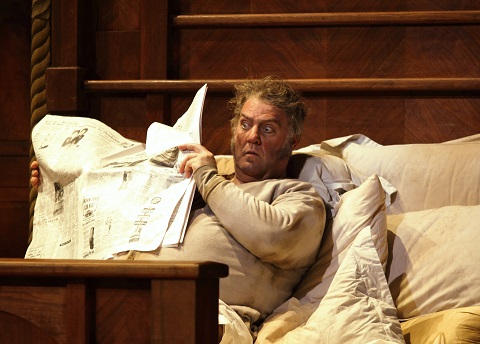
        <![CDATA[image=http://www.operatoday.com/falstaff-2442%20%281%29.gif
image_description=Laurent Naouri in Falstaff, Festival 2013. Photo Tristram Kenton

product=yes
product_title=Verdi&rsquo;s Falstaff at Glyndebourne
product_by=A review by Claire Seymour
product_id=Above: Laurent Naouri<br/><br/>Photos by Tristram Kenton courtesy of Glyndebourne Festival]]>
    </content>
</entry>

<entry>
    <title>Gareth John, Wigmore Hall</title>
    <link rel="alternate" type="text/html" href="http://www.operatoday.com/content/2013/05/gareth_john_wig.php" />
    <id>tag:www.operatoday.com,2013://1.6288</id>

    <published>2013-05-21T17:39:44Z</published>
    <updated>2013-05-21T17:50:25Z</updated>

    <summary>Baritone Gareth John is rapidly accumulating a war-chest of honours. Winner of the 2013 Kathleen Ferrier Award, he recently won the Royal Academy of Music Patrons&#8217; Award and was presented the Silver Medal by the Worshipful Company of Musicians. </summary>
    <author>
        <name>Gary Hoffman</name>
        
    </author>
    
        <category term="Performances" scheme="http://www.sixapart.com/ns/types#category" />
    
        <category term="Reviews" scheme="http://www.sixapart.com/ns/types#category" />
    
    
    <content type="html" xml:lang="en" xml:base="http://www.operatoday.com/">
        <![CDATA[<p>This Wigmore Hall recital, with pianist Matthew Fletcher,
presented a varied programme and revealed a confident and technically
accomplished performer.</p>

<p>We began with Schubert, four settings of Mayrhofer and one by Heine which
share a &#8216;watery&#8217; theme. Fletcher&#8217;s exuberant opening hurled us straight
into the wind and storm of &#8216;Der Schiffer&#8217; (&#8216;The Skipper&#8217;) as the
protagonist battles with the teaming rain and lashing waves. John&#8217;s strong
voice was a more than equal match for the turbulent weather and waves; the tone
was, however, rather unyielding at times and it took a little while for the
intonation to settle. In &#8216;Der Strom&#8217; (&#8216;The Stream&#8217;), the baritone used
the text effectively, the expression ardent and moving. Best of the bunch was
&#8216;Wie Ulfru fischt&#8217; (&#8216;How Ulfru fishes&#8217;); here John found a wider tonal
palette which he used to inject drama into the battle of wits between man and
fish. Some intelligent, controlled <em>rubato</em> in the final stanza
initiated a more meditative mood, as the poet-speaker reflects on the brevity
and unpredictability of life: &#8220;Die Erde ist gewaltig schön,/ Doch sicher ist
sie nicht&#8221; (&#8220;The world is certainly beautiful/, But safe, it is not&#8221;).</p>

<p>Fletcher was alert to textural details and the accompaniment enhanced both
the mood and the narrative of the poetry. In &#8216;Auf der Donau&#8217; the rapid
left-hand motifs were deftly articulated, imitating the rippling waves, while
at the close a more lyrical mood captured the prevailing melancholy and
vulnerability.</p>

<p>A well-shaped performance of &#8216;Nachtstck&#8217; (&#8216;Nocturne&#8217;) concluded the
Schubert sequence, throughout which John&#8217;s accurate delivery of the text was
exemplary. He produced a consistently clear vocal line too. It&#8217;s a big voice,
and a warm one, with a very full, rich sound; the tone is evenly sustained
across the range, with exceptionally focused lower register. Now, more
diversity of tone, colour and weight would add even greater nuance and
depth.</p>

<p>An earnest, urgent reading of &#8216;Es liebt sich so lieblich im Lenze!&#8217;
(&#8216;How lovely to love in spring!&#8217;) initiated a series of songs by Johannes
Brahms. The powerful assertion of this opening song contrasted with the
poignant softness of the yearning lover&#8217;s reflection, &#8220;Keine Ferne kann es
heilen,/ Nu rein holder Blick von dir&#8221; (&#8220;No distance can heal it,/ Only a
loving glance from you&#8221;) in &#8216;And den Mond&#8217; (&#8216;To the moon&#8217;), where the
rich shimmering accompaniment effectively delineated the silvery, shimmering
rays of the moon.</p>

<p>&#8216;Minnelied&#8217; (&#8216;Love Song&#8217;) and &#8216;Willst du, daß ich geh&#8217;?&#8217;
(&#8216;Do you want me to go?&#8217;) were both characterised by fervour and passion,
the vocal phrases well-crafted, the accompaniment full of drama and energy. In
contrast, &#8216;Geheimnis&#8217; (&#8216;Secret&#8217;) was wonderfully tender, John using
registral contrasts to exploit different colours which were complemented by the
arpeggiated accompaniment. The performers captured the folk-like simplicity of
&#8216;Sonntag&#8217; (&#8216;Sunday&#8217;), making much of the brief, <em>pianissimo</em>
twist to the minor mode. The final stanza of &#8216;Da unten im Tale&#8217; was
similarly poignant and contemplative, as the poet-speaker poignantly wishes his
former love farewell: &#8220;Un I wünsch, daß dir&#8217;s anderswo/ Besser mag
gehn&#8221; (&#8220;And wish that elsewhere/ You might fare better&#8221;).</p>

<p>The second half of the recital moved from the nineteenth to the twentieth
century, beginning with Maurice Ravel&#8217;s <em>Don Quichotte à Dulcinée</em>,
a set of three songs (&#8216;Chanson romanesque&#8217;, &#8216;chanson épique&#8217; and
&#8216;chanson à boire&#8217;). This was the last work that Ravel completed before his
death in 1937. Each song employs a different Spanish dance rhythm to portray
Don Quixote as first a noble lover, then a devout soldier and finally a
raucous, rabble-rousing drinker. Fletcher&#8217;s accompaniment was full of Iberian
fluidity and charm, although John&#8217;s French was less idiomatic than his
flawless German and his voice a little too weighty and unbending to capture the
spontaneity and impulsiveness of the madcap Quixote.</p>

<p>John&#8217;s rendering of Ralph Vaughan Williams&#8217; <em>Songs of Travel</em> was
a noteworthy element of his winning Kathleen Ferrier Award performance, and to
conclude the programme he offered an incisive and vigorous account of these
R.L. Stevenson settings, one which consistently emphasised the freshness of the
texts. &#8216;The Vagabond&#8217; established a driving momentum, but in &#8216;Let Beauty
Awake&#8217; John&#8217;s vocal line unfolded more gently above the piano&#8217;s
arabesques. The final verse of &#8216;The Roadside Fire&#8217; was delightfully
expansive, as the traveller reflects on the private moments that he and his
beloved will share: &#8220;And this shall be for music when no one else is near,/
The fine song for singing, the rare song tor hear.&#8221;</p>

<p>An uplifting airiness characterised &#8216;The Infinite Shining Heavens&#8217;, the
supple undulations of the accompaniment creating a magical soundscape
suggesting the &#8220;Uncountable angel stars/ Showering sorrow and light&#8221;. John
conveyed a true sense of enchantment and wonder in the final lines: &#8220;Til lo!
I looked in the dusk / And a star had come down to me.&#8221; The strophic
repetitions of &#8216;Wither Must I Wander?&#8217; reminded us of the headlong march of
the opening song, but here the journey onwards was tinged with sadness in
recognition that while &#8220;Spring shall come, come again&#8221;, for the traveller
the past will never be re-visited: &#8220;But I go for ever and come again no
more.&#8221; John countered this sorrow in the following &#8216;Bright&#8217;, the
declamation of the title word ringing with hope and positivity. The concluding
&#8216;I have Trod the Upward and the Downward Slope&#8217;, with its arioso
recollections of fragments of the preceding songs, brought the recital to an
affecting, moving close.</p>

<p><em><strong>Claire Seymour</strong></em></p>
<hr />

<p><small><strong>Programme:</strong></small></p>

<p><small>Schubert: &#8216;Der Schiffer&#8217;, &#8216;Auf der Donau&#8217;, &#8216;Der Strom&#8217;,
&#8216;Das Dischermädchen&#8217;, &#8216;Wie Ulfru fischt&#8217;, &#8216;Nachtstück&#8217;; Brahms:
Fünf Gesänge Op.71, &#8216;Sonntag&#8217;, selection from 49 Deutsche Volkslieder;
Ravel: <em>Don Quichotte à Dulcinée</em>; Vaughan Williams: <em>Songs of
Travel</em>. Gareth John, baritone; Matthew Fletcher piano. Wigmore Hall,
London, Thursday, 16th May 2013.</small></p>]]>
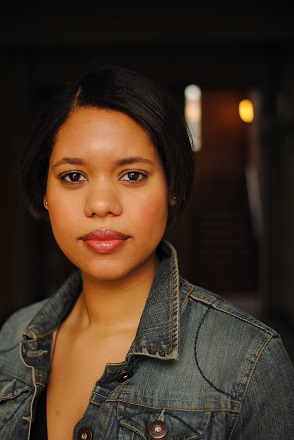
        <![CDATA[image=http://www.operatoday.com/Gareth_John.gif
image_description=Gareth Brynmor John - Baritone [Photo courtesy of the artist]

product=yes
product_title=Gareth John, Wigmore Hall
product_by=A review by Claire Seymour
product_id=Above: Gareth Brynmor John - Baritone <a href="http://www.garethjohnbaritone.co.uk/?q=profile/publicity_photographs">[Photo courtesy of the artist]</a>]]>
    </content>
</entry>

<entry>
    <title>La bohème at ENO</title>
    <link rel="alternate" type="text/html" href="http://www.operatoday.com/content/2013/05/la_boheme_at_en.php" />
    <id>tag:www.operatoday.com,2013://1.6278</id>

    <published>2013-05-21T16:15:00Z</published>
    <updated>2013-05-21T16:16:59Z</updated>

    <summary>This second revival of Jonathan Miller&#8217;s La bohème was the first time I had caught the production. </summary>
    <author>
        <name>Gary Hoffman</name>
        
    </author>
    
        <category term="Performances" scheme="http://www.sixapart.com/ns/types#category" />
    
        <category term="Reviews" scheme="http://www.sixapart.com/ns/types#category" />
    
    
    <content type="html" xml:lang="en" xml:base="http://www.operatoday.com/">
        <![CDATA[<p>Miller has often been over-praised,
particularly by those &#8216;of a certain age&#8217;, apparently unaware or unwilling
to accept that the world has moved on from the 1960s of their youth; indeed,
Miller&#8217;s <a
href="http://boulezian.blogspot.co.uk/2007/07/cos-fan-tutte-22-july-2007.html">Royal
Opera <em>Così fan tutte</em></a> is not simply bad, but one of the most
objectionable stagings I have seen of anything. This <em></em><em>Bohème</em>,
whilst hardly groundbreaking, does its job reasonably enough. For some reason,
the action is updated to the Paris of the 1930s. Beyond imparting a certain
cinematic quality &#8212; though not necessarily nearly so much as Miller and his
designer, Isabella Bywater seem to think it does &#8212; it is not clear what is
gained, but nor for that matter is a great deal lost. An individual&#8217;s
fondness for the photography of George Brassaï does not in itself seem to me
justification for a production, but anyway... The characters are for well
directed on stage, for which revival director, Natascha Metherell should
doubtless receive much of the credit. (Both Metherell and Miller appeared on
stage to take a bow.) Occasionally, I wondered whether the action were a little
too prey to domestification of the wrong way; the meeting between Rodolfo and
Mimì is decidedly low-key, more akin to a neighbourhood watch meeting than an
ignition of passion. However, the selfishness of &#8216;Bohemian&#8217; youth comes
across at least as strongly as I can recall upon other occasions: are not these
boys to some extent playing at poverty, whilst Mimì&#8217;s suffering is the real
thing? </p>

<iframe src="http://player.vimeo.com/video/54607363?title=0" width="486" height="364.5" frameborder="0" webkitAllowFullScreen mozallowfullscreen allowFullScreen></iframe>

<p>Described in the publicity blurb as a &#8216;cast of young British talent&#8217;,
that is for the most part what it is. I have little patience with those who
castigate ENO &#8212; or Covent Garden, for that matter &#8212; for &#8216;failing to
promote British artists&#8217;. The arts world has, let us be grateful, yet to
capitulate to the insidious yet hysterical nationalism pervading much of our
political class and media. What we want are singers, artists in general, who
are good, and preferably more than that. With the exception of Gwyn Hughes
Jones, we did pretty well. Though his Rodolfo improved somewhat during the
third and fourth acts, and was not without sensitivity, there was too much that
was simply crude, almost an allegedly &#8216;Italianate&#8217; parody, or strangely
faceless. The vacuum extended to stage presence too; it would have been
well-nigh impossible to believe in him as a Romantic lead. Kate Valentine&#8217;s
Mimì, on the other hand, was a credit to her and to ENO. Nobility of spirit
was allied to sterling, necessary musical values of phrasing and tonal
variegation. It was a delight to make the acquaintance of the charismatic
American singer, the splendidly named Angel Blue (an exception in terms of
nationality, but certainly not quality). She sang as well as she acted, holding
the stage without effort, imparting both &#8216;artistic&#8217; superiority to Musetta
as singer and, increasingly, warm humanity to her as woman. Richard
Burkhard&#8217;s Marcello impressed too, as did the excellently sung &#8212; and acted
&#8212; Colline of Andrew Craig Brown and Schaunard of Duncan Rock. It was a pity
that Simon Butteriss over-acted &#8212; &#8216;silly voice&#8217; rather than expression of
the text through singing &#8212; in the role of Benoit; maybe he was doing so under
orders. A greater pity was the banality of Amanda Holden&#8217;s translation;
making Puccini sound satisfactory in English is not the easiest of tasks, but
too often, a tin ear revealed itself in the straightforward incompatibility of
words and vocal line.</p>

<p>Oleg Caetani made a very welcome return to the Coliseum. His direction of
the ENO Orchestra was splendid, rich in tone &#8212; sometimes, a little more,
<em>alla</em> Daniele Gatti, would have been appreciated there, but then <a
href="http://boulezian.blogspot.co.uk/2012/08/salzburg-festival-6-la-boheme-18-august.html">Gatti,
last summer, had the Vienna Philharmonic</a> &#8212; but above all, dramatically
alert. Temptations to linger, to sentimentalise, were eschewed, without
draining the drama of its lifeblood. Wagnerisms &#8212; I noticed some especially
Tristan-esque progressions &#8212; and modernisms were not necessarily underlined,
yet, given Caetani&#8217;s ear for balance and line, caught one&#8217;s ear
nevertheless. I should love one day to hear a properly modernistic
<em>Bohème</em> &#8212; or <em>Tosca</em>. This was not it, but refusal to play to
the gallery, and underlining of solid, yet certainly not stolid, musical
virtues proved a great relief for a work in which superficial gloss can all too
readily hold sway. Choral singing and direction of the chorus also proved
estimable throughout.</p>

<p><em><strong>Mark Berry</strong></em></p>

<hr style="width:50%"></hr>

<p><a href="http://www.flickr.com//photos/eno-baylis/sets/72157632139497292/show/"><strong>Click here for a photo gallery of this production.</strong></a></p>

<p><small><strong>Cast and production information:</strong></small></p>

<p><small>Marcello: Richard Burkhard; Rodolfo: Gwyn Hughes Jones; Colline:
Andrew Craig Brown; Schaunard: Duncan Rock; Benoit: Simon Butteriss; Mimì:
Kate Valentine; Parpignol: Philip Daggett; Musetta: Angel Blue; Alcindoro:
Simon Butteriss; Policeman: Paul Sheehan; Foreman; Andrew Tinkler. Jonathan
Miller (director); Natascha Metherell (revival director); Isabella Bywater
(designs); Jean Kalman, Kevin Sleep (lighting). Orchestra and Chorus (chorus
master: Genevieve Ellis) of the English National Opera/Oleg Caetani
(conductor). The Coliseum, London, 29.4.2013.</small></p>]]>
        image=http://www.operatoday.com/ENO_Boheme01.gif
image_description=Richard Burkhard, Gwyn Hughes Jones, Kate Valentine, Duncan Rock, Andrew Craig Brown (L-R) [Photo by Donald Cooper courtesy of English National Opera]

product=yes
product_title=Giacomo Puccini: La bohème
product_by=A review by Mark Berry
product_id=Above: Richard Burkhard, Gwyn Hughes Jones, Kate Valentine, Duncan Rock, Andrew Craig Brown (L-R) [Photo by Donald Cooper courtesy of English National Opera]
    </content>
</entry>

<entry>
    <title>Rolando Villazón: Verdi (International Opera Stars Series 2013)</title>
    <link rel="alternate" type="text/html" href="http://www.operatoday.com/content/2013/05/rolando_villazo.php" />
    <id>tag:www.operatoday.com,2013://1.6287</id>

    <published>2013-05-21T14:30:23Z</published>
    <updated>2013-05-21T14:51:47Z</updated>

    <summary>It&#8217;s Verdi&#8217;s bicentenary year and Rolando Villazón has two new CDs to plug &#8212; titled somewhat confusingly, &#8216;Villazón: Verdi&#8217; and &#8216;Villazón&#8217;s Verdi&#8217;, the latter a &#8216;personal selection&#8217; of favourite numbers performed by stars of the past and present. </summary>
    <author>
        <name>Gary Hoffman</name>
        
    </author>
    
        <category term="Performances" scheme="http://www.sixapart.com/ns/types#category" />
    
        <category term="Reviews" scheme="http://www.sixapart.com/ns/types#category" />
    
    
    <content type="html" xml:lang="en" xml:base="http://www.operatoday.com/">
        <![CDATA[<p>Add these two factors
together and the result is a 15-day tour with the Philharmonia Orchestra,
conducted by Guerassim Voronkov, presenting a combination of lyric and dramatic
numbers which largely eschews the &#8216;popular hits&#8217; in favour of the less
familiar Verdian territory.</p>

<p>The selection has been carefully chosen to avoid potential technical
pitfalls and reveal Villazón&#8217;s diversity and dramatic assurance. Each aria
or scena in this engaging performance was individualised and differentiated &#8212;
in terms of both musical characterisation and dramatic tone; all were marked by
intelligence, composure and much vocal beauty. Villazón may have lost some of
the warm lustre and ease which characterised his voice prior to his pre-2009
operation, but he is still capable of producing some lovely shading of the top
notes and spinning a wonderfully long line.</p>

<p>Following a well-shaped, deft performance of the overture to
<em>Nabucco</em>, Villazón began with the relatively brief cavatina, &#8216;La mia
letizia infondere&#8217; from <em>I Lombardi alla prima crociata</em>. Despite its
succinctness, Villazón left us in no doubt of the readiness and ease with
which he can adopt a persona &#8212; like an actor slipping on a hat or coat to
indicate a change of role &#8212; and, although the performance was fairly reserved
and contained (we&#8217;d been pre-warned that he was suffering from a slight cold)
the voice was agile and bright.</p>

<p>The Act 3 scena from <em>Il Corsaro</em>, &#8216;Eccomi prigioniero!&#8217;,
afforded more space for vocal expansion and dramatic development, moving from
an intense accompanied recitative as the imprisoned Corrado laments his lost
dreams, to a lyrical outpouring of poignant disillusionment as he realises that
his visions of freedom are simply dreams. Here, the pulsing orchestral motifs,
echoed in the tenor&#8217;s voice which trembled with emotion, presented a
complementary contrast to Karen Stephenson&#8217;s affecting cello solo. There was
both lingering pain in Corrado&#8217;s recognition of his own &#8220;vane lusinghe!&#8221;
(&#8220;flattering delusions&#8221;), and muscular assertion in his desire for the body
to be granted a moment&#8217;s rest.</p>

<p>Verdi&#8217;s output is almost wholly operatic &#8212; even the Requiem is dramatic
in essence and effect &#8212; but in both 1838 and 1845, the composer published
sets of six songs for voice and piano, eight of which were later orchestrated
by Luciano Berio. In &#8216;Il mistero&#8217;, which tells of a lover&#8217;s hidden
passions, Villazón combined long-breathed lines with buoyancy and forward
motion, although at times the rather dense orchestral textures and pedal points
absorbed the voice in its middle to lower registers. The final phrase, &#8220;Chè
alimento da sè stesso/ Prende amore in nobil cor&#8221; (&#8220;Because love feeds
itself in a noble heart&#8221;) was heart-breakingly tender and sweet.</p>

<p>An urgent, nimble rendering of the overture from <em>Luisa Miller</em> &#8212;
noteworthy for the clarity of the clarinet and flute solos, and for striking
dynamic and textural contrasts &#8212; was followed by &#8216;Quando le sere al
placido&#8217; which Villazón infused with sustained burning emotion and drama,
demonstrating confident breath control.</p>

<p>The &#8216;Preludio&#8217; to <em>Otello</em> opened the second half, Voronkov
drawing, as throughout the evening, a precise account from his players, one
characterised by a diverse expressive range and well-crafted overall form. With
&#8216;Ciel, che feci &#133; Ciel pietoso&#8217; from <em>Oberto</em>, Villazón began to
relax, building Riccardo&#8217;s aria to a powerful climax in the central lines,
&#8220;Ah no! l&#8217;ultimo lament/ è del misero che muor&#8221; (&#8220;Ah no! These are the
last lamenting tones of the wretched man dying&#8221;), a full-hearted outpouring
of anguished guilt and regret following the duel which kills the eponymous
protagonist. After the tenor&#8217;s convincing and moving expression of genuine
remorse, the legato celli arpeggiation brought some sense of ease as Riccardo
prays for pardon for his murderous act.</p>

<p>The concluding number, the rarely heard &#8216;L&#8217;esule&#8217;, confirmed &#8212; if it
were necessary &#8212; Villazón&#8217;s ability to build broad structures and sustain
a firm line, losing nothing of the vibrancy and impact within the longer,
substantial form.</p>

<p>Three encores, including a beer-swilling brindisi, allowed the effervescent
tenor to indulge in some hyperactive acknowledgement of the audience&#8217;s
adulation &#8212; Villazón leapt about like an irrepressible jack-in-a-box, roses
were strewn far and wide, and a female violinist was waltzed from the stage!
Jolly japes which seemed to go down well with the tenor&#8217;s affectionate
fans.</p>

<p>So, having presented &#8216;The Genius Of Verdi&#8217; on BBC television just five
days previously, Villazón now offers us, &#8216;The Gifts of Villazón&#8217;: singer,
actor, entertainer, communicator. His passionate belief in this music was
evident from the start, and he communicated this conviction with unfailing
directness and immediacy. Villazón has recently explained: &#8217;for me the most
important reason why he remains modern and popular is because he wanted to
reach his audience. He did not want to impress his listeners; he did not try to
gain the acceptance and praise of musicologists or critics. His goal was always
to serve the drama, to give music to the feelings of his characters and above
all, to move us.&#8217; He might well have been describing himself.</p>

<p></p>

<p><em><strong>Claire Seymour</strong></em></p>

<p></p>
<hr style="width:50%"></hr>

<p><small><strong>Programme:</strong></small></p>

<p><small>Overture, Nabucco; &#8216;La mia letizia infondere&#8217; from I Lombardi;
Prelude, I masnadieri; &#8216;Eccomi prigioniero!&#8217; from Il corsaro; &#8216;Il
mistero&#8217; from 8 Romances for tenor and orchestra (orch. Berio); Overture,
&#8216;Quando le sere al placido&#8217; from Luisa Miller; Prelude, Otello; &#8216;Ciel,
che feci!&#8217; from Oberto; Baletti. &#8216;O figli, o figli miei!&#8217;, &#8216;Ah,la
paterna mano&#8217; from Macbeth; Overture, I vespri siciliani; &#8216;Deh, pietoso, oh
Addolorata&#8217;, &#8216;L&#8217;esule&#8217; from 8 Romances for tenor and orchestra (orch.
Berio), Royal Festival Hall, Southbank Centre London, Wednesday, 15th
May 2013</small></p>]]>
        image=http://www.operatoday.com/Villazon.png
image_description=Rolando Villazón [Photo © Gabo / Deutsche Grammophon]

product=yes
product_title=Rolando Villazón: Verdi (International Opera Stars Series 2013)
product_by=A review by Claire Seymour
product_id=Above: Rolando Villazón [Photo © Gabo / Deutsche Grammophon]
    </content>
</entry>

<entry>
    <title>Brahms Third in San Francisco</title>
    <link rel="alternate" type="text/html" href="http://www.operatoday.com/content/2013/05/brahms_third_in.php" />
    <id>tag:www.operatoday.com,2013://1.6284</id>

    <published>2013-05-21T01:33:00Z</published>
    <updated>2013-05-21T03:18:12Z</updated>

    <summary>Nicola Luisotti and the San Francisco Opera Orchestra climbed out of the War Memorial pit, braved the wind whipped bay and held spellbound an audience at Cal Performances&#8217; Zellerbach Auditorium at UC Berkeley.</summary>
    <author>
        <name>Michael Milenski</name>
        <uri>http://www.operatoday.com/</uri>
    </author>
    
        <category term="Performances" scheme="http://www.sixapart.com/ns/types#category" />
    
        <category term="Reviews" scheme="http://www.sixapart.com/ns/types#category" />
    
    
    <content type="html" xml:lang="en" xml:base="http://www.operatoday.com/">
        <![CDATA[<p>It was an extraordinary evening at the opera, a perfect <em>mise en scène</em> (none) for San Francisco&#8217;s tyrannical maestro. The 70 member orchestra sat huddled in a black void and sang in one magnificent voice Brahms&#8217; most lyrical symphony, its colors shining as never before, its moods of turgid Brahmsian contentment translocated into luminescent, metaphysical Latin lyricism.  </p>

<p>It was opera, and this was understood by the audience who felt each movement as an extended aria, and unabashedly applauded each movement in unbridled appreciation of great singing. It was symphony as opera, the fifty-year-old composer spinning this famous yarn of contentment, its thematic play subsumed into joy of performance. <em>Bel canto</em> indeed.</p>

<p>The maestro can sometimes, even often be accused of imposing excessive drama, but Brahms offers him very little of it to manipulate. Thus the musical excess &#8212; and there was plenty of it &#8212; was limited to expected extreme tempo alterations and <em>cantabile</em> melodic exaggerations that illuminated and transfixed more than distorted an Alpine pastoral lyricism. Though it seemed a subdued Luisotti it was still a possessed Luisotti, a powerful conductor with a unique voice.</p>

<p>The Opera orchestra is known to be a very able ensemble, after all it performs the most difficult orchestral scores that exist. The sludgy sound of the War Memorial Opera House prevents perception of the beauty of its sound, sounds that until now we could only imagine. Though Zellerbach Hall is a dowdy acoustical space &#8212; the sound at first had a cavernous quality but once accepted it permitted the winds of the orchestra to sing with a beauty of tone reminiscent of the Vienna Philharmonic (yes, really it&#8217;s true). What the strings may lack in clarity of tone they make up in boldness, and this alone defines and qualifies this ensemble as a truly dramatic orchestra.</p>

<p>It was an evening of orchestral drama. Not least of which was the Nino Rota 1962 Piano Concerto in C major. Not much of Italian Fascist musical culture is around these days, but its heroic post-Romanticism certainly informed composer Rota&#8217;s musical formation and aspiration. Add this to the heady filmic creativity at mid-century Cinecitta and you have the sense of this musical relic. It challenged elegant French pianist Aldo Ciccolini at its premiere in 1987 but was a-piece-of-cake just now for 34 year-old Italian pianist Giuseppe Albanese (no relationship to Licia).</p>

<p>Dressed in formal wear with scarlet spats young Albanese visually startled, and then attacked the American Steinway with the confidence of a finished post-Boulez virtuoso and a highly intelligent contemporary musician. Like Luisotti pianist Albanese was possessed by the music, the mechanics of the score and its execution played out physically and intellectually in full view, or let us say <em>a vista</em>. It was pure theater of musical performance. Mr. Albanese is also Professor of Philosophy at the University of Messina where he teaches the &#8220;methodology of musical communication.&#8221;</p>

<p>The Rota concerto was Prokofiev, Rachmaninoff and Tchaikovsky but more so it was the myriad moods that composer Rota mined for films ranging from <em>8 1/2</em> to <em>Godfather</em>. These moods were often conversations between the piano and an instrument of the orchestra, raptly and rapturously executed in an atmosphere of absolute artistic collaboration imposed by the maestro. </p>

<p>The audience roared (yes, it was a vocal opera audience), and brought Albanese back for curtain calls. But two were enough for these lovers of voices. Never mind. This determined artist came back unsummoned to perform four encores &#8212; to our great pleasure! The highlights were Scriabin&#8217;s Left Hand Nocturne played with his downstage arm (the right one) hanging limply, and a version (showers of notes) of Gershwin&#8217;s song <em>The Man I Love</em> created by American piano virtuoso Earl Wilde.</p>

<p>Conductor Luisotti opened the program with Puccini&#8217;s 1883 Capriccio Sinfonico. From this early work Puccini literally recycled the flashier moments to <em>La boheme</em> (1896) and even <em>Suor Angelica</em> (1918). It served as a perfect, amusing overture to the evening.</p>

<p><em><strong>Michael Milenski </strong></em></p>

<p><br />
</p>]]>
        <![CDATA[<p>image=http://www.operatoday.com/NicolaLuisotti_03.gif<br />
image_description=Nicola Luisotti [Photo by Roger Steen]</p>

<p>product=yes<br />
product_title=Brahms Third in San Francisco<br />
product_by=A review by Michael Milenski <br />
product_id=Above: Nicola Luisotti [Photo by Roger Steen]</p>]]>
    </content>
</entry>

<entry>
    <title>Ariane et Barbe-Bleue on Blu-Ray</title>
    <link rel="alternate" type="text/html" href="http://www.operatoday.com/content/2013/05/ariane_et_barbe.php" />
    <id>tag:www.operatoday.com,2013://1.6286</id>

    <published>2013-05-20T18:48:15Z</published>
    <updated>2013-05-20T19:05:15Z</updated>

    <summary>Paul Dukas&#8217; Ariane et Barbe-Bleue, first heard in 1907, once seemed important. Arturo Toscanini conducted the Met premiere in 1911 with Farrar and later arranged some of its music for a 1947 recording with his NBC Symphony. </summary>
    <author>
        <name>Gary Hoffman</name>
        
    </author>
    
        <category term="Recordings" scheme="http://www.sixapart.com/ns/types#category" />
    
        <category term="Reviews" scheme="http://www.sixapart.com/ns/types#category" />
    
    
    <content type="html" xml:lang="en" xml:base="http://www.operatoday.com/">
        <![CDATA[<p>Now it is an intriguing second-rank work whose time may have come
again. Recent performances have led to recordings under Bertrand de Billy and
Leon Botstein, re-releases on classic recordings under Armin Jordan, Gary
Bertini, Tony Aubin and Jean Martinon, and now this first Blu-Ray under
Stéphane Denève from the Gran Teatre del Liceu.</p>

<p>The music and the production, which I witnessed live in Barcelona, are
reproduced faithfully here in high-resolution Blu-Ray quality. Musically, the
best thing about it is Denève&#8217;s conducting. He manages to convey Dukas&#8217;
half-tone mix of Debussy, Wagner and Strauss (all of whom are both quoted and
imitated in the score), though he struggles to keep the volume down and achieve
the requisite palette of orchestral color. The singing is no more than
adequate. Jeanne-Michèle Charbonnet is committed singer with a large voice,
good diction, and stage presence, but her voice is unpleasantly stressed by
louder and higher passages in way that grates in an opera where she is
continuously on stage. Irish soprano Patricia Barden has made something of a
specialty of the Nurse, and she is solid, though shows similar strains. José
van Dam delivers a focused, careful performance of the surprisingly short role
of Barbe-Bleue; though over 70 at the time of the production, looks more
convincing on stage than anyone else. Of the wives, the strongest musically is
rising Catalan mezzo-soprano Gemma Coma-Alabert as Sélysette. Yet all this
does not add up to a recording that matches the best CD effort (under Armin
Jordan) or even Toscanini&#8217;s excerpt.</p>

<p>So the case for seeking out this recording comes down to the production of
Claus Guth. Any smart and successful German opera director these days&#8212;Guth is
both&#8212;bends the libretto&#8217;s explicit instructions. Most spectators, lacking
previous experience with <em>Ariane</em>, will find the result in this case
confusing: its sparseness leads to absurd inconsistencies with the libretto.
Those with some knowledge of the work, or the time and inclination to think
through Guth&#8217;s production, may be even more troubled. Guth&#8217;s basic
interpretive trope is to modernize settings and then to contrast bleak
naturalism to individual madness. For him, every libretto contains a hidden
<em>Wozzeck</em> longing to get out. This treatment is singularly unsuited to
Dukas&#8217; delicate and subtle work.</p>

<p>To see why, a little background is useful. The Nobel-prize winning Belgian
Symbolist Maurice Maeterlinck&#8212;who provided <em>Ariane</em>&#8217;s libretto and
that of Debussy&#8217;s <em>Pelleas</em>&#8212;was widely viewed as the greatest
Francophone writer of his time. He believed that human emotions and choice are
secondary. We are all marionettes driven by silent, slow-moving forces of which
we are, at best, semi-conscious. His plays do not portray stark realities,
philosophical concepts or madness, but moods, often of feminine melancholy and
foreboding. Maeterlinck seeks to capture these deeper forces and moods through
deliberately ambiguous symbols, metaphors and rituals couched in sparse French
prose-poetry.</p>

<p>The plot, as Maeterlinck and Dukas meant it to be, turns neither on
Ariane&#8217;s relentless impulse to liberate, nor on the feeble resistance of
Barbe-Bleue, but on the fact that his five former wives do not in the end leave
their wounded warrior, reactionary though he may be. Not by chance, they are
evocatively named Sélysette, Ygraine, Bellangère, Alladine, and
Mélisande&#8212;all mythic heroines from Maeterlinck&#8217;s beloved previous dramas.
Nor is it incidental that Dukas serenades them with his most lovely music: the
chorus of the daughters of Orlamonde, two sets of jewel variations, the escape
from the dungeons, and the finale. The staging and costuming instructions
portray them as unique visions. Whether they are real, or just visions of what
Ariane might be or thinks they are, is unclear. Yet Maeterlinck and Dukas&#8217;s
underlying message is clear as it is deliberately ambiguous: the ancient world
of richly imaginative private visions and the modern world of public justice
and mass equality cannot coexist or even communicate. Those who discover this
are not crazy, even if they cannot express precisely why they act as they do.
They are just profoundly human.</p>

<p>Guth has no sense of these existential and historical undertones, or he
chooses to ignore them in the interest of a chic and topical setting. So
Maeterlinck&#8217;s medieval castle, with its finely shaded distinctions between
gloomy interiors and imaginary vistas of stained glass, forests and the sea,
becomes the plain off-white interior of a row house, suggesting an asylum.
Barbe-Bleue becomes a suburban psychopath who compensates for his masculine
inadequacies by keeping five former wives chained in its cellar. Ariane becomes
a woman&#8217;s libber who sweeps in with the opening chord proclaiming freedom and
independence for all, quickly dominates her new husband, and rescues his
prisoners.</p>

<p>The sole reason left for the wives to reject Ariane&#8217;s road to freedom in
favor of servitude in the hands of a criminal is because they are insane, as
indicated by their relentless eye rolling, limb twitching, hair twisting, and
clutching of stuffed animals. To assume that fictional characters must be out
of their minds to act as they do demonstrates a lack of dramaturgical and
cultural imagination. This transforms what is already a subtle and challenging
opera into a very long evening indeed.</p>

<p><em><strong>Andrew Moravcsik</strong></em></p>

<iframe src="http://rcm.amazon.com/e/cm?t=operatoday-20&o=1&p=8&l=as1&asins=B00A2PAMJM&ref=tf_til&fc1=000000&IS2=1&lt1=_blank&m=amazon&lc1=0000FF&bc1=000000&bg1=FFFFFF&f=ifr" style="width:120px;height:240px;" scrolling="no" marginwidth="0" marginheight="0" frameborder="0"></iframe>]]>
        image=http://www.operatoday.com/OpusArteOABD7114D.gif
image_description=Opus Arte OABD 7114D [Blu-Ray]

product=yes
product_title=Paul Dukas: Ariane et Barbe-bleue 
product_by=A review by Andrew Moravcsik
product_id=Opus Arte OABD 7114D [Blu-Ray]
price=$29.99
product_url=http://www.arkivmusic.com/classical/album.jsp?album_id=859428
    </content>
</entry>

<entry>
    <title>Glyndebourne: Ariadne auf Naxos</title>
    <link rel="alternate" type="text/html" href="http://www.operatoday.com/content/2013/05/glyndebourne_ar.php" />
    <id>tag:www.operatoday.com,2013://1.6285</id>

    <published>2013-05-19T22:32:16Z</published>
    <updated>2013-05-22T16:58:50Z</updated>

    <summary>Utterly mad but absolutely right &#8212; Richard Strauss&#8217;s Ariadne auf Naxos started the Glyndebourne 2013 season with an explosion. Strauss could hardly have made his intentions more clear. Ariadne auf Naxos is not &#8220;about&#8221; Greek myth so much as a satire on art and the way art is made.</summary>
    <author>
        <name>Anne Ozorio</name>
        <uri>http://www.operatoday.com/</uri>
    </author>
    
        <category term="Performances" scheme="http://www.sixapart.com/ns/types#category" />
    
        <category term="Reviews" scheme="http://www.sixapart.com/ns/types#category" />
    
    <category term="glyndebourne" label="Glyndebourne" scheme="http://www.sixapart.com/ns/types#tag" />
    <category term="strauss" label="Strauss" scheme="http://www.sixapart.com/ns/types#tag" />
    
    <content type="html" xml:lang="en" xml:base="http://www.operatoday.com/">
        <![CDATA[<p>Strauss could hardly have made his intentions more clear. His music is a clue. There are, of course, references to Mozart, but these are prettified and tarted up. Are Strauss and Hofmannsthal suggesting that the Composer courts success rather than art for arts sake? He is, after all, writing for &#8220;the richest man in Vienna&#8221;.  The Music Master (Thomas Allen) clashes with the Major-domo (William Relton), but the firework display takes priority.<em> Ariadne auf Naxos </em>is an indictment of the system..</p>

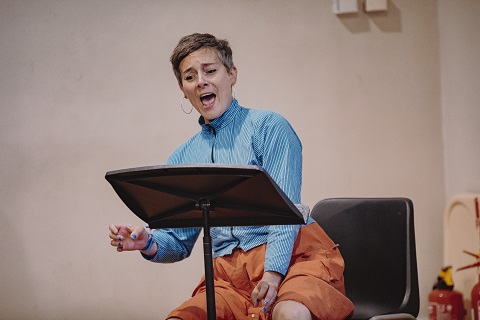
<p><span class="mt-enclosure mt-enclosure-image" style="display: inline;"><img alt="ariadne_auf_naxos212_0.gif" src="http://www.operatoday.com/ariadne_auf_naxos212_0.gif" width="300" height="376" class="mt-image-none" style="" /></span><span style="color:blue">Kate Lindsey as the Composer</span></p>

<p>The Vorspiel and Opera are distinct, but only up to a point.  Strauss pits art against artifice, disguising the true, radical meaning of his work behind a veneer of elegant stylization.These are mind games. As Zerbinetta tells the Composer, &#8220;Auf dem Theater spiele ich die Kokette, wer sagt, dass mein Herz dabei im Spiele ist? Ich scheine munter und bin doch traurig, gelte für gesellig und bin doch so einsam&#8221; (In the theatre I play the coquette. But who says my heart is in the game? I seem cheerful, but I&#8217;m sad. I play to the crowd, but I&#8217;m so alone&#8221;.)</p>

<p>Katharina Thoma&#8217;s staging is erudite. Years after the opera was written, firebombs would destroy many German theatres, symbolically wiping out the German opera tradition. Obviously this was nothing in comparison to the destruction wrought by politicians and their philistine followers, but to a man like Strauss, whose world revolved around Dresden and Munich, the bombings were a metaphor for mindless barbarism.   &#8220;The holiest shrine in the world&#8221;, he wrote. &#8220;Zerstört!&#8221;. <em>Ariadne auf Naxos</em> was written during the First World War. Although Strauss could not foresee the future, as a modern audience, we cannot forget the more destructive war that came after. There are relevant connections between <em>Ariadne auf Naxos </em>and <em>Metamorphosen, </em>which is perhaps Strauss&#8217;s most explicit comment on the madness that is war. Until we stop giggling when someone opens his cloak to reveal RAF logos, we have learned nothing.</p>

<p>Strauss&#8217;s score gives us other clues. The stock characters reference standard <em>commedia dell&#8217;arte</em> where figures are hidden behind masks. Greek myth itself uses archetypes as metaphor. If Ariadne were a &#8220;real&#8221; person, she&#8217;d be sectioned under the Mental Health Act, given her obsessive delusions about Theseus and suicide. She and Bacchus both come from family backgrounds where women have sex with gods and monsters, so they have a lot in common. But what psychiatrist would countenance that?  Soile Isokoski sang the glorious aria &#8220;Ein Schönes war&#8221; so beautifully that we could feel Ariadne&#8217;s tragedy as if it were personal and universal. &#8220;Und ging im Licht und freute sich des Lebens!&#8221; became a brave cry of protest against the hospital where &#8220;normal&#8221; people don&#8217;t understand her extreme personality. Yet like Zerbinetta, Ariadne will not be silenced. In the end, she (sort of) gets what she needs, escaping the mundane world in which she&#8217;s trapped into a kind of warped apotheosis of love, death and delusion.</p>

<p><iframe src="http://player.vimeo.com/video/66413459?color=C0C000" width="486" height="364.5" frameborder="0" webkitAllowFullScreen mozallowfullscreen allowFullScreen></iframe></p>

<p>Strauss had mixed feelings about <em>Tristan und Isolde</em>. His own take on the Liebestod is delicously delirious. The references to &#8220;drink&#8221; is particularly ironic, given that mental hospitals dispense chemical solutions just as Brangäne dispensed a potion that didn&#8217;t do what it was supposed to. Strauss writes the nurses&#8217; last song so they have to warble like mad Rhinemaidens, totally uncomprehending what&#8217;s going on round them.  Against his better instincts, Bacchus (Sergey Skorokhodov) cannot help but succumb. At the end, Thoma&#8217;s staging shows the hospital curtains billowing out like the sails of a ship, heading out at last for the freedom of the seas. The &#8220;sails&#8221; are lit by a red glow. Is this sunset or fire ? Is Valhalla burning ? Or does it suggest Dresden, Munich, Tokyo, Hiroshima, Hamburg or many other cities destroyed  since?</p>

<p>Isokoski is one of the great Strauss singers of our time, so it was a pity that the production made more of Laura Claycomb&#8217;s one-dimensional Zerbinetta. The part is central to the work as Zerbinetta interacts with the Composer (Kate Lindsey) while the Prima Donna (Soile Isokoski) is too wrapped up in her &#8220;role&#8221; as mega-star. Ariadne is frigid. Zerbinetta goes to the opposite extreme. Given that Greek myth is full of bestiality and explicit sex, we really should not be alarmed that Zerbinetta, who doesn&#8217;t feature in antiquity, is a nympho.  Compared with Ariadne&#8217;s mother, Zerbinetta is almost healthy. Claycomb is good at being strident and brassy, so if the subtlety in the role didn&#8217;t come over well, there was much else in the production to savour. When Claycomb throws off the restraints of the straitjacket, we thrill at the strength of her spirit. It&#8217;s a brilliant image, totally in keeping with the meaning of the opera on many levels.</p>

<p>Although the Vorspiel and the Opera are ostensibly separate they are integral to each other. The Composer sings in the first part because he/she&#8217;s written a score. But when the Opera actually takes place, the characters transform, as if they&#8217;ve taken on lives of their own.  Hoffmansthal and Strauss don&#8217;t give the Composer anything to sing in the second part. The Composer storms out when he realizes that scores don&#8217;t exist in limbo but are changed by circumstances and performance. Hence the psychic creative storm as this bombshell drops. In Thoma&#8217;s production, the Composer is struck dumb with the horror that he/she is no longer &#8220;in control&#8221;.   As a successful composer, Strauss knew full well that a score only becomes an opera when it is performed by musicians who think and feel. There is no such thing as &#8220;non-interpretation&#8221;. Now, Lindsey makes her presence felt through her acting, rather than by her singing, in a thoughtful reversal of roles.  The Composer &#8220;is&#8221; part of the opera, silent or otherwise.</p>

<p><span class="mt-enclosure mt-enclosure-image" style="display: inline;"><img alt="ariadne_auf_naxos144_0.gif" src="http://www.operatoday.com/ariadne_auf_naxos144_0.gif" width="486" height="363" class="mt-image-none" style="" /></span><span style="color:blue">The <em>commedia</em> troupe</span></p>

<p>Strauss&#8217;s score is brilliantly anarchic, extending the idea of multiple levels of reality. The Mozart and <em>commedia dell&#8217;arte</em> references jostle with references to Wagner, popular dance tunes and woozy bursts of fantasy. Vladimir Jurowski has a wonderful feel for Strauss&#8217;s sense of humour. The brasses of the London Philharmonic Orchestra blare just enough so we can hear the parody, the winds (especially the bassoons) wail like a bunch of mock tubas. The strings reminded me of Strauss&#8217; <em>Metamorphosen</em>.  Humour is even more difficult to express in abstract music than more obvious emotions, because by its very nature, it&#8217;s quixotic, tilting at the windmills of rigid literalism.</p>

<p>Hence the vignettes, which Thoma stages so well. They break the intensity, injecting an irreverent sense of the absurd.  The nymphs, Naiad, Dryad and Echo are mindless, not &#8220;carers&#8221; so much as nurses who follow rules without question. But how lovingly they are sung and acted by Ana Maria Labin, Adriana Di Paola, and Gabriela Istoc. The Four Comedians,  Harlequin, Scaramuccio, Truffaldino and Brighella (Dmitri Vargin, James Kryshak, Torben Jürgens and Andrew Stenson) are even more impressively performed. When they  dance, every movement matches perfectly with the music: even their toes are tuned just right. The figures may be &#8220;fools&#8221; but they&#8217;re done with panache and precision.  They practically steal the show.</p>

<p>This Glyndebourne Strauss <em>Ariadne auf Naxos </em>has the makings of a classic, once audiences realize how genuinely true it is to the savage wit of Strauss and Hoffmansthal.  <em>Ariadne auf Naxos</em> subverts delusion and false images. We need its irreverence more than ever.</p>

<p><em><strong>Anne Ozorio</strong></em></p>

<hr style="width:50%"></hr>

<p><small>For more information, and details of the June 4th broadcast, please see the <a href="http://glyndebourne.com/">Glyndebourne Festival website. </a></p>

<p><strong><a href="http://glyndebourneopera.podbean.com/mf/web/ndq4z8/AriadneaufNaxosPodcast-FINAL.mp3">Click here for a podcast relating to this production</a>.</strong></p>

<p><strong>Cast and production information:</strong></p>

<p>Prologue: Music Master: Thomas Allen, Major-domo: William Renton, Lackey: Frederick Long, Officer: Stuart Jackson, Composer: Kate Lindsey, Tenor: Sergey Skorokhodov, Wigmaker: Michael Wallace, Zerbinetta: Laura Claycomb, Prima Donna: Soile Isokoski, Dancing Master: Wolfgang Ablinger-Sperrhacke, Comedians: Dimitri Vargin, James Kryshak, Torben Jürgens, Andrew Stenson, Piano: Gary Matthewman. O[pera: Naiad: Ana Maria Labin, Dryad: Adriana Di Paola, Echo: Gabriela Istoc, Ariadne: Soile Isokoski, Zerbinetta: Layura Claycomb, Harlequin: Dimitri Vargin, Scaramuccio: James Kryshak, Truffaldino: Torben Jürgens, Brighella: Andrew Stenson, Bacchus: Serghey Skorokhodov. Conductor: Vladimir Jurowski, London Philharmonic Orchestra, Director: Katharina Thoma, Set designer: Julia Müer, Costumes: Irina Bartels, Lighting: Olaf Winter, Movement: Lucy Burge. Glyndebourne Festival, 18th May 2013</small></p>]]>
        <![CDATA[<p>image=http://www.operatoday.com/ariadne_auf_naxos617.gif<br />
image_description=Soile Isokoski and Sergey Skorokhodov [Photo by Alastair Muir courtesy of Glyndebourne Festival]</p>

<p>product=yes<br />
product_title=Glyndebourne: Ariadne auf Naxos<br />
product_by=A review by Anne Ozorio<br />
product_id=Above: Soile Isokoski and Sergey Skorokhodov<br/><br/>Photos by Alastair Muir courtesy of Glyndebourne Festival</p>]]>
    </content>
</entry>

<entry>
    <title>Michele Mariotti conducts La donna del lago</title>
    <link rel="alternate" type="text/html" href="http://www.operatoday.com/content/2013/05/post_1.php" />
    <id>tag:www.operatoday.com,2013://1.6282</id>

    <published>2013-05-17T11:09:52Z</published>
    <updated>2013-05-21T00:24:21Z</updated>

    <summary>Rossini&#8217;s La donna del Lago at the Royal Opera House boasts a superstar cast.  Joyce DiDonato and  Juan Diego Flórez are perhaps the best in these roles in the business at this time. Yet the conductor Michele Mariotti is also hot news. </summary>
    <author>
        <name>Anne Ozorio</name>
        <uri>http://www.operatoday.com/</uri>
    </author>
    
        <category term="Commentary" scheme="http://www.sixapart.com/ns/types#category" />
    
        <category term="Interviews" scheme="http://www.sixapart.com/ns/types#category" />
    
    <category term="joycedidonato" label="Joyce diDonato" scheme="http://www.sixapart.com/ns/types#tag" />
    <category term="juandiegoflorez" label="Juan Diego Florez" scheme="http://www.sixapart.com/ns/types#tag" />
    <category term="rossini" label="Rossini" scheme="http://www.sixapart.com/ns/types#tag" />
    <category term="royaloperahouse" label="Royal Opera House" scheme="http://www.sixapart.com/ns/types#tag" />
    
    <content type="html" xml:lang="en" xml:base="http://www.operatoday.com/">
        <![CDATA[<p>He has only just turned 34, but has extensive experience. He conducted <em>Rigoletto</em> at the Met. &#8220;You know,&#8221; he smiles, &#8220;the Rat Pack Rigoletto&#8221;.</p>

<p>Mariotti grew up in Pesaro, so Rossini&#8217;s music is in his genes. &#8220;Every summer, I was so excited when the Festival started at the Teatro Rossini. I went to everything I could get to. It was wonderful to be with people like Riccardo Chailly and Claudio Abbado, Leo Nucci and so many great names. I went to rehearsals to see close-up how they worked. I was very young of course, but I could &#8216;live&#8217; Rossini&#8217;s music. That&#8217;s why I feel so close to the <em>patois</em>, and care about it so much. If you play Rossini, you understand that you have to find a way into the music through what it means. If you see a dot on the note you know it means playing short, but interpretation is much more. Everything  has to be elegant, sweet, swift, evoking the atmosphere.<em> La donna del lago </em>is very Romantic, the closest for me to <em>Guillaume Tell</em>, which for me is Rossini&#8217;s greatest masterpiece.&#8221;</p>

<p>&#8220;The instrumentation is so delicate, so transparent that it&#8217;s much harder to conduct than if it were just loud. The orchestra is not just accompaniment. It has to sing with the voices. Rossini wrote more serious opera than comic, and he expresses feelings in a more abstract, intellectual way. The structure is almost completely vertical, not contrapuntal. It can look quite &#8216;frozen&#8217; in theory, but it&#8217;s a very different way of expressing feelings. For example, in the Act Two trio, "Qual pena in me gia desta", Elena and her two suitors are singing short, sharp high C&#8217;s. But these notes bear swords!&#8221;</p>

<p>&#8220;In the &#8216;King&#8217;s aria&#8217;, &#8220;O fiamma soave&#8221;, you can hear that Uberto cannot be a shepherd because the <em>coloratura</em> is so elegant, so royal that only a king could sing like that.  He was wearing a disguise as a shepherd, but the people in the audience can hear who he really is.&#8221;</p>

<p>Mariotti&#8217;s sensitivity  to Rossini&#8217;s idiom comes from instinct, but is also grounded firmly in formal and structural discipline. &#8220;I studied composition at the Conservatorio Rossini in Pesaro, but I didn&#8217;t want to be a composer. I wanted to understand the &#8220;science&#8221;, the technique of composition, so it would help me understand how to conduct. Composers don&#8217;t write &#8216;from God&#8217;, they use processes to express themselves. Rossini wrote more serious opera than comic, and he retired from opera soon after Guillaume Tell, so we have to understand that too. He is abstract, more intellectual, though you can&#8217;t compare him to Verdi, any more than you can compare Chopin to Bach&#8221;. </p>

<p>&#8220;I think you have to respect tradition, but you have to respect that not all tradition is good. Sometimes it can kill the character of the music. You have to keep asking yourself questions, because the world is always changing, and we can&#8217;t forever do the same things. When a composer finishes writing the score, the opera as a work of art is not finished. Every time it is performed, it lives again in new interpretation.  A painting in a museum doesn&#8217;t change. But every time you go and look at it, you can see something new. You don&#8217;t go with a pencil and change the nose, the eyes or anything like that. But you are looking at it in a different way.  In opera, every performance is a new way of listening, because the performers are different, and the situation and the audience are different too. So when I study a score, I need to know the tradition but also understand that there is never only one way to do it&#8221;.</p>

<p>&#8220;I met Juan Diego  Flórez many years ago in Pesaro. With singers like him and Joyce DiDonato, you can always change things and find something new. They are true musicians, who immediately understand what can be done. John Fulljames I met last year in Bologna. He showed me the ideas he had for this production, and I was very happy . He has a good understanding of the meaning of the opera, so his direction comes from the music. You can breathe the spirit of Scotland, you can feel the wind and the waves and the colours. It doesn&#8217;t matter if the set is traditional or modern. The direction is modern if it the movements and characters are alive. The most important thing is that the direction is coherent and lets the singers act&#8221;.</p>

<p>Michele Mariotti has been the Principal Conductor of the Teatro Communale in Bologna, for six years. He enjoys a strong relationship with the players and is building connections with the community. He has also conducted at the Opera Bastille, the Liceu, in Washington, in Los Angeles and at the Maggio Musicale Fiorentino. He conducted Bizet Carmen at the Met (&#8220;a bit outside my usual repertoire&#8221;) in 2011 and conducted the acclaimed Verdi Rigoletto with Piotr Beczala  </p>

<p>Yet he has only just turned 34, celebrating his birthday between rehearsals for the Royal Opera House <em>La donna del lago</em>. He&#8217;s definitely a rising star, yet comes over in person as sensitive and soft-spoken, most inspired when he talks about music. &#8220;For me it is always important to build things by the right steps. A conductor needs more than technical expertise. We need life experience to really understand the meaning of some operas. I don&#8217;t conduct Verdi Falstaff, for example. I want to do more symphonic music and more Verdi, Brahms, Strauss, Shostakovich. And <em>Guillaume Tell !</em>&#8221;</p>

<p>When he&#8217;s not making music, Mariotti plays tennis, basketball, and reads and cooks. &#8220;Musicians are always thinking about music, how to do this bar better, how to do that tempo&#133;.I need to relax and clear my mind. So I think about tomatoes and onions instead&#8221;. But cooking is creative. Blending ingredients is a form of art. Like conducting an orchestra, perhaps </p>

<p><em><strong>Anne Ozorio</strong></em></p>

<p>Rosssin<em>i La donna del lago</em> runs from 17th May to 11th June. For more details, please see the <a href="http://www.roh.org.uk/productions/la-donna-del-lago-by-john-fulljames">Royal Opera House site. </a></p>]]>
        <![CDATA[<p>image=http://www.operatoday.com/Mariotti_MG_4200.gif<br />
image_description=Michele Mariotti [Photo by Amati Bacciardi (Pesaro) courtesy of Columbia Artists Music]</p>

<p>product=yes<br />
product_title=Michele Mariotti conducts <em>La donna del lago</em><br />
product_by=An interview by Anne Ozorio<br />
product_id=Above: Michele Mariotti [Photo by Amati Bacciardi (Pesaro) courtesy of Columbia Artists Music]</p>]]>
    </content>
</entry>

<entry>
    <title>Lohengrin, Bayreuth 2011 Live</title>
    <link rel="alternate" type="text/html" href="http://www.operatoday.com/content/2013/05/lohengrin_bayre.php" />
    <id>tag:www.operatoday.com,2013://1.6281</id>

    <published>2013-05-16T18:13:03Z</published>
    <updated>2013-05-16T20:21:20Z</updated>

    <summary>Opera in three acts. Words and music by Richard Wagner. </summary>
    <author>
        <name>Gary Hoffman</name>
        
    </author>
    
        <category term="Repertoire" scheme="http://www.sixapart.com/ns/types#category" />
    
    
    <content type="html" xml:lang="en" xml:base="http://www.operatoday.com/">
        <![CDATA[<p><strong>First performance:</strong> Weimar, 28 August 1850</p>

<table>
  <tbody>
    <tr>
      <th colspan="2">Characters</th>
    </tr>
    <tr>
      <td></td>
      <td></td>
    </tr>
    <tr>
      <td><strong>Role</strong></td>
      <td><strong>Voice type</strong></td>
    </tr>
    <tr>
      <td>Lohengrin</td>
      <td>tenor</td>
    </tr>
    <tr>
      <td>Elsa of Brabant</td>
      <td>soprano</td>
    </tr>
    <tr>
      <td>Ortrud, <em>Telramund's wife</em></td>
      <td>dramatic soprano or mezzo-soprano</td>
    </tr>
    <tr>
      <td>Friedrich of Telramund, <em>a Count of Brabant</em></td>
      <td>baritone</td>
    </tr>
    <tr>
      <td>Heinrich der Vogler (Henry the Fowler)</td>
      <td>bass</td>
    </tr>
    <tr>
      <td>The King's Herald</td>
      <td>baritone</td>
    </tr>
    <tr>
      <td>Four Noblemen of Brabant</td>
      <td>tenors, basses</td>
    </tr>
    <tr>
      <td>Four Pages</td>
      <td>sopranos, altos</td>
    </tr>
    <tr>
      <td>Duke Gottfried, <em>Elsa's brother</em></td>
      <td>silent</td>
    </tr>
    <tr>
      <td colspan="2"><em>Saxon, Thuringian, and Brabantian counts and nobles,
        ladies of honor, pages, vassals, serfs</em></td>
    </tr>
  </tbody>
</table>

<p><strong>Setting:</strong> Antwerp during the first half of the
Tenth Century</p>

<p><iframe width="486" height="273" src="http://www.youtube.com/embed/4GbN-k7MHCc?list=SPE67FFC5EEFBC7BC3" frameborder="0" allowfullscreen></iframe></p>

<h4>Synopsis</strong></h4>

<h4>Act I</h4>

<p><em>A plain on the banks of the River Scheldt near Antwerp</em></p>

<p>King Henry of Germany has come to Antwerp to urge the people to join with
him in battle against invading Magyars, but he finds the Brabantians locked in
civil strife without a leader. Frederick of Telramund explains that on his
deathbed the Duke of Brabant had entrusted to his care his two children, Elsa
and Godfrey, on the understanding that he would marry Elsa and be guardian to
Godfrey. But Godfrey has disappeared, Elsa is suspected of doing away with him
and Telramund has married Ortrud, daughter of Radbold, King of the Frisians.</p>

<p>In her name and his own he claims the dukedom and accuses Elsa of fratricide
and of having a secret lover. The king agrees to judge the case and Elsa is
summoned. Her only answer to the accusations is to relate a dream in which a
hero appeared in answer to her need. To him she will entrust her cause. The
king decrees trial by combat, and the herald calls for a champion to appear.</p>

<p>A knight appears, in a boat drawn by a swan. He says he has been sent by God
to be Elsa's champion. She accepts him as champion and husband, agreeing to his
condition that she must never ask his name or lineage or where he came from.
Telramund is defeated in the duel, but the stranger knight spares his life and
is acclaimed by the populace.</p>

<h4>Act II</h4>

<p><em>The fortress of Antwerp</em></p>

<p>Telramund blames Ortrud for his downfall, as she had told him that she saw
Elsa drown her young brother, but she convinces him that he was defeated by
magic rather than divine intervention. She claims that the stranger's magic
would fail if he could be made to reveal his name - or even if the tip of a
finger were to be cut off.</p>

<p>As only Elsa can ask him to reveal his name, Ortrud plans to undermine her
confidence. Elsa appears on the balcony and Otrud, calling to her from the
darkness, succeeds in winning her pity, invoking the pagan gods in triumph as
Elsa prepares to let her in. Ortrud begs Elsa to intercede for Telramund and
suggests that as the stranger arrived by magic, so he may leave by magic, but
Elsa's faith is unshaken.</p>

<p>At dawn the herald proclaims the banishment of Telramund and announces that
the king has invested the crown of Brabant in Elsa's husband, who will lead the
Brabantians into battle. Four nobles mutter their resentment at this decision
and Telramund offers to lead them in rebellion.</p>

<p>As Elsa is about to enter the church for her wedding Ortrud claims that she
must yield pride of place to her, since her husband has been falsely accused
and is of noble birth, whereas no one knows anything about Elsa's husband.
Claiming that he would be revealed a fraud if he had to divulge the source of
his power, she challenges Elsa to ask the question. Telramund accuses the
strange knight of witchcraft and asks his name and lineage, but he is
answerable to Elsa alone. Telramund whispers to Elsa that if she were to let
him cut off the tip of the stranger's finger his secret would be known and he
would never leave her. She rejects the advice and goes into the church with her
husband, who orders Telramund and Ortrud to leave.</p>

<h4>Act III</h4>

<p><em>Scene 1. The bridal chamber</em></p>

<p>Following the good wishes of their attendants, Elsa and her husband are left
alone for the first time. Their delight in one another is soon undermined by
her regrets that she cannot call her husband by his name and her fears that he
may leave her. A hysterical vision of the swan returning to take him away leads
to the fatal question. Telramund bursts in with his followers and is killed by
Lohengrin, who tells the nobles to bring the body before the king. He calls
Elsa's ladies to dress her and tells her he will answer her question before the
king.</p>

<p><em>Scene 2. The banks of the Scheldt</em></p>

<p>The king thanks the people for their support in defending Germany against
the heathen. The body of Telramund is carried in, followed by Elsa and her
husband, who tells the king he will not be able to lead the people of Brabant
into battle. He is absolved from blame for Telramund's death.</p>

<p>Explaining that Elsa has been tricked into asking the forbidden question, he
answers it: he is one of the champions of the Holy Grail, who are sent out into
the world to defend the cause of right. But they must leave once their
identities are known. He is Lohengrin, son of Parsifal, who wears the crown of
the Grail. He prophesies that Germany will never be conquered by the eastern
hordes. The swan appears and Lohengrin bids farewell to Elsa, telling her that
if he had been able to stay, her bother Godfrey, who is not dead, would have
returned.</p>

<p>Ortrud exults at her success in driving Lohengrin away and that Godrey must
remain in the form of the swan as a result of her witchcraft. Lohengrin kneels
in prayer and when he takes the chain from the neck of the swan, it is
transformed into Godfrey. Elsa falls lifeless as Lohengrin leaves, his boat now
drawn by a white dove.</p>

<p>[Source: <a
href="http://www.opera-opera.com.au/plotw.htm#wagnlohe">Opera~Opera</a>]</p>

<p><strong><a
href="http://www.dlib.indiana.edu/variations/scores/bhr2693/large/index.html">Click
here for the complete score</a>.</strong></p>

<p><strong><a href="http://www.opera-guide.ch/opera.php?id=411&uilang=en">Click here for the complete libretto (English translation).</a></strong></p>]]>
        <![CDATA[image=http://www.operatoday.com/Lohengrin.gif
image_description=

product=yes
product_title=Lohengrin, Bayreuth 2011 Live
product_by=<a href="http://www.youtube.com/watch?v=4GbN-k7MHCc&list=SPE67FFC5EEFBC7BC3">Bayreuther Festspiele 2011</a>
product_id=]]>
    </content>
</entry>

<entry>
    <title>Wagner &#8212; 200 Years Later</title>
    <link rel="alternate" type="text/html" href="http://www.operatoday.com/content/2013/05/wagner_200_year.php" />
    <id>tag:www.operatoday.com,2013://1.6280</id>

    <published>2013-05-16T16:47:01Z</published>
    <updated>2013-05-16T19:41:53Z</updated>

    <summary>The current theme celebrates Richard Wagner&apos;s birth 200 years ago. Over the course of the next several weeks, recordings of each of works will be presented, including recordings of live performances when available. Parsifal, Bayreuth 2012 Live Lohengrin, Bayreuth 2011...</summary>
    <author>
        <name>Gary Hoffman</name>
        
    </author>
    
        <category term="Theme" scheme="http://www.sixapart.com/ns/types#category" />
    
    
    <content type="html" xml:lang="en" xml:base="http://www.operatoday.com/">
        <![CDATA[<p>The current theme celebrates Richard Wagner's birth 200 years ago. Over the course of the next several weeks, recordings of each of works will be presented, including recordings of live performances when available. </p>

<ul>
	<li><a href="http://www.operatoday.com/content/2013/05/parsifal_bayreu.php">Parsifal, Bayreuth 2012 Live</a></li>
<li><a href="http://www.operatoday.com/content/2013/05/lohengrin_bayre.php">Lohengrin, Bayreuth 2011 Live</a></li>
</ul>

<p><a href="http://www.wagneroperas.com/">Click here for a general overview of Wagner and his works</a>.</p>

<p></p>

<p> </p>]]>
        
    </content>
</entry>

<entry>
    <title>Parsifal, Bayreuth 2012 Live</title>
    <link rel="alternate" type="text/html" href="http://www.operatoday.com/content/2013/05/parsifal_bayreu.php" />
    <id>tag:www.operatoday.com,2013://1.6279</id>

    <published>2013-05-16T16:01:09Z</published>
    <updated>2013-05-16T16:53:10Z</updated>

    <summary><![CDATA[Parsifal. Bühnenweihfestspiel (&ldquo;stage dedication play&rdquo;) in three acts.]]></summary>
    <author>
        <name>Gary Hoffman</name>
        
    </author>
    
        <category term="Redbox" scheme="http://www.sixapart.com/ns/types#category" />
    
        <category term="Repertoire" scheme="http://www.sixapart.com/ns/types#category" />
    
    
    <content type="html" xml:lang="en" xml:base="http://www.operatoday.com/">
        <![CDATA[<p> Music and libretto by Richard Wagner.</p>

<p><strong>First Performance:</strong> 26 July 1882, Bayreuth (Festspielhaus)<br />
    <br />
<strong>Characters:</strong> </p>

<table>
    <tbody>
    <tr><td>Amfortas</td><td>Baritone</td></tr>
    <tr><td>Titurel</td><td>Bass</td></tr>
    <tr><td>Gurnemanz</td><td>Bass</td></tr>
    <tr><td>Parsifal</td><td>Tenor</td></tr>
    <tr><td>Klingsor</td><td>Bariton</td></tr>
    <tr><td>Kundry</td><td>Soprano</td></tr>
    <tr><td>First and Second Knights of the Grail</td><td>Tenor/Bass</td></tr>
    <tr><td>First and Second Squires</td><td>Soprano</td></tr>
    <tr><td>Third and Fourth Squires</td><td>Tenor</td></tr>
    <tr><td>A Voice</td><td>Contralto</td></tr>
    <tr><td>Klingsor's Flower Maidens</td><td>Soprano/Alto</td></tr>
    </tbody>
</table>

<p><strong>Time and Place:</strong> In the vicinity of Monsalvat, the castle of the Knights of the Grail, located in the northern mountains of Gothic Spain.</p>

<p><iframe width="486" height="273" src="http://www.youtube.com/embed/Zwb59zq-J6s?list=PL7B9126BE66E82061" frameborder="0" allowfullscreen></iframe></p>

<p><strong>Synopsis:</strong></p>

<p><em>Act I</em></p>

<p>In a wood near the castle of Monsalvat, home to the Knights of the Grail, Gurnemanz, one of the Knights of the Grail, wakes his young squires and leads them in prayer. He notices the retinue of Amfortas approach, and asks the leading Knight for news of the King&#8217;s health. The knight tells him that the King has suffered during the night and is going early for his bath. The squires ask Gurnemanz to explain how the King&#8217;s injuries can be healed, but before he can do so a wild woman - Kundry - bursts in. She offers a balsam for the King&#8217;s pain which she claims is from Arabia and then collapses, exhausted.</p>

<p>Amfortas, King of the Grail Knights, arrives, carried on a stretcher. He asks for Gawain, only to be told that this Knight has left without his permission. Angrily, Amfortas says that this sort of impetuousity was what led him to Klingsor&#8217;s realm and to his downfall. He receives Kundry&#8217;s potion and tries to thank her, but she answers, incoherently, that thanks will not help and urges him to his bath.</p>

<p>The King leaves, and the squires question Kundry mistrustfully. Gurnemanz tells them that Kundry has often helped the Grail Knights but that she appears and disappears at her whim. When he asks her why she does not stay to help, she replies that she never helps. The squires think she is a witch and sneer that if she is so helpful, why does she not find the Holy Spear for them? Gurnemanz says that this is destined to be the job of another. He tells them that Amfortas had been the guardian of the Spear, but lost it when seduced by a fearsomely attractive woman in Klingsor&#8217;s domain. Klingsor had stabbed Amfortas with the Spear: this is the wound which causes Amfortas&#8217; suffering and it will never heal.</p>

<p>Two squires, returning from the King&#8217;s bath, tell Gurnemanz that Kundry&#8217;s balsam has eased the King&#8217;s sufferings for the moment. His squires ask Gurnemanz whether he knew Klingsor. He tells them of how the Holy Spear, which was used to wound the Redeemer on the Cross, and the Grail which caught His blood, had come to Monsalvat to be guarded by the Knights of the Grail under the rule of Titurel - Amfortas&#8217; father. Klingsor had yearned to join the Knights, but had been unable to drive impure thoughts from his mind and resorted to self-castration which led to his expulsion. Klingsor then bitterly set himself up in opposition to the Kingdom of the Grail, learning dark arts and establishing a domain full of beautiful flower-maidens who seduce and destroy the Knights of the Grail. It was in this way that Amfortas lost the Holy Spear, which is now in Klingsor&#8217;s hand. Gurnemanz relates how Amfortas then had a vision in which he was told to wait for a &#8220;holy fool, enlightened by compassion&#8221; (&#8220;Durch Mitleid Wissend, der Reine Tor&#8221;) who would finally heal his wound.</p>

<p>At this moment, cries are heard from the Knights: a swan has been shot, and a young man is dragged in carrying a bow. Gurnemanz berates the boy, telling him that this is a holy domain, and asking what had the swan ever done to injure the boy. The boy remorsefully breaks his bow and is unable to answer any question put to him: why is he here, who is his father, how did he arrive at the realm of the Grail and what is his name? When asked what he does know, the boy says he has a mother called Herzeleide, and that he made his bow himself. Kundry has been watching and now she tells them that the boy&#8217;s father was Gamuret, a knight killed in battle, and how the boy&#8217;s mother had forbidden her son to use a sword, fearing that he would suffer the same fate as his father. The boy exclaims that after seeing Knights passing through his forest he immediately left his mother to follow them. Kundry laughs and tells the boy that his mother has died of grief, at which the boy attempts to attack Kundry, but then collapses in grief. Kundry suddenly seems overcome with sleep, but cries out that she must not sleep and wishes that she would never waken. She crawls off to rest.</p>

<p>Gurnemanz invites the boy to observe the Grail ritual at Monsalvat. The boy does not know what the Grail is, but remarks as they walk that although he scarcely moves, he has travelled far. Gurnemanz tells him that in this realm, time becomes space.</p>

<p>They arrive at the Hall of the Grail and observe the ceremony. The voice of Titurel is heard, telling his son, Amfortas, to uncover the Grail. Amfortas is racked with shame and suffering. He is the Guardian of the Grail, and yet he has succumbed to temptation and lost the Holy Spear: he declares himself unworthy of his office. He cries out for forgiveness (&#8220;Erbarmen!&#8221;) but hears only the promise of future redemption by the &#8220;Holy Fool, enlightened by compassion&#8221;. The Knights and Titurel urge him to reveal the Grail, which he finally does. The Hall is bathed in the light of the Grail as the Knight commune by taking bread and wine. Amfortas has collapsed, and is taken out. Slowly the Hall empties leaving only the boy and Gurnemanz, who asks him if he has understood what he has seen. The boy cannot answer and is roughly ejected by Gurnemanz with a warning not to shoot swans. A voice from on high repeats the promise of redemption.</p>

<p><em>Act II</em></p>

<p>The second act begins in Klingsor&#8217;s castle, where Klingsor calls up his servant to destroy the boy who has strayed into his domain. He calls her: HellRose, Herodias, Gunddrigga and finally Kundry, transformed here into the fearsomely beautiful woman who seduced Amfortas. She wakes from her sleep and initially resists Klingsor, mocking his enforced chastity, but soon succumbs to his spell. Klingsor calls up Knights from his domain to attack the boy, but can only watch as they are slain. He sees the boy stray into his Flowermaiden garden and calls on Kundry to seek the boy out - but she has already gone.</p>

<p>The boy finds himself in a Garden surrounded by the beautiful and seductive Flower-maidens. They call to him and entwine themselves around him, chiding him for killing their lovers and for resisting their charms. They fight amongst themselves to win his love but are stilled when a voice calls out the boy&#8217;s name: Parsifal. Parsifal suddenly remembers that this is the name his mother used when she appeared in his dreams. The Flower-maidens fade away, calling him a fool, leaving Parsifal and Kundry alone. He wonders if this has all been a dream and asks how she knows his name. Kundry tells him that she knows his name from his Mother who had loved him and tried to protect him from his father&#8217;s fate, but who had been abandoned by him and finally died of grief. Parsifal is overcome with grief and blames himself for his mother&#8217;s death. He thinks he must be very stupid to have forgotten his mother. Kundry says that this is his first sign of understanding, and that she can help him understand his mother&#8217;s love by kissing him. Kundry&#8217;s kiss is, however, anything but maternal, and Parsifal reacts immediately by realising that this is how Amfortas was seduced - he feels the wound burn in his side, and now understands Amfortas&#8217; passion during the Grail Ceremony. Filled with this compassion for Amfortas, Parsifal rejects Kundry.</p>

<p>Furious, Kundry tells Parsifal that if he can feel compassion for Amfortas, then he should feel compassion for her as well. She relates how she saw the Redeemer on the cross and laughed at Him. For this lack of compassion, she has been condemned to wander through the centuries looking for rest. Parsifal tells her that they would both be condemned for ever if he succumbed to her. Kundry again calls for his compassion, telling him that she is now the slave of the Spear-carrier. As he rejects her again, she curses him to wander without ever returning to the Kingdom of the Grail, and finally she calls on Klingsor to help her.</p>

<p>Klingsor appears and throws the Spear at Parsifal, but the Holy Fool catches it and destroys Klingsor and his Kingdom by making the sign of the Cross with the Spear. As he leaves, he tells Kundry that she knows where she will find him.</p>

<p><em>Act III</em></p>

<p>The Third act opens again at the Kingdom of the Grail, many years later. Gurnemanz, now aged and bent, hears a crying outside his hut and discovers Kundry unconscious. He revives her, using water from the Holy Spring, but she will only speak the word &#8220;serve&#8221; (&#8220;Dienen&#8221;). Gurnemanz wonders if there is any significance in the fact that she has reappeared on this, special, day. He then notices a figure dressed in full armour approaching. He cannot see who it is because the stranger wears a helmet, and does not speak. Finally the apparition removes its helmet and Guremanz recognises the boy who shot the swan, and then realises that the spear carried by him is the Holy Spear.</p>

<p>Parsifal tells of his desire to return to Amfortas. He relates his journey, wandering for years unable to find the path back to the Grail: he has often been forced to fight, but has never wielded the Spear in battle. Gurnemanz tells him that the curse preventing Parsifal from finding his right path has now been lifted, but that in his absence Amfortas has refused to reveal the Grail, and that Titurel has died. Parsifal is overcome with remorse, blaming himself for this state of affairs. Gurnemanz tells him that today is the day of Titurel&#8217;s funeral rites, and that Parsifal has a great duty to perform. Kundry washes Parsifal&#8217;s feet and Gurnemanz anoints him with water from the Holy Spring, recognising him as the pure Holy Fool, now enlightened by compassion, and as the new King of the Knights of the Grail.</p>

<p>Parsifal comments on the beauty of the meadow and Gurnemanz explains that today is Good Friday, when all the world is renewed. Parsifal gives his blessing to the weeping Kundry.</p>

<p>Once more they travel to the Hall of the Grail. Amfortas is brought before the Grail and before Titurel&#8217;s coffin. He cries out to his dead father to offer him rest from his sufferings, and wishes to join him in death. The Knights of Grail urge Amfortas angrily to reveal the Grail to them again, but Amfortas in a frenzy says he will never reveal the Grail and commands his Knights to kill him. At this moment, Parsifal arrives and says that only one weapon can perform this task: with the Spear he heals Amfortas&#8217; wound and forgives him. He returns the Spear to the keeping of the Grail knights and once more reveals the Grail. All kneel before him and Kundry, released from her curse, sinks lifeless to the ground.</p>

<p>[Synopsis Source: <a href="http://en.wikipedia.org/wiki/Parsifal">Wikipedia</a>]</p>

<p><strong><a href="http://www.impresario.ch/libretto/libwagpar_e.htm">Click here for the complete libretto (English translation)</a>.</strong></p>]]>
        <![CDATA[<p>image=http://www.operatoday.com/AN00459076_001_l.gif<br />
image_description=Illustration of Parsifal by Rogelio Egusquiza [Courtesy of The British Museum]</p>

<p><br />
product=yes<br />
product_title=Parsifal, Bayreuth 2012 Live<br />
product_by=<a href="http://www.youtube.com/watch?v=IrY1QCeKoNg&list=PL7B9126BE66E82061">Bayreuther Festspiele 2012</a><br />
product_id=Above: Illustration of Parsifal by Rogelio Egusquiza [Courtesy of The British Museum]</p>]]>
    </content>
</entry>

<entry>
    <title>Wozzeck at ENO</title>
    <link rel="alternate" type="text/html" href="http://www.operatoday.com/content/2013/05/wozzeck_at_eno.php" />
    <id>tag:www.operatoday.com,2013://1.6277</id>

    <published>2013-05-14T14:03:53Z</published>
    <updated>2013-05-15T17:14:14Z</updated>

    <summary>&#8220;Man is an abyss. It makes one dizzy to look into it.&#8221;  So utters Georg Büchner&#8217;s Woyzeck, repeating what was also a recurring motif in the playwright&#8217;s own letters.  </summary>
    <author>
        <name>Gary Hoffman</name>
        
    </author>
    
        <category term="Performances" scheme="http://www.sixapart.com/ns/types#category" />
    
        <category term="Redbox" scheme="http://www.sixapart.com/ns/types#category" />
    
        <category term="Reviews" scheme="http://www.sixapart.com/ns/types#category" />
    
    
    <content type="html" xml:lang="en" xml:base="http://www.operatoday.com/">
        <![CDATA[<p>But, even the darkest most abject tragedies have, by definition, the power to uplift, salve and redeem.  Our spirits are plunged to the most terrible depths, yet our terrified souls are ultimately cleansed by some ultimate beauty which perhaps cannot be defined but whose capacity to purify is discerned and experienced.</p>

<p>Carrie Cracknell&#8217;s striking new production of Berg&#8217;s bleak opera is a tragedy without catharsis or succour.  Situating the unfolding misery in a shabby army barracks in modern Britain, Cracknell presents us with unsentimental, gritty realism and domestic suffering, enriched by imaginative theatrical details.  Wozzeck is a poor private driven into despair and then madness by impoverishment, betrayal and guilt.  He kills his wife, and then himself, their lifeless bodies, slumped like rag-dolls across a scuffed kitchen table, a painful image of futility and senselessness.  There is no  universal atonement.  </p>

<p>The wretchedness unfolds relentlessly across the levels of designer Tom Scutt&#8217;s highly effective three-level set.  The cheerless private living quarters are permanently visible above the public goings-on in the ground floor mess, thereby emphasising that the horror and inanity of war is responsible for the destruction of human dignity.  Indeed, Cracknell makes much of the military context; soldiers in combat gear stand astride the stage, smoking, posturing, challenging the audience before curtain rise.  Union-draped coffins return home but are awarded little respect, as the women prefer to bestow their shameless attentions on the living rather than direct their compassion to the fallen. </p>

<p><span class="mt-enclosure mt-enclosure-image" style="display: inline;"><img alt="Wozzeck--Leigh_Melrose--Bryan_Register.gif" src="http://www.operatoday.com/Wozzeck--Leigh_Melrose--Bryan_Register.gif" width="468" height="324" class="mt-image-none" style="" /></span><span style="color:blue">Leigh Melrose as Wozzeck and Bryan Register as Drum Major</span><br />
 <br />
Certainly one should not under-estimate the impact of Berg&#8217;s own experiences of war - he enlisted in August 1915 - on this opera, and they may have encouraged him to empathise with the oppressed soldier of Büchner's play.  But, Berg show Wozzeck as a man who is both a poor squaddie and a visionary, and his tragedy is - like that of Peter Grimes - that he cannot reconcile these two opposing identities.  Cracknell&#8217;s Wozzeck is a man undone by the revulsion and responsibilities of war, which hound and haunt him - mingled with the hallucinatory torments caused by the Doctor&#8217;s psychedelic chemical experimentations.  But, the director offers little sense of the visionary dimension, of the Wozzeck who is more than a representative of the oppressed class - &#8216;die arme Leute&#8217;; the Wozzeck who is &#8216;outside&#8217; conventional mores.</p>

<p>The effects of this are most noticeable in the closing moments when the decision to confine the drama within the domestic interior deprives us of the pathos of the moonlit lake where Wozzeck desperately tries to purify his soul, by committing suicide in the very waters where he has washed the blood from the lethal knife.  (It also makes a nonsense of the translated surtitles).  Yet, what better expresses Wozzeck's ultimate alienation and estrangement than the gentle sounds of nature - namely the indifferent croaking of the frogs as he drowns in the lake upon whose shore lies Marie&#8217;s condemnatory corpse.  </p>

<p>In Berg&#8217;s final scene, the child of Wozzeck and Marie is seen playing, enjoying what will be his final moments of innocence, unaware of the tragedy which has ensued; but in Cracknell&#8217;s production Harry Polden creeps past the bloodied bodies - with shocking dignity and composure - to the courtyard.</p>

<p>As Wozzeck, Leigh Melrose is at once introverted and authoritative.  A man trapped in own mind, plagued and piqued by images of innocence ravaged, he is as physically enfeebled as he is mentally besieged.  It is clear that his obsessive love for the unworthy Marie is both a tantalising path to deliverance and his ultimate, inevitable route to destruction.   At times an inert, frail figure, Melrose focuses all his authority into his voice, conveying a huge range of psychological states and dimensions.  Both he and his Marie, the American soprano Sara Jakubiak, are moving without lapsing into sentimentality.  <br />
Jakubiak finds huge resources of passion and piercing anger, conveying the savagery of her desires and distress.  Yet, conversely, she captures Marie&#8217;s unobtrusive yet undoubted emergent remorse, culminating in a sudden realization of her culpability which confirms her inescapable haplessness and lack of hope.   </p>

<p>Berg&#8217;s monstrous Captain and Doctor can seem outlandish caricatures and Cracknell certainly piles on the grotesque twitches and manias.  Tom Randle&#8217;s swaggering Captain, his steroid-derived muscles etched with livid tattoos, runs a neat side-line in drugs-trafficking, concealing his mind-numbing powders and capsules in garish children&#8217;s toys.  James Morris&#8217;s egregious, despotic Doctor, meanwhile, finds the likes of Wozzeck and his friend Andres (Adrian Dwyer)  - a wheelchair-bound veteran who numbs the pain of reality by retreating into the world of computer games and cyber hostilities - a willing workforce, ready to endure his experiments and chemical confections for small change.</p>

<p>Both Morris and Randle presented unequivocally committed performances of vicious vitality; in common with the entire cast, they delivered Richard Stokes&#8217; translation with unfailingly clarity.  During the diverse, loosely connected dialogue of the opening scene, they used body and voice to transfix us in fascination at their foulness; throughout they ambushed all with their ghastly diversions, Morris thundering imposingly forth while Randle unleashed some terrifying falsetto shrieks. </p>

<p>Edward Gardner drew a performance of astonishing lyrical intensity from the orchestra of English National Opera, in a rich, Romantic reading of almost Mahlerian elegy.  He used the intimate quality of much of the score to throw the interludes into powerful relief, crafting the latter so that they steadily gained in dramatic significance and emotional potency.  Such luscious opulence may have been a little at odds with the stark bleakness of the on-stage action, but Gardner&#8217;s acute awareness of the minutiae of the disciplined structure units from which the score is built provided a controlled counterpoint to the escalation of abnormal psychological intensity. </p>

<p>The penetrating tone which, following Marie&#8217;s murder, twice surges from a troubling pianissimo tremor to a captivating, apocalyptic boom, was electrifying in its primitive grandeur.  At the moment of death some believe that all the important occurrences of one&#8217;s life pass rapidly and in distortion through one&#8217;s mind; and here, we seemed to experience both the self-consuming fire of Marie&#8217;s death, and Wozzeck&#8217;s terrifying realization of his own vileness.</p>

<p>Sir Thomas Beecham detested Berg&#8217;s opera, calling it &#8220;the most horrible opera in the world&#8221;.  Cracknell offered little to alleviate the horror but much to inspire admiration.</p>

<p><em><strong>Claire Seymour</strong></em></p>

<hr style="width:50%"></hr>

<p><small><strong>Cast and production information:</strong></p>

<p>Wozzeck: Leigh Melrose; Marie: Sara Jakubiak; Captain: Tom Randle; Doctor: James Morris; Drum Major: Bryan Register; Andres: Adrian Dwyer; Margret: Clare Presland; First Apprentice: Andrew Greenan; Second Apprentice: James Cleverton; Madman: Peter van Hulle; Marie&#8217;s Child: Harry Polden; Carrie Cracknell: director; Edward Gardner: conductor; Tom Scutt: set designs; Oliver Townsend and Naomi Wilkinson: costumes; Jon Clarke: lighting; Ann Yee: choreography; Chorus and Orchestra of the English National Opera. English National Opera, London Coliseum, Saturday 11th May 2013.</small></p>]]>
        <![CDATA[<p>image=http://www.operatoday.com/Wozzeck--Sara_Jakubiak.gif<br />
image_description=Sara Jakubiak as Marie [Photo by Tristram Kenton courtesy of English National Opera]</p>

<p>product=yes<br />
product_title=Wozzeck at ENO<br />
product_by=A review by Claire Seymour<br />
product_id=Above: Sara Jakubiak as Marie<br/><br/>Photos by Tristram Kenton courtesy of English National Opera</p>]]>
    </content>
</entry>

<entry>
    <title>Mulhouse: Rare Britten Well Done</title>
    <link rel="alternate" type="text/html" href="http://www.operatoday.com/content/2013/05/mulhouse_rare_b.php" />
    <id>tag:www.operatoday.com,2013://1.6264</id>

    <published>2013-05-12T03:23:00Z</published>
    <updated>2013-05-12T03:27:49Z</updated>

    <summary>National Opera Company of the Rhine has marked this year&#8217;s Benjamin Britten celebration with a remarkably compelling, often gripping new production of the seldom-seen Owen Wingrave.</summary>
    <author>
        <name>Jim Sohre</name>
        <uri>http://70.32.73.199/</uri>
    </author>
    
        <category term="Performances" scheme="http://www.sixapart.com/ns/types#category" />
    
        <category term="Reviews" scheme="http://www.sixapart.com/ns/types#category" />
    
    
    <content type="html" xml:lang="en" xml:base="http://www.operatoday.com/">
        <![CDATA[<p>The pacifist Britten wrote the piece for BBC television in 1971, partly as a response to the lingering Viet Nam War which was still raging.  The structure of the dramatic episodes, the cross fades written into the transitions, and the contrasting instrumental sounds in the sparsely-scored work were all a consideration of the medium.<br />
 <br />
Indeed, my one and only experience with the piece was when PBS broadcast the original production in the early 70&#8217;s, when television sound was still rather rudimentary.  Now encountering the work live in the theatre, I was not prepared for the rich diversity of the instrumental writing, nor for the sonorous ensemble effects.  Britten was, of course, not only a master orchestrator, but quite adept at setting texts to good dramatic effect.  He was well-served in Mulhouse by cast, band, and production leadership.  <br />
 <br />
 <em>L&#8217;Opéra national du Rhin</em> has wisely chosen to feature the excellent young members of their Opera Studio program and if the result is any indication, opera has a promising future in France. The title role is a Big Sing, with lots of it lying in the middle voice, and Laurent Deleuil essayed Owen with a well-schooled baritone that boasted a solid technique wedded to a (not overly) warm tone that had substantial presence.  If the very top money notes pushed him to the limit, Mr. Deleuil nevertheless had the full arsenal of gifts necessary to score a considerable success as he anchored the production. Laurent is possessed of an easy, unaffected stage deportment and has very clear diction.  If ultimately he didn&#8217;t yet quite feel the character&#8217;s convictions deep in his gut (especially at the start), this was nonetheless a memorable role assumption.<br />
 <br />
The towering Sévag Tachdjian gave much pleasure in his commanding turn as schoolmaster Coyle.  Mr. Tachdjian&#8217;s orotund bass-baritone was passionately deployed and was evenly produced throughout the rangy part.   But he needs a little more coaching on his pronunciation, since his somewhat odd-sounding vowels and soft consonants made me wonder at first if he was singing, in English.  Handsome Jérémy Duffau was a lanky, coltish Lechmere, and his buzzy lyric tenor was engaged, solid, and fluid.  He might check his tendency to appear too balletic in his movements in his embodiment of the young soldier.<br />
 <br />
Mélanie Moussay proved to be an imperious Miss Wingrave, with a distinguished vocal instrument of unanticipated maturity, resonance and power for one so young. Kristina Bitene combined excellent elocution and a wiry, committed demeanor to make Mrs. Julia a riveting personage in the unfolding drama.  She also proved to have a reliable, wide-ranging soprano of pleasant bite and with a rock solid technique.   Mmes. Moussay, Bitene, and the evening&#8217;s &#8220;Kate&#8221; made their extended trio &#8220;(&#8220;He will listen to the house&#8221;) a real musical highlight.<br />
 <br />
And speaking of Kate, Marie Cubaynes had much to offer with her dark-hued mezzo including a consistency and pulsing forward motion that served the opinionated, head-strong lass well.  Her final duet with Owen was another highly affecting emotional landmark. Guillaume François proved a real &#8220;triple threat&#8221; as he took on the three roles of Sir Philip, Narrator, and the Phantom.  His promising tenor sported a pleasant, steady tone, even if it had a moment or two in legato passages that were a little rough around the edges.  Still, his rendition of the unaccompanied &#8220;folk song&#8221; was hauntingly beautiful, and very well controlled, especially at opera&#8217;s close.<br />
 <br />
Conductor David Syrus had a remarkable night in the pit, wringing every last variation of color from his talented, small band of musicians.  That Maestro Syrus is a noted Britten specialist was self-evident based on the exceptional aural results of this performance.  Just listen to the nuanced interweaving of text and orchestra, the gossamer sheen of the signature repeated chords, the rhythmic storm of effects he churns up, the inevitable unfolding of the conversational phrases, the effortless deliberation and weight of the ensembles.  This was a wholly mesmerizing night of persuasive music-making.  <br />
 <br />
Stage director Christophe Gayral, in tandem with set and lighting designer Eric Soyer were admirable models of restraint, and their modus operandi of &#8220;less is more&#8221; paid huge dividends.  The set was all black legs, sliding doors, levels, and carefully chosen set pieces.  On occasion, it suggested an Advent-calendar approach with insets (and characters) revealed, but only as long as they were pertinent. <br />
 <br />
The evening opened with a dumb-show, first revealing the boy dropping dead to the floor then effectively blending into a foreshadowing of Owen&#8217;s funeral.  Especially telling was Kate&#8217;s fainting with guilt as she goes to place a rose in the blood red funeral spray (in the form of a cross).  Of course, we don&#8217;t know any of these characters yet, but the scene cleverly gets us to speculate and anticipate the mysteries to come. Renaud Rubiamo has devised a number of gorgeous still projections and video effects, the most stunning being the requisite hall of portraits that at one point come eerily to life. <br />
 <br />
The only downside of the night was that the seats were only half-filled for this significant musical-dramatic achievement.  But there is another chance to partake of its glories.   <em>Owen Wingrave</em> will play two more performances this summer in Strasbourg (4 and 6 July).  It would be worth the trip.</p>

<p><em><strong>James Sohre</strong></em></p>

<hr style="width:50%"></hr>

<p><br />
<small><strong>Cast and production information:</strong></p>

<p>Owen Wingrave:  Laurent Deleuil; Spencer Coyle: Sévag Tachdjian; Lechmere:  Jérémy Duffau; Miss Wingrave:  Mélanie Moussay; Mrs. Julian: Kristina Bitene; Kate: Marie Cubaynes; Sir Philip, Narrator, Phantom: Guillaume François; Boy Ghost: Victor Collin; Conductor: David Syrus; Stage Director: Christophe Gayral; Set and Lighting Design: Eric Soyer; Costume Design: Cidalia Da Costa; Video Design: Renaud Rubiamo</small></p>]]>
        
    </content>
</entry>

<entry>
    <title>Frankfurt&apos;s Intriguing Idomeneo</title>
    <link rel="alternate" type="text/html" href="http://www.operatoday.com/content/2013/05/frankfurts_intr.php" />
    <id>tag:www.operatoday.com,2013://1.6266</id>

    <published>2013-05-12T03:13:00Z</published>
    <updated>2013-05-12T03:17:31Z</updated>

    <summary>Once upon a time, Frankfurt Opera had the baddest ass reputation in Germany as &#8220;the&#8221; cutting edge producer of must-see opera.</summary>
    <author>
        <name>Jim Sohre</name>
        <uri>http://70.32.73.199/</uri>
    </author>
    
        <category term="Performances" scheme="http://www.sixapart.com/ns/types#category" />
    
        <category term="Reviews" scheme="http://www.sixapart.com/ns/types#category" />
    
    
    <content type="html" xml:lang="en" xml:base="http://www.operatoday.com/">
        <![CDATA[<p>Never mind that the not-to-be-ignored &#8216;interpretations&#8217; had to be &#8216;different&#8217; at all costs; or that (often rankling) &#8216;insider&#8217; concepts by groupie-inspiring-directors had to be explained (if indeed that were possible) with extensive program notes; or that decent enough singers were sometimes secondary to the buzz-worthy &#8216;event.&#8217; The city opera house on the Main River was a place to see and be seen, challenge and be challenged.<br />
 <br />
And then prime movers and shakers moved out, and the company seemed shaken indeed not only by those high profile departures, but also by devastating budget cuts in the last Time of Austerity. They almost cut the chorus entirely, for crying out loud!  What followed was a well-intended but languishing period when the company&#8217;s productions unwillingly digressed from &#8216;shock and awe&#8217; to &#8216;schlock and awful&#8217; on more than a few occasions.<br />
 <br />
But happily in recent seasons, the old rebel spark is decidedly back in force (mercifully moderated by common sense), the overall quality of the singers is once again high, and the half-hearted air that seemed to inhabit nearly a decade of shows has lifted.  Witness their new, modern dress, cogent spin on Mozart&#8217;s opera seria <em>Idomeneo</em> which is extremely well-served by its wholly comprehensible <em>Konzept.</em><br />
 <br />
Stage Director Jan Philipp Gloger has set out to actually tell the story (*gasp*) while informing it with a contemporary resonance.  War references feature soldiers that could have come out of today&#8217;s conflicts. Karin Jud&#8217;s costumes successfully define the aristocrats and refugees/prisoners in modern terms, and the Naval uniforms ably establish a hierarchy of a military (and political) chain of command.  Mr. Gloger&#8217;s intentions have been well-served by a collaborative set design (Franziska Bornkamm) that is at once blissfully simple and wonderfully varied thanks to the ingenious use of Frankfurt&#8217;s massive turntable. Bearing a huge white wall with massive double doors that bisects up-stage from down-, it rotates frequently to reveal ever more interesting &#8220;rooms&#8221; in Idomeneo&#8217;s realm. The space is effectively re-defined with well-chosen set pieces that include a desk, Nautilus set, hospital bed, podium, press conference set-up, catafalque and more.<br />
 <br />
The director has blocked the action to facilitate highly detailed character relationships, and has made full use of the vast playing space with well-motivated and dramatically telling movement.  Gloger masterfully uses diverse levels and groupings, witness the stylized &#8216;group hug&#8217; by title character, Idamante, Ilia and Elettra in the great quartet.  Too, the dramatic tension between Ilia and various others was physicalized in unusually contentious, even brutal confrontations.  Exciting stuff.<br />
 <br />
Only the transition to the shore left me wanting something more. It was all well and good to have the massive wall disappear into the flies, and I accepted the modern suitcases littered about like toppled gravestones.  But as the bits of &#8216;flotsam and jetsam&#8217; were blown onstage by hidden fans, did the strands of debris have to be black, sparkly cuttings from a slit plastic glitter curtain?  Not damaging, but it seemed at odds with other more sober scenic effects.  The whole evening&#8217;s story telling was exceptionally well-lit by Jan Hartmann with well tightly crafted specials, atmospheric gel colors, good area washes and excellent focus of the action.<br />
 <br />
All in all, the staging made absolute sense within its chosen convention.  I loved introducing Idamante as a boy given a toy boat by Idomeneo in a flashback.  When the adult Idamante then bounded on stage he was first still carrying the boat, which spoke volumes about his youthfulness, his unconditional love for his father, and his place in succession to the throne as a future naval hero.  The presentation of Idomeneo as a war veteran, first on crutches and later in a wheelchair had great meaning.  And having his suffering require sedation and confinement to a hospital bed set up one of the show&#8217;s best and most mysterious effects.<br />
 <br />
For the sacrifice of Idamante, a stunning backdrop gets pulled in depicting a site crowded with ancient ruins.  When it comes time for Idomeneo to kill his son, it is the boy-extra who enters and mouths the words as the adult Idamante sings upstage.  For a while, it all seems disorienting until. . .it is all cunningly revealed to have been a drug-induced hallucination by the hospitalized hero.  This proved a real stunner of an interpretive twist, an absolutely honest one that injected truthful spontaneity into what can be a stilted theatrical moment.     <br />
 <br />
The huge revolving wall also facilitated/masked some amazing &#8220;dissolves,&#8221; such as when the entire chorus seemed to have disappeared in the blink of an eye, leaving an empty press conference room at the end. Or when Idomeneo&#8217;s negative fantasy of Ilia and Idamante is revealed as a steamy sex scene with the two in bed together, only to have vanished when the setting came back &#8216;round.<br />
 <br />
Misfires?  Yeah, a couple moments might be re-considered like Idomeneo&#8217;s very brief attempted rape of Ilia.  Or having the boy-as-sacrifice mouth every single word Idamante sings off stage rather than simply having the boy gesture. Or Elettra&#8217;s powder blue business suit that rendered her unnecessarily matronly, with an unflattering wig that she ripped off a couple of times.  But these were quite minor distractions in what was a pretty terrific take on Mozart&#8217;s dramatic masterpiece.<br />
 <br />
Best of all, Frankfurt peopled this inventive production with a truly first rate cast of singing actors.  The title role is surely the best, and most difficult tenor role Mozart ever created.  It has severely tested any number of first-string performers over the years, but it seemed to hold no terror for the resourceful Roberto Saccà.  Having begun his career as a light tenor, in the intervening years Mr. Saccà has imbued his refulgent tone with a good deal of weight, resulting in a robust, even delivery.  The trade-off is that the youthful sweetness in his mid-lower range tends to become a mite tremulous when pressed, but the pay-off is that his meaty high notes soar.  His fiercely accurate, propulsive rendition of <em> Fuor del mar</em> was downright definitive.<br />
 <br />
Elsa van den Heever is not only a house favorite, she has been branching out to conquer hearts with major companies throughout the world (the latest with her recent Met debut).  The diva&#8217;s praiseworthy spinto was a good match for Elettra, and while she could zing out a phrase with aplomb, she could also scale back her tone to a filigree of melting beauty.  Her superlative way with serene utterances were all prelude to a powerfully demented fury that she unleashed with her showpiece <em>D&#8217;Oreste d&#8217;Ajace.</em> <br />
 <br />
Juanita Lascarro was the darkest-voice Ilia I have yet encountered, which added an interesting dynamic to the musical texture.  Ms. Lascarro proved a spirited persona dominating her every scene, although her impassioned delivery found her forcefully trilling her &#8220;r&#8217;s&#8221; a bit too much for my taste.  Given that she slightly covers her voice, the result was that Juanita had an admirable way with legato phrases and could float high notes that were very affecting.  That said, when she pressed the top more powerfully, forte notes tended to spread.<br />
 <br />
Martin Mitterutzner was a revelation as a fresh-voiced, fresh-faced Idamanate.  Lanky and boyishly handsome, Mr. Mitterutzner complemented his committed acting with a robust lyric tenor that had power and style. Company member Julien Prégardien displayed all his familiar strengths (uncanny musicianship, gently pleasing tone, and clean melismas) and an occasional weakness (the very top notes don&#8217;t turn over and get a bit straight), but his seasoned delivery as Arbace was a success.<br />
 <br />
Young Beau Gibson showed off an exceptionally pleasing, youthful tone married to a witty impersonation as the High Priest.  As Neptune, lean and wiry actor Olaf Reinecke seemed to meld the Ancient Mariner and Freddy Kruger <em>(Nightmare on Elm Street)</em> in equal parts, as he lurked, menaced, proffered weapons, and generally behaved doggone unpleasantly.  The four soloists (Cretans and Trojans) drawn from the Frankfurt chorus were all uniformly fine: Camilla Suzana Peteu, Thomas Charrois, Yvonne Hettegger, and Pere Llompart.  Their winning featured moments speak well for the quality and depth of the vocal ensemble who excelled under Chorus Master Matthias Köhler&#8217;s tutelage. <br />
 <br />
In the pit Julia Jones elicited exciting results from the resident orchestra.  For once the rather dry acoustic was a plus, as the individual colors of the instruments were highlighted without taking away from a smooth, clean, well-oiled ensemble.  Perhaps there was nothing radically revelatory about Maestra Jones&#8217;s straightforward interpretation, but she hit all the musical marks, the drama was always well served, and the singers were superbly partnered.<br />
 <br />
Having visited Frankfurt Opera happily and often during the ten years I lived there, what a joy it was to re-live (and perhaps reclaim) the &#8216;glory days&#8217; with this inspired, well-crafted performance.</p>

<p><em><strong>James Sohre</strong></em></p>

<hr style="width:50%"></hr>
 
<small><strong>Cast and production information:</strong>

<p>Idomeneo: Roberto Saccà; Idamante: Martin Mitterutzner; Ilia: Juanita Lascarro; Elettra: Elsa van den Heever; Arbace: Julian Prégardien; Neptune&#8217;s High Priest: Beau Gibson; Voice:  Philipp Alexander Mehr; Neptune: Olaf Reinecke; Two Cretans: Camilla Suzana Peteu, Thomas Charrois; Two Trojans: Yvonne Hettegger, Pere Llompart; Conductor: Julia Jones; Stage Director: Jan Philipp Gloger; Set Design: Franziska Bornkamm; Costume Design: Karin Jud; Lighting Design: Jan Hartmann; Chorus Master: Matthias Köhler  </small><br />
﻿</p>]]>
        
    </content>
</entry>

</feed>