Subscribe to
Opera Today

Receive articles and news via RSS feeds or email subscription.


Recently in FeaturedOperas

ROSSINI: Guglielmo Tell — Rome 1954

Guglielmo Tell: Melodramma tragico in four acts

MOZART: Idomeneo

Idomeneo, rè di Creta. Dramma per musica in tre atti (K. 366).

Music composed by Wolfgang Amadeus Mozart. Libretto by Giovanni Battista Varesco after Idomenée by Antoine Danchet.

GOUNOD: Faust

Faust, Opéra en cinq actes

Music composed by Charles Gounod. Libretto by Jules Barbier and Michel Carré after Faust by Johann Wolfgang von Goethe

BERLIOZ: La damnation de Faust

La damnation de Faust, Légende dramatique en quatre parties

Music composed by Hector Berlioz. Libretto by Hector Berlioz, Almire Gandonanière and Gérard de Nerval after Faust by Johann Wolfgang von Goethe

BOITO: Mefistofele

Mefistofele, Opera in un prologo, quattro atti e un epilogo

Music and libretto by Arrigo Boito (1842-1918), based on Faust: Eine Tragödie by Johann Wolfgang von Goethe

VERDI: La Forza del Destino

La Forza del Destino, a melodramma in quattro atti

Music composed by Giuseppe Verdi. Libretto by Francesco Maria Piave based on the drama Don Alvaro o La fuerza del sino by Angel Perez de Saavedra

FLOTOW: Martha — Berlin 1944

Martha, an opera in four acts.

Music composed by Friedrich von Flotow. Libretto by Wilhelm Friedrich.

First performance: 25 November 1847 at Theater an der Wien, Vienna.

PERGOLESI: La serva padrona

La serva padrona, intermezzo in two parts

Music composed by Giovanni Battista Pergolesi. Libretto by Gennar'antonio Frederico.

First performance: 28 August 1733, Teatro San Bartolomeo, Naples.

BEETHOVEN: Fidelio — Munich 1978

Fidelio, an opera in two acts

Maria Callas Performs Lady Macbeth

Here we offer three selections from Macbeth with Maria Callas performing the role of Lady Macbeth. These are from a live performance given on 7 December 1952 at La Scala. Victor de Sabata conducts the Orchestra del Teatro alla Scala, Milano.

VERDI: Macbeth

VERDI: Macbeth, melodramma in quattro parti.

Music composed by Giuseppe Verdi. Libretto by Francesco Maria Piave, based on the play by William Shakespeare.

STRAUSS: Die Fledermaus

Music composed by Johann Strauss II.

Libretto by Richard Genée based on Henri Meilhac and Ludovic Halévy/Karl Haffner.

First performance: 5 April 1874 at the Theater an der Wien, Vienna.

NICOLAI: Die lustigen Weiber von Windsor (The Merry Wives of Windsor)

Die lustigen Weiber von Windsor (The Merry Wives of Windsor), a comical-fantastical opera in three acts with dance.

GIORDANO: Fedora

Fedora, a melodrama in three acts.

Umberto Giordano, composer. Arturo Colautti, librettist, based on the play with the same name by Victorien Sardou

First performance: 17 November 1898 at Teatro Lirico Internazionale, Milan

PUCCINI: Tosca

Tosca, a melodrama in three acts

Giacomo Puccini, composer. Libretto by Luigi Illica and Giuseppe Giacosa, based on the play La Tosca by Victorien Sardou.

First performance: 14 January 1900 at Teatro Costanzi, Rome

The twists and trysts of Tosca

A few years ago, I had the rare experience of attending a performance of Tosca in a small farm community where opera was a fairly new commodity. After the second act ended, with Scarpia's corpse lying center stage, I happened to overhear a young, wide-eyed woman say to her companion, "I knew she was upset, but I didn't think she'd KILL him!"

RIMSKY-KORSAKOV: Mozart and Salieri

Mozart and Salieri, an opera in one act consisting of two scenes.

Nicolai Rimsky-Korsakov (1844-1908), composer. Libretto derived from Alexander Puskhin's play of the same name.

First performance: 7 December 1898 in Moscow.

MUSSORGSKY: Boris Godunov

Boris Godunov, an opera in four acts with prologue


Modest Mussorgsky, composer. Libretto by the composer, based on Alexander Pushkin's drama Boris Godunov and Nikolai Karamazin's History of the Russian Empire


First performance: 8 February 1874 at the Mariinsky Theatre, St. Petersburg

TCHAIKOVSKY: The Queen of Spades

The Queen of Spades (Pique Dame), an opera in three acts.

Pyotr Il’yich Tchaikovsky, composer. Modest Tchaikovsky and composer, librettists.

First performance: 19 December 1890 at the Mariinsky Theatre, St. Petersburg.

PUCCINI: Manon Lescaut

Manon Lescaut, dramma lirico in quattro atti

Giacomo Puccini (1858-1924), composer. Luigi Illica and Domenico Oliva, librettists.

First performance: 1 February 1893 at Teatro Regio, Turin.

OPERA TODAY ARCHIVES »

FeaturedOperas

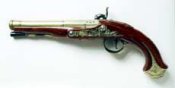
Duelling pistol
15 Oct 2005

TCHAIKOVSKY: Eugene Onegin

Eugene Onegin, lyrical scenes in three acts and seven tableaux.

Pyotr Il’yich Tchaikovsky, composer. Libretto by the composer, based on the verse novel by Aleksandr Sergeevich Pushkin.

First performance: 29 March 1879 at the Maliy Theatre, Moscow.

Pyotr Il'yich Tchaikovsky: Eugene Onegin

Sena Jurinac, Dietrich Fischer-Dieskau, Anton Dermota, Hilde Konetzni. Vienna State Opera Orchestra, Lovro von Matacic (cond.). Live performance 26 January 1961. Sung in German.


Characters

Larina, who owns an estateMezzo-soprano
Tatiana, one of her daughtersSoprano
Olga, one of her daughtersAlto
Filippyevna, a waitressMezzo-soprano
Eugene OneginBaritone
LenskiTenor
Prince GreminBaritone
A CaptainBass
Zaretski Bass
Triquet, a FrenchmanTenor

Synopsis

Act I

Scene One

With her devoted servant Filippyevna, the widowed Madame Larina sits in the garden of her country estate. Her daughters, Olga and Tatiana, sing a love song that reminds the older women of days gone by. Peasants coming from the fields bring freshly cut hay for their mistress and celebrate the completion of the harvest with songs and dances. Olga taunts Tatiana for failing to enjoy the festivities. Pale and shy, Tatiana remains pensive and apart, wrapped in the fantasy of her beloved novels. As the peasants leave, the poet Lenski, Olga's suitor, and his worldly friend Eugene Onegin arrive. When Madame Larina and Filippyevna enter the house, the four young people mingle, awkwardly at first. Then Lenski pours forth his love to Olga. Onegin, strolling with Tatiana, asks if she does not tire of her bucolic existence. Visibly upset by the handsome stranger, the girl answers with difficulty. As night falls, the two couples go in for dinner.

Scene Two

In her bedroom, Tatiana persuades Filippyevna to speak of her first love and marriage. Filippyevna notices that the girl's mind is wandering and asks if she is ill. Tatiana declares she is in love and begs to be left alone. Resolved to reveal her passion to Onegin, Tatiana sits up the entire night and writes to him, full of fear and shame. She closes by pleading for his mercy and understanding. When day breaks, she gives the letter to Filippyevna for her grandson to deliver.

Scene Three

As they work to pass the time, a group of women gathered in Madame Larina's garden sing about flirting with boys. When they leave, Tatiana hurries in, soon followed by Onegin, who asks that she hear him out. He admits he was touched by her letter but adds he would tire quickly of marriage. Though she has all the virtues he might wish in a wife, the most he can offer is a brother's love. He advises more emotional control, lest another man fail to respect her innocence. Crushed, Tatiana rushes away.

Act II

Scene One

Some months later in Madame Larina's house, a party is under way in honor of Tatiana's name day. As young couples glide merrily across the floor, the older guests sit watching and gossiping. Onegin dances with Tatiana but clearly is bored with these country people and their provincial sensibilities. To get back at Lenski for dragging him there, he dances with Olga, who is attracted momentarily and responds to his advances. Onegin's game is interrupted by Triquet, an elderly French tutor, who serenades Tatiana with a song he has written in her honor. When dancing resumes, Lenski jealously confronts Onegin. The merrymaking stops. Madame Larina implores them not to quarrel in her house; Lenski is remorseful but cannot contain his rage at Onegin, who accepts his challenge to a duel.

Scene Two

At dawn on the banks of a stream near an old mill, Lenski and his second, Zaretski, await Onegin. Reflecting on the folly of his brief life, and saddened by its now unalterable course, the young poet imagines his beloved Olga visiting his grave. Onegin arrives with his second. The two men, standing apart and without looking at one another, sing a cannon in which each admits privately that they have acted rashly — that they would rather laugh together than fight — but pride and impulsiveness prevail. The duel is fought and Lenski is fatally shot.

Act III

Scene One

Several years later, in a hall of a palace in St. Petersburg, a magnificent ball is in progress. Onegin has traveled widely, seeking to alleviate his boredom and give his life meaning. With bitterness he says his search has led him tonight to a monotonous social event. Suddenly he recognizes Tatiana across the room, but she is no longer the girl he knew: sumptuously gowned, she walks with poise and dignity. Questioning his cousin, Prince Gremin, he learns that Tatiana is now Gremin's wife. The older man tells of his marriage two years earlier and describes Tatiana as his life's salvation. When Gremin introduces Onegin, Tatiana maintains her composure, excusing herself after a few words of polite conversation. Captivated, Onegin dashes from the palace.

Scene Two

In the Gremins' town house, Tatiana receives Onegin in answer to an impassioned letter he has written. When he falls at her feet, she remains controlled. Now that she has a rich and noble husband, she asks, does he desire her position or her shame? She recalls the days when they might have been happy; now he can bring her only grief. As Onegin's pleas grow more ardent Tatiana prays for courage. Suddenly finding strength, she rushes out, leaving the distraught Onegin behind.

[Synopsis courtesy of Royal Opera Canada]
Send to a friend

Send a link to this article to a friend with an optional message.

Friend's Email Address: (required)

Your Email Address: (required)

Message (optional):