27 Nov 2005
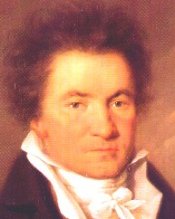
BEETHOVEN: Fidelio — Munich 1978
Fidelio, an opera in two acts
Mozart and Salieri, an opera in one act consisting of two scenes.
Nicolai Rimsky-Korsakov (1844-1908), composer. Libretto derived from Alexander Puskhin's play of the same name.
First performance: 7 December 1898 in Moscow.
Ariadne auf Naxos, Oper with a prologue and one act. Music composed by Richard Strauss. Libretto by Hugo von Hofmannsthal.
La Vestale, a tragédie lyrique in three acts.
Boris Godunov, an opera in four acts with prologue
Modest Mussorgsky, composer. Libretto by the composer, based on Alexander Pushkin's drama Boris Godunov and Nikolai Karamazin's History of the Russian Empire
First performance: 8 February 1874 at the Mariinsky Theatre, St. Petersburg
Il Trovatore, dramma in four parts.
Only a few months following the premiere of Der Rosenkavalier, Hugo von Hofmannsthal proposed a new opera to Richard Strauss based on Molière’s comedy-ballet, Le Bourgeois gentilhomme (in German, Der Bürger als Edelmann).
Die Entführung aus dem Serail, Singspiel in 3 Acts.
Music composed by Wolfgang Amadeus Mozart (1756–1791). Libretto by Johann Gottlieb Stephanie the Younger, based on an earlier libretto by
Christoph Friedrich Bretzner.
Die Entführung aus dem Serail, Singspiel in 3 Acts.
Music composed by Wolfgang Amadeus Mozart (1756–1791). Libretto by Johann Gottlieb Stephanie the Younger, based on an earlier libretto by
Christoph Friedrich Bretzner.
Arabella: Lyrische Komödie in three acts
Die Entführung aus dem Serail, Singspiel in 3 Acts.
Music composed by Wolfgang Amadeus Mozart (1756–1791). Libretto by Johann Gottlieb Stephanie the Younger, based on an earlier libretto by
Christoph Friedrich Bretzner.
La Gioconda, dramma lirico in four acts.
Music composed by Amilcare Ponchielli (1834–1886). Libretto by Arrigo Boito (under the pseudonym Tobia Gorrio), based upon Victor Hugo's Angelo, Tyrant of Padua (1835).
Don Carlo, an opera in four acts. Music composed by Giuseppe Verdi (1813–1901). Libretto by Joseph Méry and Camille Du Locle after Friedrich von Schiller’s dramatic poem Don Carlos, Infant von Spanien. Revised version in four acts (French text revised by Du Locle, Italian translation by Achille de Lauzières and Angelo Zanardini).
Un ballo in maschera, a melodramma in three acts.
Music composed by Giuseppe Verdi. Libretto by Antonio Somma, based upon the work of Eugène Scribe Gustave III ou Le bal masqué (1833)
Medea: Melodramma tragico in three acts.
Die Tote Stadt, an opera in three acts.
Music composed by Erich Wolfgang Korngold (1897-1957). Libretto by Paul Schott (Julius and E. W. Korngold) after the novel Bruges la morte by Georges Rodenbach.
Some Details concerning the Revolution inaugurated by Rossini
Manon Lescaut, dramma lirico in quattro atti
Elektra: Tragedy in one act.
Lyric Opera of Chicago has announced both schedules and cast-lists for is Spring 2020 performances of Richard Wagner’s Ring Cycle. Given the series of individual productions already staged by the company since Fall 2016, that pave the way for the complete cycle, Lyric Opera of Chicago’s complete production should affirm the artistic might of the great composer.
“Diacono himself does not know what musical talent he possesses” – Mascagni
Fidelio, an opera in two acts
Streaming Audio
Music by Ludwig van Beethoven. Libretto by Josef Sonnleithner, based on a French libretto by Jean Nicolas Bouilly
First performance: 23 May 1814 at the k.k. Hoftheater nächst dem Kärnthnerthor, Vienna
| Principal Characters: | |
| Florestan, a Spanish nobleman | Tenor |
| Leonora, his wife, in male attire known as "Fidelio" | Soprano |
| Don Fernando, the Prime Minister | Bass |
| Don Pizarro, Governor of the prison | Bass-Baritone |
| Rocco, chief jailer | Bass |
| Marzellina, his daughter | Soprano |
| Jaquino, his assistant | Tenor |
Time and Place:
Seville, 18th Century
Synopsis:
Act I
Don Pizarro, the despotic governor of a state prison near Seville, is in the habit of holding his political enemies prisoner at his mercy. One of these enemies is Don Florestan, who has publicly accused the governor of abusing the power of his position. Leonore, Florestan's wife, suspects that her husband is being held prisoner by Pizarro and so, disguised as a man and calling herself Fidelio, she gets a job as assistant to Rocco, the chief jailer.
Marzelline, Rocco's daughter, has fallen in love with Fidelio and rejects the suit of Jaquino, the jailer who has been courting her for years. Rocco also now seems to prefer the idea of Fidelio, who is much cleverer than the simple Jaquino, as a son-in-law and gives his approval of his daughter's decision.
Pizarro receives an anonymous letter warning him that the King's minister, Don Fernando, plans to come and inspect the prison. It has come to his ears that political prisoners are being unlawfully held there. Pizarro immediately posts a trumpeter to keep watch and warn him of the minister's approach so that he has time to do away with Florestan before the minister arrives at the prison. Pizarro instructs Rocco to kill Florestan, but the latter refuses and the governor determines to do the job himself, ordering Rocco to dig a grave in Florestan's cell.
Leonore, who has overheard this conversation between Pizarro and Rocco, is determined to rescue Florestan; she plans to search for him among the prisoners and set him free. She pleads with Rocco to allow the prisoners to take exercise in the prison yard but is unable to discover her husband among them. She then persuades Rocco to take her with him into the dungeons, where the suspects Florestan is being held. Pizzaro appears and angrily orders the prisoners to be hustled back to their cells but refrains from punishing Rocco for acting without orders because of the latter's involvement in the plot to murder Florestan.
Act II
Florestan is bewailing his fate in a dungeon and on the verge of hallucination, so to speak, as he sees the image of Leonore in his mind's eye.
Rocco, followed by Leonore, comes in to dig the grave. Horrified, she recognises her husband. When Rocco gives the agreed signal, Pizarro arrives to kill Florestan. Leonore reveals herself as Florestan's wife and is able to prevent the murder by courageously stepping between her husband and Pizarro as he draws his dagger, just as the trumpeter gives the signal announcing the arrival of the minister.
Don Fernando, who has believed his friend Florestan dead, sets him and all the other prisoners free and Pizarro, the tyrant, is arrested to await his just punishment.
Courtesy of the Bayerische Staatsoper. Translation: Susan Bollinger