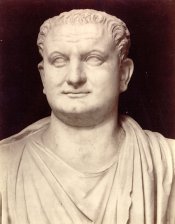
15 Jan 2006
MOZART: La clemenza di Tito
La clemenza di Tito. Opera seria in due atti (K. 621).
Music by Wolfgang Amadeus Mozart. Libretto by Caterino Mazzolà based on a text by Pietro Metastasio.
Mozart and Salieri, an opera in one act consisting of two scenes.
Nicolai Rimsky-Korsakov (1844-1908), composer. Libretto derived from Alexander Puskhin's play of the same name.
First performance: 7 December 1898 in Moscow.
Ariadne auf Naxos, Oper with a prologue and one act. Music composed by Richard Strauss. Libretto by Hugo von Hofmannsthal.
La Vestale, a tragédie lyrique in three acts.
Boris Godunov, an opera in four acts with prologue
Modest Mussorgsky, composer. Libretto by the composer, based on Alexander Pushkin's drama Boris Godunov and Nikolai Karamazin's History of the Russian Empire
First performance: 8 February 1874 at the Mariinsky Theatre, St. Petersburg
Il Trovatore, dramma in four parts.
Only a few months following the premiere of Der Rosenkavalier, Hugo von Hofmannsthal proposed a new opera to Richard Strauss based on Molière’s comedy-ballet, Le Bourgeois gentilhomme (in German, Der Bürger als Edelmann).
Die Entführung aus dem Serail, Singspiel in 3 Acts.
Music composed by Wolfgang Amadeus Mozart (1756–1791). Libretto by Johann Gottlieb Stephanie the Younger, based on an earlier libretto by
Christoph Friedrich Bretzner.
Die Entführung aus dem Serail, Singspiel in 3 Acts.
Music composed by Wolfgang Amadeus Mozart (1756–1791). Libretto by Johann Gottlieb Stephanie the Younger, based on an earlier libretto by
Christoph Friedrich Bretzner.
Arabella: Lyrische Komödie in three acts
Die Entführung aus dem Serail, Singspiel in 3 Acts.
Music composed by Wolfgang Amadeus Mozart (1756–1791). Libretto by Johann Gottlieb Stephanie the Younger, based on an earlier libretto by
Christoph Friedrich Bretzner.
La Gioconda, dramma lirico in four acts.
Music composed by Amilcare Ponchielli (1834–1886). Libretto by Arrigo Boito (under the pseudonym Tobia Gorrio), based upon Victor Hugo's Angelo, Tyrant of Padua (1835).
Don Carlo, an opera in four acts. Music composed by Giuseppe Verdi (1813–1901). Libretto by Joseph Méry and Camille Du Locle after Friedrich von Schiller’s dramatic poem Don Carlos, Infant von Spanien. Revised version in four acts (French text revised by Du Locle, Italian translation by Achille de Lauzières and Angelo Zanardini).
Un ballo in maschera, a melodramma in three acts.
Music composed by Giuseppe Verdi. Libretto by Antonio Somma, based upon the work of Eugène Scribe Gustave III ou Le bal masqué (1833)
Medea: Melodramma tragico in three acts.
Die Tote Stadt, an opera in three acts.
Music composed by Erich Wolfgang Korngold (1897-1957). Libretto by Paul Schott (Julius and E. W. Korngold) after the novel Bruges la morte by Georges Rodenbach.
Some Details concerning the Revolution inaugurated by Rossini
Manon Lescaut, dramma lirico in quattro atti
Elektra: Tragedy in one act.
Lyric Opera of Chicago has announced both schedules and cast-lists for is Spring 2020 performances of Richard Wagner’s Ring Cycle. Given the series of individual productions already staged by the company since Fall 2016, that pave the way for the complete cycle, Lyric Opera of Chicago’s complete production should affirm the artistic might of the great composer.
“Diacono himself does not know what musical talent he possesses” – Mascagni
La clemenza di Tito. Opera seria in due atti (K. 621).
Music by Wolfgang Amadeus Mozart. Libretto by Caterino Mazzolà based on a text by Pietro Metastasio.
First performance: 6 September 1791 at the National Theatre, Prague.
Characters:
| Tito Vespasiano, Imperatore di Roma | Tenor |
| Vitellia, figlia dell'Imperatore Vitellio | Soprano |
| Servilia, sorella di Sesto, amante d'Annio | Soprano |
| Sesto, amico di Tito, amante di Vitellia | Soprano |
| Annio, amico di Sesto, amante di Servilia | Soprano |
| Publio, prefetto del pretoris | Bass |
Time and Place: Rome during the reign of Titus Flavius Vespasianus (79-81 C.E.)
Synopsis:
Act I
Vitellia, daughter of deposed emperor Vitellius, wants revenge against Tito (“Titus”) and stirs up Titus’ vacillating friend Sesto (“Sextus”), who is in love with her, to act against him. But when she hears word that Titus has sent Berenice, of whom she was jealous, back to Jerusalem, Vitellia tells Sextus to delay carrying out her wishes, hoping Titus will choose her (Vitellia) as his empress.
Titus, however, decides to choose Sextus’ sister Servilia to be his empress, and orders Annio (“Annius,” Sextus’ friend) to bear the message to Servilia. Since Annius and Servilia, unbeknownst to Titus, are in love, this news is very unwelcome to both. Servilia decides to tell Titus the truth but also says that if Titus still insists on marrying her, she will obey. Titus thanks the gods for Servilia’s truthfulness and immediately forswears the idea of coming between her and Annius.
In the meantime, however, Vitellia has heard the news about Titus’ interest in Servilia and is again boiling with jealousy. She urges Sextus to go assassinate Titus. He agrees, singing one of the opera’s most famous arias, “Parto, parto.” Almost as soon as he leaves, Annius and the guard Publio (“Publius”) arrive to escort Vitellia to Titus, who has now chosen her as his empress. She is torn with feelings of guilt and worry over what she has sent Sextus to do.
Sextus, meanwhile, is at the Capitol wrestling with his conscience as he and his accomplices go about to burn it down. The other characters (except Titus) enter severally and react with horror to the burning Capitol. Sextus reenters and announces that he saw Titus slain, but Vitellia stops him from incriminating himself as the assassin.
Act II
Annius tells Sextus that Emperor Titus is in fact alive and has just been seen; in the smoke and chaos, Sextus mistook another for Titus. Soon Publius arrives to arrest Sextus, bearing the news that it was one of Sextus’ co-conspirators who dressed himself in Titus’ robes and was stabbed, though not mortally, by Sextus. The Senate tries Sextus as Titus waits impatiently, sure that his friend will be exonerated; but the Senate finds him guilty, and an anguished Titus must sign Sextus’ death sentence.
He decides to send for Sextus first, attempting to obtain further details about the plot. Sextus takes all the guilt on himself and says he deserves death, so Titus tells him he shall have it and sends him away. But after an extended internal struggle, Titus tears up the execution warrant for Sextus and determines that, if the world wishes to accuse him (Titus) of anything, it can charge him with showing too much mercy rather than with having a revengeful heart.
Vitellia at this time is torn by guilt and decides to confess all to Titus, giving up her hopes of empire in the well-known rondo “Non più di fiori.” In the ampitheater, the condemned (including Sextus) are waiting to be thrown to the wild beasts. Titus is about to show mercy when Vitellia offers her confession as the instigator of Sextus’ plot. Though shocked, the emperor includes her in the general clemency he offers. The opera concludes with all the subjects praising the extreme generosity of Titus, while he himself asks that the gods cut short his days when he ceases to care for the good of Rome.
[Source: Wikipedia]