18 Feb 2006
WEBER: Der Freischütz
Der Freischütz, Romantische Oper in drei Aufzügen.
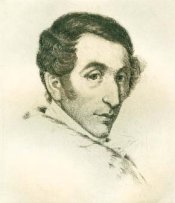
Music composed by Carl Maria von Weber (1786-1826). Libretto by Friedrich Kind.
Mozart and Salieri, an opera in one act consisting of two scenes.
Nicolai Rimsky-Korsakov (1844-1908), composer. Libretto derived from Alexander Puskhin's play of the same name.
First performance: 7 December 1898 in Moscow.
Ariadne auf Naxos, Oper with a prologue and one act. Music composed by Richard Strauss. Libretto by Hugo von Hofmannsthal.
La Vestale, a tragédie lyrique in three acts.
Boris Godunov, an opera in four acts with prologue
Modest Mussorgsky, composer. Libretto by the composer, based on Alexander Pushkin's drama Boris Godunov and Nikolai Karamazin's History of the Russian Empire
First performance: 8 February 1874 at the Mariinsky Theatre, St. Petersburg
Il Trovatore, dramma in four parts.
Only a few months following the premiere of Der Rosenkavalier, Hugo von Hofmannsthal proposed a new opera to Richard Strauss based on Molière’s comedy-ballet, Le Bourgeois gentilhomme (in German, Der Bürger als Edelmann).
Die Entführung aus dem Serail, Singspiel in 3 Acts.
Music composed by Wolfgang Amadeus Mozart (1756–1791). Libretto by Johann Gottlieb Stephanie the Younger, based on an earlier libretto by
Christoph Friedrich Bretzner.
Die Entführung aus dem Serail, Singspiel in 3 Acts.
Music composed by Wolfgang Amadeus Mozart (1756–1791). Libretto by Johann Gottlieb Stephanie the Younger, based on an earlier libretto by
Christoph Friedrich Bretzner.
Arabella: Lyrische Komödie in three acts
Die Entführung aus dem Serail, Singspiel in 3 Acts.
Music composed by Wolfgang Amadeus Mozart (1756–1791). Libretto by Johann Gottlieb Stephanie the Younger, based on an earlier libretto by
Christoph Friedrich Bretzner.
La Gioconda, dramma lirico in four acts.
Music composed by Amilcare Ponchielli (1834–1886). Libretto by Arrigo Boito (under the pseudonym Tobia Gorrio), based upon Victor Hugo's Angelo, Tyrant of Padua (1835).
Don Carlo, an opera in four acts. Music composed by Giuseppe Verdi (1813–1901). Libretto by Joseph Méry and Camille Du Locle after Friedrich von Schiller’s dramatic poem Don Carlos, Infant von Spanien. Revised version in four acts (French text revised by Du Locle, Italian translation by Achille de Lauzières and Angelo Zanardini).
Un ballo in maschera, a melodramma in three acts.
Music composed by Giuseppe Verdi. Libretto by Antonio Somma, based upon the work of Eugène Scribe Gustave III ou Le bal masqué (1833)
Medea: Melodramma tragico in three acts.
Die Tote Stadt, an opera in three acts.
Music composed by Erich Wolfgang Korngold (1897-1957). Libretto by Paul Schott (Julius and E. W. Korngold) after the novel Bruges la morte by Georges Rodenbach.
Some Details concerning the Revolution inaugurated by Rossini
Manon Lescaut, dramma lirico in quattro atti
Elektra: Tragedy in one act.
Lyric Opera of Chicago has announced both schedules and cast-lists for is Spring 2020 performances of Richard Wagner’s Ring Cycle. Given the series of individual productions already staged by the company since Fall 2016, that pave the way for the complete cycle, Lyric Opera of Chicago’s complete production should affirm the artistic might of the great composer.
“Diacono himself does not know what musical talent he possesses” – Mascagni
Der Freischütz, Romantische Oper in drei Aufzügen.
Music composed by Carl Maria von Weber (1786-1826). Libretto by Friedrich Kind.
Streaming Audio
First Performance: 18 June 1821, at the Königliches Schauspielhaus, Berlin
Principal Characters:
| Ottokar, böhmischer Fürst | Baritone |
| Kuno, fürstlicher Erbförster | Bass |
| Agathe, seine Tochter | Soprano |
| Ännchen, eine junge Verwandte | Soprano |
| Kaspar, erster Jägerbursche | Bass |
| Max, zweiter Jägerbursche | Tenor |
| Ein Eremit | Bass |
| Kilian, ein reicher Bauer | Bass |
| Brautjungfern | Soprano |
| Samiel, der schwarze Jäger | Sprechrolle |
| Erster, zweiter und dritter fürstlicher Jäger | Sprechrollen |
Time and Place: Bohemia following the 30 Years' War.
Synopsis:
Act I
The young ranger Max loves Agatha and is to become the successor to Kuno, the head ranger. A test of skill in marksmanship is requisite, the trial to be held the following day. The target shooting. Max has failed in the test, and the young peasant Kilian is proclaimed "King of marksmen." (Chorus: "Victory, long live the master"; and the good-naturedly mocking song of Kilian: "Let him gaze on me as king.")
As Max has had ill-luck for several days he easily falls under the influence of Caspar, who also loves Agatha, and persuades Max to cast some magic bullets to be used in the contest. Caspar, whose soul on the morrow is to be forfeited to the devil, by the sacrifice of Max, hopes to obtain three more years of grace. (Trio, Kuno, Caspar, Max and chorus: "O the sun, fearsomely it rises.")
Left alone, Max, at the thought of losing Agatha through failure at the shooting contest, sinks into deep melancholy. (Aria: "Through woods and fields.") Caspar with weird incantations tries to imbue him with courage. (Song: "Here in this vale of tears.")
He hands him his gun loaded with one of the magic bullets, and to his own astonishment Max kills an eagle soaring at a great height. He resolves to go with Caspar at midnight to the terrible wolf’s gorge to cast the magic bullets in order to win the prize. Caspar, left alone, triumphs. (Aria: "Silence, let no one him warn.")
Act II
Agatha’s chamber. Agatha is filled with sad forebodings. She sings of her meeting with a hermit in the forest, who told her that in some danger which menaced her, she would be protected by her bridal wreath. At the moment when Max shoots the magic bullet, the picture of Agatha’s ancestor hanging against the wall falls to the floor, slightly wounding her. The lively Ännchen replaces it. (Duet "Rogue, hold fast, I will teach you.") Agatha is still more disturbed, but Ännchen endeavours to cheer her with jests. (Arietta: "Comes a pretty boy this path.")
Agatha left alone awaits Max with the news of his success, which she decides to interpret as a favourable omen. (Recitative: "My eyelids droop in slumber"; Prayer: "Low, low, sacred words"; Scene: "All have long since gone to rest"; and Aria: "All my pulses beat.")
Max arrives; he acknowledges that he has not been the victor, but explains that he has killed a deer, which he will bring this evening from the wolf’s gorge. Notwithstanding the prayers of Agatha and Ännchen, Max departs. (Trio: "What, oh horror! there in the wolf’s gorge?")
Change of scene: The wolf’s gorge at night. Caspar calls upon the black ranger for assistance, and prepares the casting of the magic bullets. Max arrives and is warned by the spirit of his mother to abandon the project. Samiel conjures up the shape of Agatha, representing her as drowning herself in despair at Max’s ill success, whereupon he plunges into the gorge and with demoniacal noise the casting of the bullets is begun.
Act III
Agatha’s chamber. Agatha in prayer. (Aria: "Through clouds obscure still shines the sun in radiant sky.") Her doubts have returned, owing to a dream of ill omen, but Ännchen again cheers her with laughter and song. (Romance and aria, subsequently added by Weber: "My deceased cousin had a dream.") The bridesmaids arrive with the bridal wreath. (Song: "We wind round thee the bridal wreath.") When Ännchen opens the box, however, she finds within a funeral wreath, which still further increases Agatha’s misgivings. She is somewhat comforted by the memory of the hermit’s promise that she shall be protected by her bridal wreath.
Change of scene: Meeting of the marksmen. Max has discharged six of his bullets successfully and Caspar is triumphant, knowing that the course of the seventh will be guided by the Evil One.
Change of scene: The prize shooting. Duke Ottokar awaits Max at his tent. (Chorus of foresters: "What excels the pleasures of the chase.") Max is now to shoot a dove. As he takes aim, Samiel, the black huntsman, appears to guide the bullet, and causes Max to fire at Agatha, who is apparently wounded. (Finale: "See, oh see, he shoots his bride.") Her bridal wreath turns the bullet aside and she revives. Caspar, seeing a holy hermit by her side, realises that he has failed. Samiel grasps him instead of Max, whereupon Caspar expires with a curse upon his lips. Duke Ottokar orders the corpse to be thrown into the wolf’s gorge, receives the explanation of Max, and touched by his repentance and the prayers of the hermit ("Who puts on him this dreadful ban"), inflicts upon him but a slight penalty. A year of trial is imposed, the prize shooting abolished and a promise given that at the expiration of the time of probation the duke himself will place the hand of Agatha in that of Max.
[Synopsis Source: Wikipedia]
Click here for the complete libretto. [Libretto source: Digitale Bibliothek]
Click here for an English translation of the libretto.
iTunes Users: Right click here and save playlist. Then import to iTunes.