12 Feb 2006
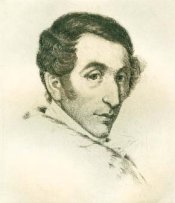
WEBER: Euryanthe
Euryanthe, Romantische Oper in drei Aufzügen
Music composed by Carl Maria von Weber (1786-1826). Libretto by Wilhelmina Christiane von Chézy.
Mozart and Salieri, an opera in one act consisting of two scenes.
Nicolai Rimsky-Korsakov (1844-1908), composer. Libretto derived from Alexander Puskhin's play of the same name.
First performance: 7 December 1898 in Moscow.
Ariadne auf Naxos, Oper with a prologue and one act. Music composed by Richard Strauss. Libretto by Hugo von Hofmannsthal.
La Vestale, a tragédie lyrique in three acts.
Boris Godunov, an opera in four acts with prologue
Modest Mussorgsky, composer. Libretto by the composer, based on Alexander Pushkin's drama Boris Godunov and Nikolai Karamazin's History of the Russian Empire
First performance: 8 February 1874 at the Mariinsky Theatre, St. Petersburg
Il Trovatore, dramma in four parts.
Only a few months following the premiere of Der Rosenkavalier, Hugo von Hofmannsthal proposed a new opera to Richard Strauss based on Molière’s comedy-ballet, Le Bourgeois gentilhomme (in German, Der Bürger als Edelmann).
Die Entführung aus dem Serail, Singspiel in 3 Acts.
Music composed by Wolfgang Amadeus Mozart (1756–1791). Libretto by Johann Gottlieb Stephanie the Younger, based on an earlier libretto by
Christoph Friedrich Bretzner.
Die Entführung aus dem Serail, Singspiel in 3 Acts.
Music composed by Wolfgang Amadeus Mozart (1756–1791). Libretto by Johann Gottlieb Stephanie the Younger, based on an earlier libretto by
Christoph Friedrich Bretzner.
Arabella: Lyrische Komödie in three acts
Die Entführung aus dem Serail, Singspiel in 3 Acts.
Music composed by Wolfgang Amadeus Mozart (1756–1791). Libretto by Johann Gottlieb Stephanie the Younger, based on an earlier libretto by
Christoph Friedrich Bretzner.
La Gioconda, dramma lirico in four acts.
Music composed by Amilcare Ponchielli (1834–1886). Libretto by Arrigo Boito (under the pseudonym Tobia Gorrio), based upon Victor Hugo's Angelo, Tyrant of Padua (1835).
Don Carlo, an opera in four acts. Music composed by Giuseppe Verdi (1813–1901). Libretto by Joseph Méry and Camille Du Locle after Friedrich von Schiller’s dramatic poem Don Carlos, Infant von Spanien. Revised version in four acts (French text revised by Du Locle, Italian translation by Achille de Lauzières and Angelo Zanardini).
Un ballo in maschera, a melodramma in three acts.
Music composed by Giuseppe Verdi. Libretto by Antonio Somma, based upon the work of Eugène Scribe Gustave III ou Le bal masqué (1833)
Medea: Melodramma tragico in three acts.
Die Tote Stadt, an opera in three acts.
Music composed by Erich Wolfgang Korngold (1897-1957). Libretto by Paul Schott (Julius and E. W. Korngold) after the novel Bruges la morte by Georges Rodenbach.
Some Details concerning the Revolution inaugurated by Rossini
Manon Lescaut, dramma lirico in quattro atti
Elektra: Tragedy in one act.
Lyric Opera of Chicago has announced both schedules and cast-lists for is Spring 2020 performances of Richard Wagner’s Ring Cycle. Given the series of individual productions already staged by the company since Fall 2016, that pave the way for the complete cycle, Lyric Opera of Chicago’s complete production should affirm the artistic might of the great composer.
“Diacono himself does not know what musical talent he possesses” – Mascagni
Euryanthe, Romantische Oper in drei Aufzügen
Music composed by Carl Maria von Weber (1786-1826). Libretto by Wilhelmina Christiane von Chézy.
Streaming Audio
First Performance: 25 October 1823, Kärntnertortheater, Vienna
Principal Characters:
| König Ludwig VI | Bass |
| Adolar, Graf von Nevers | Tenor |
| Euryanthe von Savoyen, Adolars Braut | Soprano |
| Rudolf, ein Ritter | Tenor |
| Lysiart, Graf von Forest | Baritone |
| Eglantine von Puiset, eine Gefangene, Tochter eines Empörers | Mezzo-soprano |
| Bertha, ein Landmädchen | Soprano |
Time and Place: France about 1110, after the peace with England
Synopsis:
Act I
Palace of the King.
Count Adolar chants the beauty and virtue of his betrothed, Euryanthe. Count Lysiart sneers and boasts that he can lead her astray. The two noblemen stake their possessions upon the result.
Garden of the Palace of Nevers. Euryanthe sings of her longing for Adolar. Eglantine, the daughter of a rebellious subject who, made a prisoner, has, on Euryanthe’s plea, been allowed the freedom of the domain, is in love with Adolar. She has sensed that Euryanthe and her lover guard a secret. Hoping to estrange Adolar from her, she seeks to gain Euryanthe’s confidence and only too successfully. For Euryanthe confides to her that Adolar's dead sister, who lies in the lonely tomb in the garden, has appeared to Adolar and herself and confessed that, her lover having been slain in battle, she has killed herself by drinking poison from her ring; nor can her soul find rest until some one, innocently accused, shall wet the ring with tears. To hold this secret inviolate has been imposed upon Euryanthe by Adolar as a sacred duty. Too late she repents of having communicated it to Eglantine who, on her part, is filled with malicious glee. Lysiart arrives to conduct Adolar’s betrothed to the royal palace.
Act II
Lysiart despairs of accomplishing his fell purpose when Eglantine emerges from the tomb with the ring and reveals to him its secret. In the royal palace, before a brilliant assembly, Lysiart claims to have won his wager, and, in proof, produces the ring, the secret of which he claims Euryanthe has communicated to him. She protests her innonence, but in vain. Adolar renounces his rank and estates with which Lysiart is forthwith invested and endowed, and, dragging Euryanthe after him, rushed into the forest where he intends to kill her and then himself.
Act III
In a rocky mountain gorge Adolar draws his sword and is about to slay Euryanthe, who in vain protests her innocence. At that moment a huge serpent appears. Euryanthe throws herself between it and Adolar in order to save him. He fights the serpent and kills it; then, although Euryanthe vows she would rather he slew her than not love her, he goes his way leaving her to heaven’s protection. She is discovered by the King, who credits her story and promises to vindicate her, when she tells him that it was through Eglantine, to whom she disclosed the secret of the tomb, that Lysiart obtained possession of the ring.
Gardens of Nevers, where preparations are making for the wedding of Lysiart and Eglantine. Adolar enters in black armour with visor down. Eglantine, still madly in love with him and dreading her union with Lysiart, is so affected by the significance of the complete silence with which the assembled villagers and others watch her pass, that, half out of her mind, she raves about the unjust degradation she has brought upon Euryanthe.
Adolar, disclosing his identity, challenges Lysiart to combat. But before they can draw, the King appears. In order to punish Adolar for his lack of faith in Euryanthe, he tells him that she is dead. Savagely triumphant over her rival’s end, Eglantine now makes known the entire plot and is slain by Lysiart. At that moment Euryanthe rushes into Adolar’s arms. Lysiart is led off a captive. Adolar’s sister finds eternal rest in her tomb because the ring has been bedewed by the tears wept by the innocent Euryanthe.
[Synopsis Source: Music with Ease]
Click here for the complete libretto. [Libretto source: Digitale Bibliothek]