31 May 2006
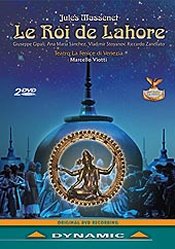
MASSENET: Le Roi de Lahore
Sergio Seggalini, former editor of Opéra International (now Opéra Magazine), is the artistic director of both La Fenice and the Festival of Martina Franca.
The Sixteen continues its exploration of Henry Purcell’s Welcome Songs for Charles II. As with Robert King’s pioneering Purcell series begun over thirty years ago for Hyperion, Harry Christophers is recording two Welcome Songs per disc.
In February this year, Albanian soprano Ermonela Jaho made a highly lauded debut recital at Wigmore Hall - a concert which both celebrated Opera Rara’s 50th anniversary and honoured the career of the Italian soprano Rosina Storchio (1872-1945), the star of verismo who created the title roles in Leoncavallo’s La bohème and Zazà, Mascagni’s Lodoletta and Puccini’s Madama Butterfly.
Collapsology. Or, perhaps we should use the French word ‘Collapsologie’ because this is a transdisciplinary idea pretty much advocated by a series of French theorists - and apparently, mostly French theorists. It in essence focuses on the imminent collapse of modern society and all its layers - a series of escalating crises on a global scale: environmental, economic, geopolitical, governmental; the list is extensive.
Amongst an avalanche of new Mahler recordings appearing at the moment (Das Lied von der Erde seems to be the most favoured, with three) this 1991 Mahler Second from the 2nd Kassel MahlerFest is one of the more interesting releases.
If there is one myth, it seems believed by some people today, that probably needs shattering it is that post-war recordings or performances of Wagner operas were always of exceptional quality. This 1949 Hamburg Tristan und Isolde is one of those recordings - though quite who is to blame for its many problems takes quite some unearthing.
The voices of six women composers are celebrated by baritone Jeremy Huw Williams and soprano Yunah Lee on this characteristically ambitious and valuable release by Lontano Records Ltd (Lorelt).
As Paul Spicer, conductor of the Royal Birmingham Conservatoire Chamber Choir, observes, the worship of the Blessed Virgin Mary is as ‘old as Christianity itself’, and programmes devoted to settings of texts which venerate the Virgin Mary are commonplace.
Ethel Smyth’s last large-scale work, written in 1930 by the then 72-year-old composer who was increasingly afflicted and depressed by her worsening deafness, was The Prison – a ‘symphony’ for soprano and bass-baritone soloists, chorus and orchestra.
‘Hamilton Harty is Irish to the core, but he is not a musical nationalist.’
‘After silence, that which comes closest to expressing the inexpressible is music.’ Aldous Huxley’s words have inspired VOCES8’s new disc, After Silence, a ‘double album in four chapters’ which marks the ensemble’s 15th anniversary.
A song-cycle is a narrative, a journey, not necessarily literal or linear, but one which carries performer and listener through time and across an emotional terrain. Through complement and contrast, poetry and music crystallise diverse sentiments and somehow cohere variability into an aesthetic unity.
One of the nicest things about being lucky enough to enjoy opera, music and theatre, week in week out, in London’s fringe theatres, music conservatoires, and international concert halls and opera houses, is the opportunity to encounter striking performances by young talented musicians and then watch with pleasure as they fulfil those sparks of promise.
“It’s forbidden, and where’s the art in that?”
Dublin-born John F. Larchet (1884-1967) might well be described as the father of post-Independence Irish music, given the immense influenced that he had upon Irish musical life during the first half of the 20th century - as a composer, musician, administrator and teacher.
The English Civil War is raging. The daughter of a Puritan aristocrat has fallen in love with the son of a Royalist supporter of the House of Stuart. Will love triumph over political expediency and religious dogma?
Beethoven Symphony no 9 (the Choral Symphony) in D minor, Op. 125, and the Choral Fantasy in C minor, Op. 80 with soloist Kristian Bezuidenhout, Pablo Heras-Casado conducting the Freiburger Barockorchester, new from Harmonia Mundi.
A Louise Brooks look-a-like, in bobbed black wig and floor-sweeping leather trench-coat, cheeks purple-rouged and eyes shadowed in black, Barbara Hannigan issues taut gestures which elicit fire-cracker punch from the Mahler Chamber Orchestra.
‘Signor Piatti in a fantasia on themes from Beatrice di Tenda had also his triumph. Difficulties, declared to be insuperable, were vanquished by him with consummate skill and precision. He certainly is amazing, his tone magnificent, and his style excellent. His resources appear to be inexhaustible; and altogether for variety, it is the greatest specimen of violoncello playing that has been heard in this country.’
Baritone Roderick Williams seems to have been a pretty constant ‘companion’, on my laptop screen and through my stereo speakers, during the past few ‘lock-down’ months.
Melodramas can be a difficult genre for composers. Before Richard Strauss’s Enoch Arden the concept of the melodrama was its compact size – Weber’s Wolf’s Glen scene in Der Freischütz, Georg Benda’s Ariadne auf Naxos and Medea or even Leonore’s grave scene in Beethoven’s Fidelio.
Sergio Seggalini, former editor of Opéra International (now Opéra Magazine), is the artistic director of both La Fenice and the Festival of Martina Franca.
He has given each a healthy dose of almost unknown French operas. There has been a lot of grumbling in sito and even complaints of a French overdose; but most opera lovers in the rest of the world are quite happy with the resuscitation of some scores otherwise only known by a few arias. Though Le Roi de Lahore is not unknown on record due to Mr. and Mrs. Bonynge, assisted by Milnes, Lima and Ghiaurov, these DVD’s will be a world première for most of us, especially as this is the first performance of a new critical edition by the conductor, the late Marcello Viotti, who died a few months afterwards.
There is a reason Le Roi was almost forgotten. Massenet was 35 when the work premièred and he scored his first big success—Puccini had almost the same age when he had his breakthrough with Manon Lescaut. There is much in the score, especially in the orchestral part, that reminds us of the genius the Frenchman would become. The music is lovely and tuneful in a general way but without the kind of melody that stays in the ear and that would result in the triumph for Hérodiade four years later. For a long time only the baritone’s aria ‘Promesse de mon avenir’ survived.
The singers of these Venice performances were not cast with an eye on “le fysique du role.” Ana Maria Sanchez especially reminds us a little bit too much of Sweet, Eaglen, Pollet, Neves and Voigt before her surgery. Normally I couldn’t care less; but on my plasma screen, and during the many close-ups, the credibility gap is sometimes a bit stretched. Nor is Mrs. Sanchez helped by some ungainly costumes during the first acts. A pity as she has something to offer. She has an exceptional warm enveloping middle voice (reminding me of the best of Françoise Pollet) and she can float her notes in a delicious way. Under pressure the voice sometimes (not always) will turn somewhat shrill and even flat. During duets and ensembles one hears that notwithstanding a soft grained timbre she has volume to spare. Her French is quite good and in general she is an improvement on Joan Sutherland, completely incomprehensible and no longer very fresh voiced as she had been singing for 30 years.
Albanian tenor Giuseppe Gipala too is a marked improvement on Decca’s Luis Lima. He has a clear, ringing voice, probably a bit kissed by the mike as the sound is less exciting and smaller in the house. Though he is best known for his Italian roles, no sobs or mannerisms cling to him in his stylish singing with an almost perfect pronunciation. At times he reminds me of a good Alfredo Kraus and that’s high praise indeed.
Almost the same can be said of baritone Vladimir Stoyanov as Scindia with his rounded and very homogeneous baritone. The voice is better focused than Milnes on Decca and he doesn’t quite get the applause he deserves after an impressive ‘Promesse de mon avenir.’ Indeed, the public throughout the evening is rather lukewarm; probably not completely at ease with the relatively unknown score.
Cristina Sogmaister as Kaled has a nice Falcon mezzo, with more colour in the voice, than most of these ladies show. She succeeds very well in her aria and in the big duet with Sanchez where for a moment one almost has the feeling Massenet has too intently studied the famous Lakmé/Selika duet until one realizes that Lakmé came into being six years later.
As Indra, Federico Sacchi sings with a bright and well focused voice. It is a short but important role. He, too, succeeds in bettering Ghiaurov’s rather woolly account.
Only Riccardo Zanellato as Timour disappoints. There is just loud noise at the start, though the sound marginally improves. He is not too sure of himself and is always looking at the conductor when he should be doing something else.
As conductor Marcello Viotti himself prepared the new critical edition, he has his work cut out for him. He is of course not handicapped as Bonynge was by a star on her way down. Viotti doesn’t linger and doesn’t push. There is no camera on him during the performance and he doesn’t think it necessary to use some antics during the overture. One doesn’t even notice that there is a conductor. So, naturally, the tempi flow.
I’m less enthusiastic about the production, though I realize that Le Roi is an almost impossible task. The first two acts are just another love triangle and then the hero dies. In the third act he is in heaven and gets permission to return to earth. He once again is reunited with his love until she commits suicide, whereupon he, too, according to the conditions of heaven, dies and the lovers ends the opera happily, once more reunited in death.
This theme that has much in common with the Greek legend of Orpheus doesn’t work very well in this Indian subcontinent version. And, Massenet treats it very seriously without a wink. In our cynical times some snickering is due, which director Arnaud Bernard helps provoke. While the two first acts are played at face value, the heavenly act makes fun of everything. Heaven for Bernard is a world where Indian lords and ladies can forget their heritage and all at once switch to Western evening clothes and have dinner in the best Western High Society style. God Indra makes his entrance wheeled in on a giant plaster elephant painted in silver. And, at the end of the act everybody, dead lover king included, pose proudly in front of a photograph. In the meantime we have the obligatory ballet, half Western, half Indian with an old movie running over the heads of the dancers who abundantly prove that even in heaven fully synchronized movement is not assured. After this amusing intermezzo, it is somewhat difficult to take the horrible fate and the resulting arias and duets of the protagonists seriously.
In such a colourful opera costuming is important and once more I have to grumble. Costumes are all somewhat vaguely Indian, all vaguely stylized; and, what is now almost a law in costuming, members of the same group are not allowed any individuality. For soldiers I can understand the reasons; but ladies in evening dress, or market women? Does the production team really think the audience is too stupid to understand who is whom? Mind you, nothing disturbs the music. The singers are not asked to deliver in difficult poses or with their back to the public. Mad ideas are not running loose. It’s just that the director either didn’t know what to do with the opera or didn’t take it too seriously. “Eurotrash” is definitely not to be seen and I’ve even a feeling Mrs. Harrington could have lived with it.
Jan Neckers