19 Aug 2007
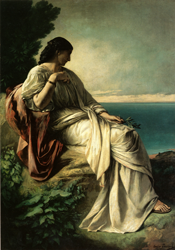
GLUCK: Iphigénie en Tauride
Iphigénie en Tauride, Tragédie Lyrique in four acts.
Mozart and Salieri, an opera in one act consisting of two scenes.
Nicolai Rimsky-Korsakov (1844-1908), composer. Libretto derived from Alexander Puskhin's play of the same name.
First performance: 7 December 1898 in Moscow.
Ariadne auf Naxos, Oper with a prologue and one act. Music composed by Richard Strauss. Libretto by Hugo von Hofmannsthal.
La Vestale, a tragédie lyrique in three acts.
Boris Godunov, an opera in four acts with prologue
Modest Mussorgsky, composer. Libretto by the composer, based on Alexander Pushkin's drama Boris Godunov and Nikolai Karamazin's History of the Russian Empire
First performance: 8 February 1874 at the Mariinsky Theatre, St. Petersburg
Il Trovatore, dramma in four parts.
Only a few months following the premiere of Der Rosenkavalier, Hugo von Hofmannsthal proposed a new opera to Richard Strauss based on Molière’s comedy-ballet, Le Bourgeois gentilhomme (in German, Der Bürger als Edelmann).
Die Entführung aus dem Serail, Singspiel in 3 Acts.
Music composed by Wolfgang Amadeus Mozart (1756–1791). Libretto by Johann Gottlieb Stephanie the Younger, based on an earlier libretto by
Christoph Friedrich Bretzner.
Die Entführung aus dem Serail, Singspiel in 3 Acts.
Music composed by Wolfgang Amadeus Mozart (1756–1791). Libretto by Johann Gottlieb Stephanie the Younger, based on an earlier libretto by
Christoph Friedrich Bretzner.
Arabella: Lyrische Komödie in three acts
Die Entführung aus dem Serail, Singspiel in 3 Acts.
Music composed by Wolfgang Amadeus Mozart (1756–1791). Libretto by Johann Gottlieb Stephanie the Younger, based on an earlier libretto by
Christoph Friedrich Bretzner.
La Gioconda, dramma lirico in four acts.
Music composed by Amilcare Ponchielli (1834–1886). Libretto by Arrigo Boito (under the pseudonym Tobia Gorrio), based upon Victor Hugo's Angelo, Tyrant of Padua (1835).
Don Carlo, an opera in four acts. Music composed by Giuseppe Verdi (1813–1901). Libretto by Joseph Méry and Camille Du Locle after Friedrich von Schiller’s dramatic poem Don Carlos, Infant von Spanien. Revised version in four acts (French text revised by Du Locle, Italian translation by Achille de Lauzières and Angelo Zanardini).
Un ballo in maschera, a melodramma in three acts.
Music composed by Giuseppe Verdi. Libretto by Antonio Somma, based upon the work of Eugène Scribe Gustave III ou Le bal masqué (1833)
Medea: Melodramma tragico in three acts.
Die Tote Stadt, an opera in three acts.
Music composed by Erich Wolfgang Korngold (1897-1957). Libretto by Paul Schott (Julius and E. W. Korngold) after the novel Bruges la morte by Georges Rodenbach.
Some Details concerning the Revolution inaugurated by Rossini
Manon Lescaut, dramma lirico in quattro atti
Elektra: Tragedy in one act.
Lyric Opera of Chicago has announced both schedules and cast-lists for is Spring 2020 performances of Richard Wagner’s Ring Cycle. Given the series of individual productions already staged by the company since Fall 2016, that pave the way for the complete cycle, Lyric Opera of Chicago’s complete production should affirm the artistic might of the great composer.
“Diacono himself does not know what musical talent he possesses” – Mascagni
Iphigénie en Tauride, Tragédie Lyrique in four acts.
Music composed by Christoph Willibald Gluck. Libretto by Nicolas-François Guillard after Guymond de la Touche’s Iphigénie en Tauride, which was based on Iphigenia in Tauris by Euripides.
First Performance: 18 May 1779, Opéra, Paris.
| Principal Characters: | |
| Iphigénie [Iphigenia], High Priestess of Diana | Soprano |
| Oreste [Orestes], King of Argos and Mycenae, Iphigenia’s brother | Baritone |
| Pylade [Pylades], King of Phocis, Orestes’ friend | Tenor |
| Thoas, King of Tauris | Bass |
| Diane [Diana], goddess of hunting | Soprano |
| First Priestess | Soprano |
| Second Priestess | Soprano |
| A Scythian | Bass |
| A Minister | Bass |
| A Greek woman | Soprano |
Setting: Tauris after the Trojan War
Background: While en route to Troy, Agamemnon’s fleet is prevented from proceeding by a storm. Calchas, the soothsayer, admonishes Agamemnon that he cannot proceed without first offering the sacrifice he promised Artemis, the goddess of the hunt and the wild (considered synonymous with the Roman goddess, Diana). The sacrifice can be none other than Iphigenia, the daughter of Agamemnon and Clytemenstra. Iphegenia is offered upon an altar at the bay of Aulis; however, Artemis deceives them by substituting a deer for Iphigenia. She is then taken to Tauris, a town ruled by Thoas, to serve as the High Priestess of Artemis’ temple.
Synopsis
Act I
In the entrance hall of the temple of Diana as a great storm rages. Iphigenia, sister of Orestes, is the high priestess of Diana, having been transported here magically by the goddess when her father Agamemnon attempted to offer her as a sacrifice. Iphigenia and her priestesses beg all the gods to protect them from the storm.
Although it dies down, Iphigenia remains troubled by a dream she has had, in which she envisioned her mother Clytemnestra murdering her father, and then her own hand stabbing her brother. Thoas, King of Tauris, enters, himself obsessed with dark thoughts; the oracles, he tells her, predict doom for him if a single stranger escapes with his life (The custom of the Scythians, who inhabit Tauris, is to ritually sacrifice any who are shipwrecked on their shores).
A chorus of Scythians comes bringing news of two young Greeks who have just been found shipwrecked, demanding their blood. After Iphigenia and the priestesses depart, Thoas brings in the Greeks, who turn out to be Orestes and his friend Pylades. After asking them for what purpose they came (they have come to retrieve Diana’s statue and return it to Greece, though they do not divulge this), Thoas promises them death and has them taken away.
Act II
Begins, Orestes and Pylades languish in chains. Orestes berates himself for causing the death of his dear friend, but Pylades assures him that he does not feel dispirited because they will die united. A minister of the sanctuary comes to remove Pylades, and as Orestes falls asleep, he is tormented by visions of the Furies, who wish to avenge his slaying of his mother (whom Orestes slew for murdering her husband Agamemnon).
Iphigenia enters, and although the two do not recognize each other, Orestes sees an astonishing likeness between her and the slain Clytemnestra seen in his dream. She questions him further, asking him the fate of Agamemnon and all Greece, and he tells her of Agamemnon’s murder by his wife, and the wife’s murder by her son. In agitation, she asks of the fate of the son, and Orestes says that the son found the death he had long sought, and that only their sister Electra remains alive. Iphigenia sends Orestes away and with her priestesses laments the destruction of her country and the supposed death of her brother.
Act III
Iphigenia determines to save at least one of the two captives, though because Thoas demands blood, she knows both cannot be spared. She summons Orestes and Pylades and asks if whichever one is spared will carry word to her home of Argos with news of her fate to her sister Electra. Both men readily agree, and Iphigenia chooses Orestes to go.
But on her exit, Orestes insists that Pylades agree to switch places with him as Orestes cannot bear the thought of his friend’s death; Pylades, on the contrary, is glad at the thought of dying so Orestes can live. When Iphigenia returns, Orestes insists that she reverse her decision, threatening to kill himself before her eyes if she does not. Reluctantly, she agrees to spare Pylades instead and sends him to carry her message to Electra. Everyone but Pylades departs, and he closes the act by promising to do everything possible to save Orestes.
Act IV
Iphigenia wondering how she can ever carry out the killing of the remaining Greek (Orestes), since somehow her soul shrinks from the thought of it. The priestesses bring in Orestes, who has been prepared for sacrifice. He tells her not to lament him, but to strike, telling her it is the will of the gods. While she wields the knife, Orestes exclaims Iphigenia’s name, leading her and the priestesses to recognize him and stop the ritual slaughter.
The happy reunion of sister and brother is cut short at news that Thoas is coming, having heard that one of the captives was released and intent on the blood of the other. The king enters wildly, ordering his guards to seize Orestes and promising to sacrifice both him and his sister. At that moment Pylades enters with a band of Greeks, cutting down Thoas where he stands.
The resulting rout of the Scythians by the Greeks is halted by a deus ex machina appearance of Diana, who commands the Scythians to restore her statue to Greece. She also issues pardon to Orestes for murdering his mother, sending him to be king over Mycenae and bidding him restore Iphigenia to her country. As Diana is carried back into the clouds, everyone sings a concluding chorus of rejoicing at having the favor of earth and heaven restored to them.
[Synopsis Source: Wikipedia]