06 Dec 2007
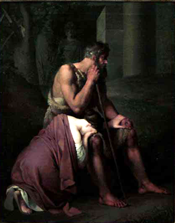
SACCHINI: Oedipe à Colone
Oedipe à Colone: Tragédie lyrique in three acts.
Mozart and Salieri, an opera in one act consisting of two scenes.
Nicolai Rimsky-Korsakov (1844-1908), composer. Libretto derived from Alexander Puskhin's play of the same name.
First performance: 7 December 1898 in Moscow.
Ariadne auf Naxos, Oper with a prologue and one act. Music composed by Richard Strauss. Libretto by Hugo von Hofmannsthal.
La Vestale, a tragédie lyrique in three acts.
Boris Godunov, an opera in four acts with prologue
Modest Mussorgsky, composer. Libretto by the composer, based on Alexander Pushkin's drama Boris Godunov and Nikolai Karamazin's History of the Russian Empire
First performance: 8 February 1874 at the Mariinsky Theatre, St. Petersburg
Il Trovatore, dramma in four parts.
Only a few months following the premiere of Der Rosenkavalier, Hugo von Hofmannsthal proposed a new opera to Richard Strauss based on Molière’s comedy-ballet, Le Bourgeois gentilhomme (in German, Der Bürger als Edelmann).
Die Entführung aus dem Serail, Singspiel in 3 Acts.
Music composed by Wolfgang Amadeus Mozart (1756–1791). Libretto by Johann Gottlieb Stephanie the Younger, based on an earlier libretto by
Christoph Friedrich Bretzner.
Die Entführung aus dem Serail, Singspiel in 3 Acts.
Music composed by Wolfgang Amadeus Mozart (1756–1791). Libretto by Johann Gottlieb Stephanie the Younger, based on an earlier libretto by
Christoph Friedrich Bretzner.
Arabella: Lyrische Komödie in three acts
Die Entführung aus dem Serail, Singspiel in 3 Acts.
Music composed by Wolfgang Amadeus Mozart (1756–1791). Libretto by Johann Gottlieb Stephanie the Younger, based on an earlier libretto by
Christoph Friedrich Bretzner.
La Gioconda, dramma lirico in four acts.
Music composed by Amilcare Ponchielli (1834–1886). Libretto by Arrigo Boito (under the pseudonym Tobia Gorrio), based upon Victor Hugo's Angelo, Tyrant of Padua (1835).
Don Carlo, an opera in four acts. Music composed by Giuseppe Verdi (1813–1901). Libretto by Joseph Méry and Camille Du Locle after Friedrich von Schiller’s dramatic poem Don Carlos, Infant von Spanien. Revised version in four acts (French text revised by Du Locle, Italian translation by Achille de Lauzières and Angelo Zanardini).
Un ballo in maschera, a melodramma in three acts.
Music composed by Giuseppe Verdi. Libretto by Antonio Somma, based upon the work of Eugène Scribe Gustave III ou Le bal masqué (1833)
Medea: Melodramma tragico in three acts.
Die Tote Stadt, an opera in three acts.
Music composed by Erich Wolfgang Korngold (1897-1957). Libretto by Paul Schott (Julius and E. W. Korngold) after the novel Bruges la morte by Georges Rodenbach.
Some Details concerning the Revolution inaugurated by Rossini
Manon Lescaut, dramma lirico in quattro atti
Elektra: Tragedy in one act.
Lyric Opera of Chicago has announced both schedules and cast-lists for is Spring 2020 performances of Richard Wagner’s Ring Cycle. Given the series of individual productions already staged by the company since Fall 2016, that pave the way for the complete cycle, Lyric Opera of Chicago’s complete production should affirm the artistic might of the great composer.
“Diacono himself does not know what musical talent he possesses” – Mascagni
Oedipe à Colone: Tragédie lyrique in three acts.
Streaming Audio
Music composed by Antonio Sacchini. Libretto by Nicolas-François Guillard after Sophocles.
First Performance: 4 January 1786, Versailles
Principal Characters: |
||
| Antigone | Soprano | |
| Polynice | Tenor | |
| Thésée | Tenor | |
| Oedipe | Baritone | |
| Eriphile | Soprano | |
| Le grand prêtre, the High Priest | Bass-Baritone | |
| Une athénienne, an Athenian woman | Soprano |
Setting: The grove of the Furies at Colonus
Synopsis of the play:
Blind, old Oedipus, a former king of Thebes, wanders for many years guided by his daughter, Antigone. Although once successful as a ruler, he was exiled after the gods sent sickness to the city because Oedipus had killed his father Laius, the prior king, and he commited incest with his mother, Iocasta, after he becoming king of Thebes. Now he and Antigone end their journey near the Greek city-state of Athens at a place called Colonus. There, Oedipus offends the Eumenides -- goddesses of the underworld -- and he must make offerings later to avoid punishment. His youngest daughter, Ismene, joins them at Colonus, bearing news from Thebes that her brothers are fighting over the kingship and that the younger Eteocles exiled his older brother Polyneices from the city.
Oedipus is stunned to hear this, but she also reveals the oracle's prediction that the each of the sons will soon seek Oedipus' support to win the battle for the throne. Disgusted, he refuses to help either of them because Theban citizens had treated him so poorly before. He asks for the help of Theseus, King of Athens, to protect him and his daughters, and the wise king agrees. Later, Creon, Iocasta's brother, finds Oedipus at Colonus and kidnaps his daughters to force Oedipus to return to Thebes, so that the younger Eteocles can win the war. Thankfully, Theseus comes to the rescue by retrieving the two girls and sending Creon back to Thebes empty-handed. Next, the exiled older son Polyneices comes seeking Oedipus' support, yet the old man is angered at his son's request and condemns both of his sons to death because they are so selfish.
After praising the Athenians for their kindness, thunder in the sky summons Oedipus into the wilderness to die. Accompanied by his children and King Theseus, he walks off toward death, declaring that Athens will forever be protected by the gods as long as Theseus does not reveal the location of his grave to anyone. Oedipus thus dies after a long life filled with suffering that is cured only by forgiveness and acknowledging the supremity of the gods. Because of his return to faith, he is absolved from the crimes he committed so many years before. After their father's death, Antigone and Ismene return to Thebes, hoping to prevent the deaths of their two brothers that Oedipus had predicted.