21 Sep 2008
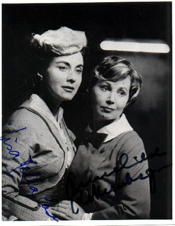
STRAUSS: Arabella — Salzburg 1958
Arabella: Lyrische Komödie in three acts
Mozart and Salieri, an opera in one act consisting of two scenes.
Nicolai Rimsky-Korsakov (1844-1908), composer. Libretto derived from Alexander Puskhin's play of the same name.
First performance: 7 December 1898 in Moscow.
Ariadne auf Naxos, Oper with a prologue and one act. Music composed by Richard Strauss. Libretto by Hugo von Hofmannsthal.
La Vestale, a tragédie lyrique in three acts.
Boris Godunov, an opera in four acts with prologue
Modest Mussorgsky, composer. Libretto by the composer, based on Alexander Pushkin's drama Boris Godunov and Nikolai Karamazin's History of the Russian Empire
First performance: 8 February 1874 at the Mariinsky Theatre, St. Petersburg
Il Trovatore, dramma in four parts.
Only a few months following the premiere of Der Rosenkavalier, Hugo von Hofmannsthal proposed a new opera to Richard Strauss based on Molière’s comedy-ballet, Le Bourgeois gentilhomme (in German, Der Bürger als Edelmann).
Die Entführung aus dem Serail, Singspiel in 3 Acts.
Music composed by Wolfgang Amadeus Mozart (1756–1791). Libretto by Johann Gottlieb Stephanie the Younger, based on an earlier libretto by
Christoph Friedrich Bretzner.
Die Entführung aus dem Serail, Singspiel in 3 Acts.
Music composed by Wolfgang Amadeus Mozart (1756–1791). Libretto by Johann Gottlieb Stephanie the Younger, based on an earlier libretto by
Christoph Friedrich Bretzner.
Arabella: Lyrische Komödie in three acts
Die Entführung aus dem Serail, Singspiel in 3 Acts.
Music composed by Wolfgang Amadeus Mozart (1756–1791). Libretto by Johann Gottlieb Stephanie the Younger, based on an earlier libretto by
Christoph Friedrich Bretzner.
La Gioconda, dramma lirico in four acts.
Music composed by Amilcare Ponchielli (1834–1886). Libretto by Arrigo Boito (under the pseudonym Tobia Gorrio), based upon Victor Hugo's Angelo, Tyrant of Padua (1835).
Don Carlo, an opera in four acts. Music composed by Giuseppe Verdi (1813–1901). Libretto by Joseph Méry and Camille Du Locle after Friedrich von Schiller’s dramatic poem Don Carlos, Infant von Spanien. Revised version in four acts (French text revised by Du Locle, Italian translation by Achille de Lauzières and Angelo Zanardini).
Un ballo in maschera, a melodramma in three acts.
Music composed by Giuseppe Verdi. Libretto by Antonio Somma, based upon the work of Eugène Scribe Gustave III ou Le bal masqué (1833)
Medea: Melodramma tragico in three acts.
Die Tote Stadt, an opera in three acts.
Music composed by Erich Wolfgang Korngold (1897-1957). Libretto by Paul Schott (Julius and E. W. Korngold) after the novel Bruges la morte by Georges Rodenbach.
Some Details concerning the Revolution inaugurated by Rossini
Manon Lescaut, dramma lirico in quattro atti
Elektra: Tragedy in one act.
Lyric Opera of Chicago has announced both schedules and cast-lists for is Spring 2020 performances of Richard Wagner’s Ring Cycle. Given the series of individual productions already staged by the company since Fall 2016, that pave the way for the complete cycle, Lyric Opera of Chicago’s complete production should affirm the artistic might of the great composer.
“Diacono himself does not know what musical talent he possesses” – Mascagni
Arabella: Lyrische Komödie in three acts
Streaming Audio
Music composed by Richard Strauss. Libretto by Hugo von Hofmannsthal.
First Performance: 1 July 1933, Sächsisches Staatstheater Opernhaus, Dresden
| Principal Roles: | |
| Count Waldner | Bass |
| Adelaide, his wife | Mezzo Soprano |
| Arabella, their daughter | Soprano |
| Zdenka, Arabella’s younger sister | Soprano |
| Mandryka, a Croatian landowner | Baritone |
| Matteo, an officer | Tenor |
| Count Elemer | Tenor |
| Count Dominik | Baritone |
| Count Lamoral | Bass |
| Fiakermilli | Soprano |
| Fortune-Teller | Soprano |
| Three Players | Basses |
| Welko, Mandryka’s bodyguard | Spoken Role |
Synopsis:
The impoverished Count and Countess Waldner seek a rich suitor for their eldest daughter Arabella, and have disguised their younger daughter Zdenka as a boy to save money. Zdenka is in love with Matteo, one of Arabella’s admirers, and has written him letters in her sister’s name. Arabella believes she will recognise ‘the right man’, and is curious about a stranger who has watched her outside the hotel. She agrees to choose a husband by the end of the Coachmen’s Ball that evening, and leaves for a sleigh-ride. Beset by creditors, the Count has written to a Croatian landowning friend, enclosing a photo of Arabella. The friend’s nephew and heir, Mandryka, announces himself. He is bewitched by Arabella’s portrait and has come to Vienna to woo her. The Count accepts Mandryka’s suit and a loan for the gambling tables. At the ball, Arabella and Mandryka are attracted to each other – he is the stranger she had noticed. He describes a village custom in which a glass of water is offered by a maid to her betrothed to drink. She agrees to marry him, but begs a few hours to bid farewell to her youth. Arabella is proclaimed Queen of the Ball by Milli, the coachmen’s darling, and takes leave from each of her former suitors. Zdenka arranges an assignation with Matteo, luring him with a key to Arabella’s room. This is overheard by Mandryka, who notes Arabella’s departure and falls into a drunken fury, outraging the Countess with accusations of Arabella’s infidelity. The Waldners leave the ball and the Count commands Mandryka to follow. Back at the hotel, Matteo believes he has met with Arabella in her darkened bedroom, but in the foyer she is baffled by his allusions. Mandryka has lost his trust in Arabella, and in the growing confusion challenges Matteo to a fight. Zdenka appears in a nightdress and confesses her love for Matteo. Arabella seeks forgiveness from Mandryka and asks her father to bless the union of Zdenka and Matteo. Mandryka, alone, contemplates his feelings for Arabella and sends a glass of water to her room. She brings it down for him to drink, as a symbol of their love.
[Synopsis Source: Boosey & Hawkes]