25 Jan 2009
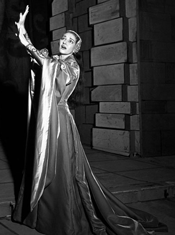
BELLINI: Il Pirata — New York 1959
Il Pirata: Melodramma in two acts.
Mozart and Salieri, an opera in one act consisting of two scenes.
Nicolai Rimsky-Korsakov (1844-1908), composer. Libretto derived from Alexander Puskhin's play of the same name.
First performance: 7 December 1898 in Moscow.
Ariadne auf Naxos, Oper with a prologue and one act. Music composed by Richard Strauss. Libretto by Hugo von Hofmannsthal.
La Vestale, a tragédie lyrique in three acts.
Boris Godunov, an opera in four acts with prologue
Modest Mussorgsky, composer. Libretto by the composer, based on Alexander Pushkin's drama Boris Godunov and Nikolai Karamazin's History of the Russian Empire
First performance: 8 February 1874 at the Mariinsky Theatre, St. Petersburg
Il Trovatore, dramma in four parts.
Only a few months following the premiere of Der Rosenkavalier, Hugo von Hofmannsthal proposed a new opera to Richard Strauss based on Molière’s comedy-ballet, Le Bourgeois gentilhomme (in German, Der Bürger als Edelmann).
Die Entführung aus dem Serail, Singspiel in 3 Acts.
Music composed by Wolfgang Amadeus Mozart (1756–1791). Libretto by Johann Gottlieb Stephanie the Younger, based on an earlier libretto by
Christoph Friedrich Bretzner.
Die Entführung aus dem Serail, Singspiel in 3 Acts.
Music composed by Wolfgang Amadeus Mozart (1756–1791). Libretto by Johann Gottlieb Stephanie the Younger, based on an earlier libretto by
Christoph Friedrich Bretzner.
Arabella: Lyrische Komödie in three acts
Die Entführung aus dem Serail, Singspiel in 3 Acts.
Music composed by Wolfgang Amadeus Mozart (1756–1791). Libretto by Johann Gottlieb Stephanie the Younger, based on an earlier libretto by
Christoph Friedrich Bretzner.
La Gioconda, dramma lirico in four acts.
Music composed by Amilcare Ponchielli (1834–1886). Libretto by Arrigo Boito (under the pseudonym Tobia Gorrio), based upon Victor Hugo's Angelo, Tyrant of Padua (1835).
Don Carlo, an opera in four acts. Music composed by Giuseppe Verdi (1813–1901). Libretto by Joseph Méry and Camille Du Locle after Friedrich von Schiller’s dramatic poem Don Carlos, Infant von Spanien. Revised version in four acts (French text revised by Du Locle, Italian translation by Achille de Lauzières and Angelo Zanardini).
Un ballo in maschera, a melodramma in three acts.
Music composed by Giuseppe Verdi. Libretto by Antonio Somma, based upon the work of Eugène Scribe Gustave III ou Le bal masqué (1833)
Medea: Melodramma tragico in three acts.
Die Tote Stadt, an opera in three acts.
Music composed by Erich Wolfgang Korngold (1897-1957). Libretto by Paul Schott (Julius and E. W. Korngold) after the novel Bruges la morte by Georges Rodenbach.
Some Details concerning the Revolution inaugurated by Rossini
Manon Lescaut, dramma lirico in quattro atti
Elektra: Tragedy in one act.
Lyric Opera of Chicago has announced both schedules and cast-lists for is Spring 2020 performances of Richard Wagner’s Ring Cycle. Given the series of individual productions already staged by the company since Fall 2016, that pave the way for the complete cycle, Lyric Opera of Chicago’s complete production should affirm the artistic might of the great composer.
“Diacono himself does not know what musical talent he possesses” – Mascagni
Il Pirata: Melodramma in two acts.
Streaming Audio
Music composed by Vincenzo Bellini. Libretto by Felice Romani after Bertram, ou le Chateau de S.t Aldobrand (1821) by Charles Nodier and Isidore Justin Severin Taylor, a French adaptation of Bertram; or The Castle of St. Aldobrand (1816) by Charles Maturin.
First Performance: 27 October 1827, Teatro alla Scala, Milan.
| Principal Roles: | |
| Ernesto, Duke of Caldora | Baritone |
| Imogene, his wife | Soprano |
| Gualtiero, former Count of Montalto | Tenor |
| Itulbo, Gualtiero’s lieutenant | Tenor |
| Goffredo, a hermit, once tutor to Gualtiero | Bass |
| Adele, Imogene’s companion | Mezzo-Soprano |
Setting: Sicily, 13th Century.
Synopsis:
Act I
On a stormy sea-shore, fisherfolk watch a shipwreck. Among the survivors is Gualtiero, who is recognised and offered refuge by Goffredo. Gualtiero tells him that he drew strength from his continuing love for Imogene (“Nel furor delle tempeste”), although she is now married to Ernesto. She arrives to offer hospitality to the shipwrecked strangers, but Gualtiero does not reveal himself, and Imogene assumes from what Itulbo tells her that he is dead. She tells Adele that she dreamt that he had been killed by her husband (“Lo sognai ferito, esangue”).
At night, Itulbo warns the strangers not to reveal that they are the pirates who have been pursued by Ernesto. Meanwhile, Imogene is strangely fascinated by Goffredo’s guest, who soon reveals to her who he really is. Gualtiero learns that she had married Ernesto only because he had threatened her father’s life, and when he sees that she has borne Ernesto’s child, he starts to think of revenge (“Pietosa al padre”).
Ernesto and his men celebrate victory over the pirates (“Sì, vincemmo”), but he is annoyed that Imogene is not celebrating, too. He questions Itulbo (who pretends to be the pirates’ chief) about Gualtiero’s fate, and the act ends with all the principals expressing their conflicting emotions, though Goffredo manages to restrain Gualtiero from giving his identity away.
Act II
Adele tells Imogene that Gualtiero wishes to see her before he leaves. Ernesto accuses Imogene of being unfaithful to him, but she defends herself by saying that her continuing love for Gualtiero is based solely on her remembrance of their past encounters. Ernesto is inclined to take her word for it, but, when he is told that Gualtiero is being sheltered in his own castle, he is consumed by rage.
Despite Itulbo’s pleas, Gualtiero meets Imogene again before he leaves. Their acceptance of the situation alternates with passionate declarations of love, and Ernesto, arriving, conceals himself and overhears the end of their duet. He is discovered, and exits with Gualtiero, each determined to fight to the death.
It is Ernesto who is killed. Gualtiero, to the amazement of Ernesto’s retainers, gives himself up to justice, and, as he is taken away, he prays that Imogene may forgive him (“Tu vedrai la sventurata”). She appears in a state of anguish and sees visions of her dead husband and her son (“Col sorriso d’innocenza ... Oh sole, ti vela di tenebre oscure”). Meanwhile, the Council of Knights has condemned Gualtiero to death.
[Synopsis Source: Wikipedia]