04 Jan 2009
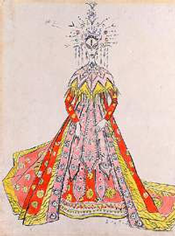
PUCCINI: Turandot — Wien 1961
Turandot, dramma lirico in three acts.
Mozart and Salieri, an opera in one act consisting of two scenes.
Nicolai Rimsky-Korsakov (1844-1908), composer. Libretto derived from Alexander Puskhin's play of the same name.
First performance: 7 December 1898 in Moscow.
Ariadne auf Naxos, Oper with a prologue and one act. Music composed by Richard Strauss. Libretto by Hugo von Hofmannsthal.
La Vestale, a tragédie lyrique in three acts.
Boris Godunov, an opera in four acts with prologue
Modest Mussorgsky, composer. Libretto by the composer, based on Alexander Pushkin's drama Boris Godunov and Nikolai Karamazin's History of the Russian Empire
First performance: 8 February 1874 at the Mariinsky Theatre, St. Petersburg
Il Trovatore, dramma in four parts.
Only a few months following the premiere of Der Rosenkavalier, Hugo von Hofmannsthal proposed a new opera to Richard Strauss based on Molière’s comedy-ballet, Le Bourgeois gentilhomme (in German, Der Bürger als Edelmann).
Die Entführung aus dem Serail, Singspiel in 3 Acts.
Music composed by Wolfgang Amadeus Mozart (1756–1791). Libretto by Johann Gottlieb Stephanie the Younger, based on an earlier libretto by
Christoph Friedrich Bretzner.
Die Entführung aus dem Serail, Singspiel in 3 Acts.
Music composed by Wolfgang Amadeus Mozart (1756–1791). Libretto by Johann Gottlieb Stephanie the Younger, based on an earlier libretto by
Christoph Friedrich Bretzner.
Arabella: Lyrische Komödie in three acts
Die Entführung aus dem Serail, Singspiel in 3 Acts.
Music composed by Wolfgang Amadeus Mozart (1756–1791). Libretto by Johann Gottlieb Stephanie the Younger, based on an earlier libretto by
Christoph Friedrich Bretzner.
La Gioconda, dramma lirico in four acts.
Music composed by Amilcare Ponchielli (1834–1886). Libretto by Arrigo Boito (under the pseudonym Tobia Gorrio), based upon Victor Hugo's Angelo, Tyrant of Padua (1835).
Don Carlo, an opera in four acts. Music composed by Giuseppe Verdi (1813–1901). Libretto by Joseph Méry and Camille Du Locle after Friedrich von Schiller’s dramatic poem Don Carlos, Infant von Spanien. Revised version in four acts (French text revised by Du Locle, Italian translation by Achille de Lauzières and Angelo Zanardini).
Un ballo in maschera, a melodramma in three acts.
Music composed by Giuseppe Verdi. Libretto by Antonio Somma, based upon the work of Eugène Scribe Gustave III ou Le bal masqué (1833)
Medea: Melodramma tragico in three acts.
Die Tote Stadt, an opera in three acts.
Music composed by Erich Wolfgang Korngold (1897-1957). Libretto by Paul Schott (Julius and E. W. Korngold) after the novel Bruges la morte by Georges Rodenbach.
Some Details concerning the Revolution inaugurated by Rossini
Manon Lescaut, dramma lirico in quattro atti
Elektra: Tragedy in one act.
Lyric Opera of Chicago has announced both schedules and cast-lists for is Spring 2020 performances of Richard Wagner’s Ring Cycle. Given the series of individual productions already staged by the company since Fall 2016, that pave the way for the complete cycle, Lyric Opera of Chicago’s complete production should affirm the artistic might of the great composer.
“Diacono himself does not know what musical talent he possesses” – Mascagni
Turandot, dramma lirico in three acts.
Streaming Audio
Music composed by Giacomo Puccini (1858–1924). Libretto by Giuseppe Adami and Renato Simoni based on Turandot, Prinzessin von China (1802), Johann Christoph Friedrich von Schiller's adaptation of Turandotte (1762) by Carlo Gozzi.
First Performance: 25 April 1926, Teatro alla Scala, Milan.
| Principal Characters: | |
| Princess Turandot | Soprano |
| The Emperor Altoum, her father | Tenor |
| Timur, the dispossessed King of Tartary | Bass |
| Calaf, the son of Timur | Tenor |
| Liù, a young slave-girl | Soprano |
| Ping, Grand Chancellor | Baritone |
| Pang, General Purveyor | Tenor |
| Pong, Chief Cook | Tenor |
| A Mandarin | Baritone |
| The Prince of Persia | Silent role |
| The Executioner (Pu-Tin-Pao) | Silent role |
Setting: Peking in the distant past.
Synopsis:
A Mandarin announces that any prince seeking to marry the Princess Turandot must first answer three riddles. If he fails, he must die. The latest suitor, the Prince of Persia, is to be executed at the moon's rising. In the crowd is Timur, banished King of Tartary, who is reunited with his son, Calaf, who he thought died in a battle. The Prince of Persia passes on his way to the scaffold and the crowd calls upon the Princess to spare him. Turandot bids that the execution proceed. As the death cry is heard, Calaf, transfixed by the beauty of the Princess, strides towards the gong that announces a new suitor. Turandot's ministers, Ping, Pang and Pong, try to discourage Calaf. Timur and Liù (who is in love with Calaf) also beg him to reconsider, but he strikes the gong and calls Turandot's name.
Ping, Pang and Pong lament Turandot's bloody reign, hoping that love will conquer her icy heart and peace will return. They think longingly of their distant country homes, but the noise of the populace gathering to hear Turandot question the new challenger brings them back to reality.
The people, eager for another execution, have gathered in the square. The Emperor asks Calaf to reconsider, but he refuses. Turandot describes how her ancestor was dishonoured and killed by a conquering prince; the cruel trial her suitors have to undergo is revenge for that crime. Turandot asks Calaf three riddles, which he answers correctly. Turandot begs her father not to give her to the stranger, but to no avail. Calaf, hoping to win her love, offers Turandot a challenge: if she can learn his name by dawn, he will forfeit his life.
Calaf hears a proclamation: on pain of death, no one in Peking shall sleep until Turandot learns the stranger's name. Ping, Pang and Pong try unsuccessfully to bribe him to learn his secret. As the mob threatens him, soldiers drag in Liù and Timur. Calaf tries to convince the mob that neither knows his secret. Liù declares that she alone knows but will never tell. She is tortured, but remains silent. Impressed by such endurance, Turandot asks Liù's secret: "Love" replies Liù. Fearing that she will weaken under torture Liù seizes a dagger and kills herself. The crowd, fearful of her dead spirit, forms a funeral procession. Left alone with Turandot, Calaf first reproaches her for her coldness and cruelty, then kisses her. Feeling emotion for the first time, Turandot weeps. Now sure of his victory, Calaf reveals his identity. Before the assembled crowd, Turandot announces the stranger's name: it is Love. As Calaf embraces her, the court hails the power of love and life.
[Synopsis Source: Opera Australia]
Click here for the complete libretto.
Click here for the complete libretto (English translation).
Click here for the complete text of Turandot, Prinzessin von China.