Recently in Redbox
Ethel Smyth’s last large-scale work, written in 1930 by the then 72-year-old composer who was increasingly afflicted and depressed by her worsening deafness, was The Prison – a ‘symphony’ for soprano and bass-baritone soloists, chorus and orchestra.
Mozart and Salieri, an opera in one act consisting of two scenes.
Nicolai Rimsky-Korsakov (1844-1908), composer. Libretto derived from Alexander Puskhin's play of the same name.
First performance: 7 December 1898 in Moscow.
Boris Godunov, an opera in four acts with prologue
Modest Mussorgsky, composer. Libretto by the composer, based on Alexander Pushkin's drama Boris Godunov and Nikolai Karamazin's History of the Russian Empire
First performance: 8 February 1874 at the Mariinsky Theatre, St. Petersburg
La Gioconda, dramma lirico in four acts.
Music composed by Amilcare Ponchielli (1834–1886). Libretto by Arrigo Boito (under the pseudonym Tobia Gorrio), based upon Victor Hugo's Angelo, Tyrant of Padua (1835).
Don Carlo, an opera in four acts. Music composed by Giuseppe Verdi (1813–1901). Libretto by Joseph Méry and Camille Du Locle after Friedrich von Schiller’s dramatic poem Don Carlos, Infant von Spanien. Revised version in four acts (French text revised by Du Locle, Italian translation by Achille de Lauzières and Angelo Zanardini).
Un ballo in maschera, a melodramma in three acts.
Music composed by Giuseppe Verdi. Libretto by Antonio Somma, based upon the work of Eugène Scribe Gustave III ou Le bal masqué (1833)
The most notable of all Péricholes of Offenbach’s sentimental operetta is surely the legendary Hortense Schneider who created the role back in 1868 at Paris’ Théâtre des Varietés. Alas there is no digital record.
John Eliot Gardiner's Schumann series with the London Symphony Orchestra, demonstrate the how Schumann’s Lieder and piano music influenced his approach to symphonic form and his interests in music drama.
Passion! Pain! Poetry! (but hold the irony . . .)
Brilliant Emmerich Kálmán’s Ein Herbstmanöver from the Stadttheater, Giessen in 2018, conducted by Michael Hofstetter now on Oehms Classics, in a performing version by Balázs Kovalik.
Medea: Melodramma tragico in three acts.
The 68th Wexford Festival Opera, which runs until Sunday 3rd November, is bringing past, present and future together in ways which suggest that the Festival is in good health, and will both blossom creatively and stay true to its roots in the years ahead.
O Lieb! presents the lieder of Franz Liszt with a distinctive spark from Cyrille Dubois and Tristan Raës, from Aparté. Though young, Dubois is very highly regarded. His voice has a luminous natural elegance, ideal for the Mélodie and French operatic repertoire he does so well. With these settings by Franz Liszt, Dubois brings out the refinement and sophistication of Liszt’s approach to song.
The final performance of San Francisco Opera’s deeply flawed production of the Gounod masterpiece became, in fact, a triumph — for the Romeo of Pene Pati, the Juliet of Amina Edris, and for Charles Gounod in the hands of conductor Yves Abel.
From Albion, The Song of Love featuring songs by Ralph Vaughan Williams, with Kitty Whately, Roderick Williams and pianist William Vann. Albion is unique, treasured by Vaughan Williams devotees for rarely heard repertoire from the composer’s vast output, so don’t expect mass market commercial product. Albion recordings often highlight new perspectives.
Die Tote Stadt, an opera in three acts.
Music composed by Erich Wolfgang Korngold (1897-1957). Libretto by Paul Schott (Julius and E. W. Korngold) after the novel Bruges la morte by Georges Rodenbach.
Manon Lescaut, dramma lirico in quattro atti
Elektra: Tragedy in one act.
Though Luigi Cherubini long outlived the carnage of the French Revolution his 1797 opéra comique [with spoken dialogue] Médée fell well within the “horror opera” genre that responded to the spirit of its time. These days however Médée is but an esoteric and extremely challenging late addition to the international repertory.
Jake Heggie and Gene Scheer have become an indispensable presence in the contemporary opera world, and their latest premiere, If I Were You, found the duo at the very top of their game.
Redbox
24 Oct 2005
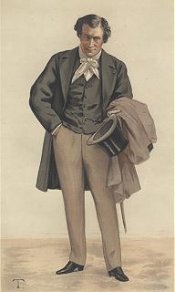
Victorien Sardou — A Tale of Two Operas
Victorien Sardou (1831-1908) was a popular French dramatist during the later half of the 19th Century. He, along with Eugène Scribe, combined melodrama and realism to a produce a more serious form of drama that emphasized careful plot construction.
This style is generally referred to as “well-made plays.” He was seated at the Academy in 1878. His initial efforts were poorly received. Through the connections of his wife, Pauline Virginie Dejazet began to perform his plays that enabled her to perform youthful roles even at the age of 65. Sardou then began writing plays for Sarah Bernhardt, which include Fédora (1882) and La Tosca (1887). Sardou’s close connection with Bernhardt has been criticized:
[T]he career of one of the very best endowed theatrical composers of the nineteenth century, the late Victorien Sardou, has been molded and restricted for all time by the talents of a single star performer, Mme. Sarah Bernhardt. Under the influence of Eugene Scribe, Sardou began his career at the Theatre Francais with a wide range of well-made plays, varying in scope from the social satire of Nos Intimes and the farcical intrigue of Les Pattes de Mouche (known to us in English as The Scrap of Paper) to the tremendous historic panorama of Patrie. When Sarah Bernhardt left the Comedie Francaise, Sardou followed in her footsteps, and afterwards devoted most of his energy to preparing a series of melodramas to serve successively as vehicles for her. Now, Sarah Bernhardt is an actress of marked abilities, and limitations likewise marked. In sheer perfection of technique she surpasses all performers of her time. She is the acme of histrionic dexterity; all that she does upon the stage is, in sheer effectiveness, superb. But in her work she has no soul; she lacks the sensitive sweet lure of Duse, the serene and starlit poetry of Modjeska. Three things she does supremely well. She can be seductive, with a cooing voice; she can be vindictive, with a cawing voice; and, voiceless, she can die. Hence the formula of Sardou's melodramas.
His heroines are almost always Sarah Bernhardts,-luring, tremendous, doomed to die. Fedora, Gismonda, La Tosca, Zoraya, are but a single woman who transmigrates from play to play. We find her in different countries and in different times; but she always lures and fascinates a man, storms against insuperable circumstance, coos and caws, and in the outcome dies. One of Sardou's latest efforts, La Sorciere, presents the dry bones of the formula without the flesh and blood of life. Zoraya appears first shimmering in moonlight upon the hills of Spain,-dovelike in voice, serpentining in seductiveness. Next, she is allowed to hypnotise the audience while she is hypnotising the daughter of the governor. She is loved and she is lost. She curses the high tribunal of the Inquisition,-a dove no longer now. And she dies upon cathedral steps, to organ music. The Sorceress is but a lifeless piece of mechanism; and when it was performed in English by Mrs. Patrick Campbell, it failed to lure or to thrill. But Sarah Bernhardt, because as an actress she is Zoraya, contrived to lift it into life. Justly we may say that, in a certain sense, this is Sarah Bernhardt's drama instead of Victorien Sardou's. With her, it is a play; without her, it is nothing but a formula. The young author of Patrie promised better things than this. Had he chosen, he might have climbed to nobler heights. But he chose instead to write, year after year, a vehicle for the Muse of Melodrama, and sold his laurel crown for gate-receipts.
[Clayton Hamilton,
The Theory of the Theatre and Other Principles of Dramatic Criticism, New York: Henry Holt & Co., 1910]
His later plays tended to have an historical setting. La Tosca, for example, takes place in Rome while the Battle of Marengo (14 June 1800) is being fought in the Piedmont between Napoleon and the Austrians.
Sardou’s plays were highly sought after as librettos for operas. The two operas chosen here are Giacomo Puccini’s Tosca and Umberto Giordano’s Fedora. They have been chosen not merely to illustrate how two composers approached Sardou’s well-made plays, but to show how one succeeds masterfully while the other achieves at best mixed results.
Related Links: